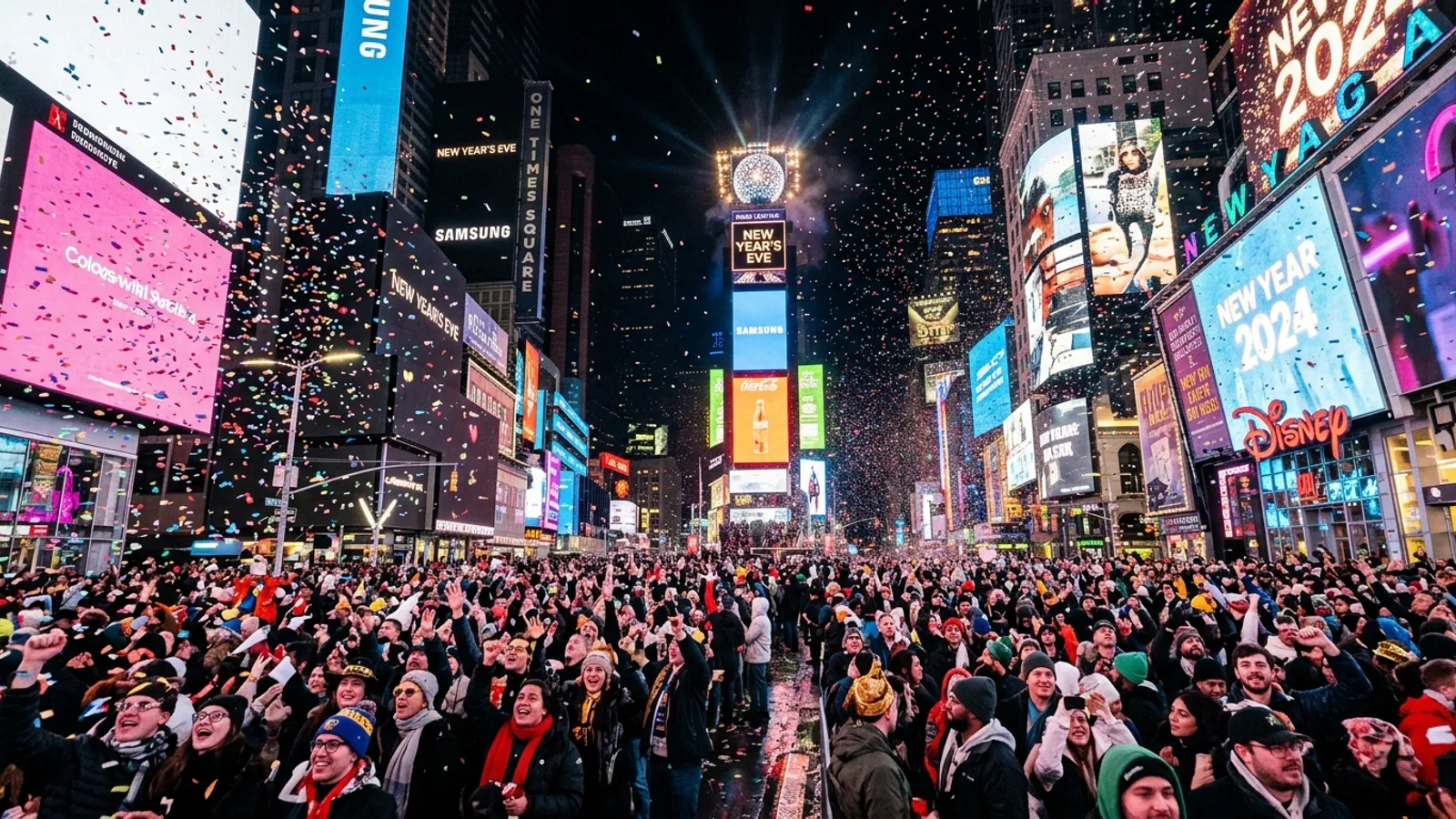
Every winter, New Orleans transforms into the epicenter of North America’s largest free public street festival. Known globally as Mardi Gras—the culmination of the city’s vibrant Carnival season—the celebration blends centuries-old French and Spanish Catholic traditions with Brass Band jazz, towering hand-sculpted floats, masked riders, and neighborhood-wide hospitality.
For 2027, Mardi Gras Day falls on Tuesday, February 9, 2027. Because this date lands relatively early in the calendar year, the main parade season compresses into late January and the first nine days of February. Planning ahead is essential: hotel inventory across downtown fills months early, major thoroughfares close for parade staging, and knowing the difference between Uptown float routes and French Quarter street celebrations determines how smoothly your trip runs.
This guide covers everything required to organize a practical trip for Mardi Gras in New Orleans in 2027—from projected parade schedules and viewing spots to MSY airport transfers, transit disruptions, neighborhood lodging comparisons, and realistic budgeting.
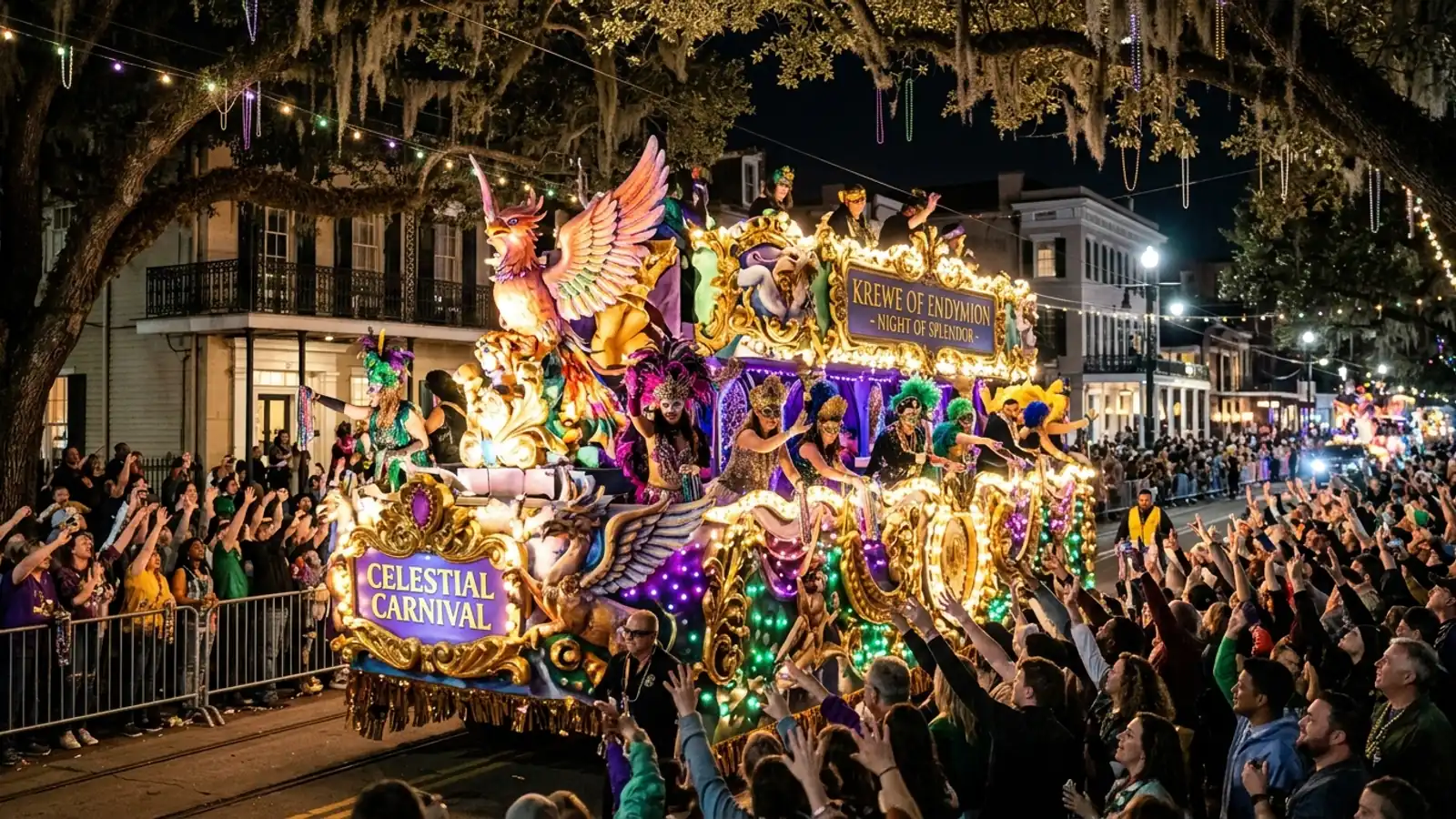
Mardi Gras 2027 in New Orleans at a Glance
| Detail | Information |
|---|---|
| Destination | New Orleans, Louisiana, USA |
| Carnival Season Begins | Wednesday, January 6, 2027 (Twelfth Night) |
| Lundi Gras | Monday, February 8, 2027 |
| Mardi Gras Day (Fat Tuesday) | Tuesday, February 9, 2027 |
| Ash Wednesday | Wednesday, February 10, 2027 |
| Main Parade Period | Late January through February 9, 2027 (Verify final official schedule) |
| Main Airport | Louis Armstrong New Orleans International Airport (MSY) |
| Main Parade Areas | Uptown/St. Charles Avenue, Canal Street, Mid-City, Marigny/French Quarter perimeters (Verify individual routes) |
| Official Information | NewOrleans.com & MardiGrasNewOrleans.com |
What Is Mardi Gras in New Orleans?
Mardi Gras translates from French as "Fat Tuesday," referring to the centuries-old Christian practice of consuming rich, fatty foods—meat, eggs, milk, and lard—before the 40-day fasting and penance season of Lent begins on Ash Wednesday.
In New Orleans, however, Mardi Gras is not a single-day event. It is the grand finale of Carnival, a civic and cultural season that opens every year on January 6 (Twelfth Night, or the Feast of the Epiphany) and builds in momentum until midnight on Fat Tuesday. Along with other major US cultural festivals, it remains a defining American cultural experience.
Key traditions define the New Orleans celebration:
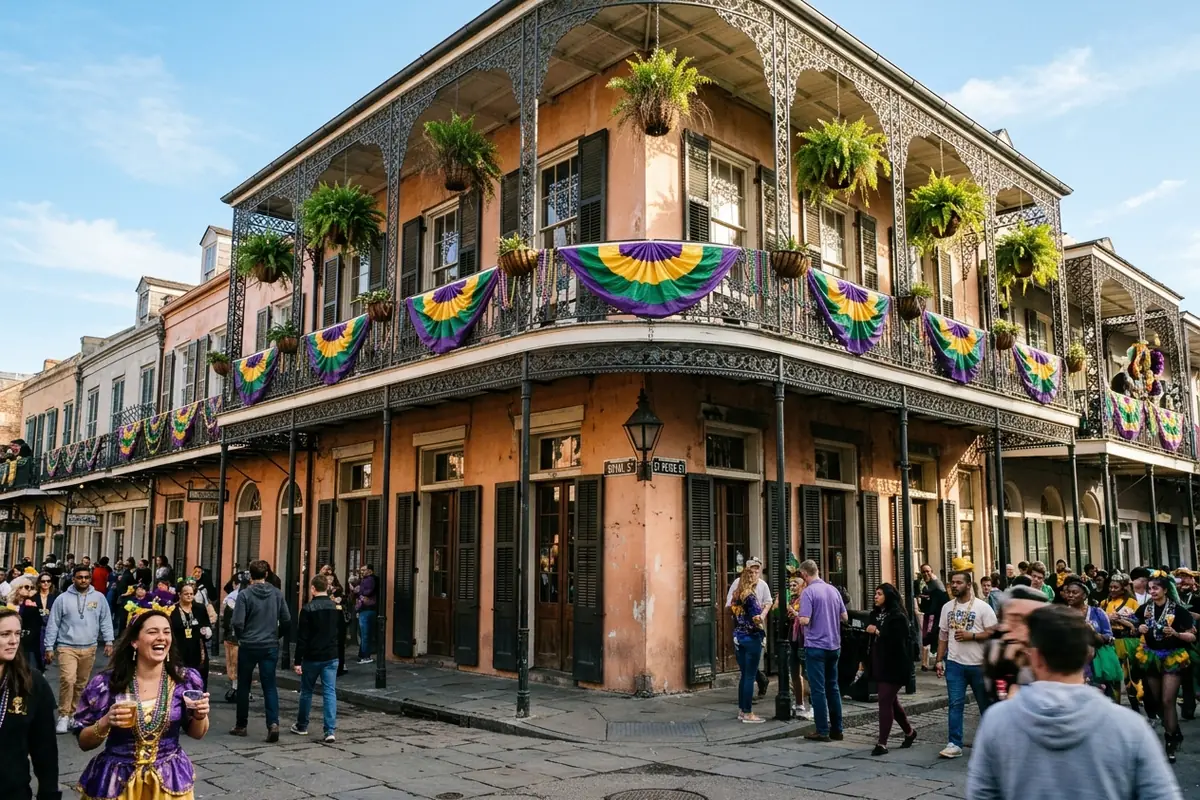
- Purple, Green, and Gold: Established as the official Carnival colors in 1872 by the Krewe of Rex, purple symbolizes justice, green represents faith, and gold stands for power. You will see these three colors on flags, beads, masks, and king cakes across the city.
- Krewes: Parades and private masquerade balls are organized, funded, and staged by private social clubs known as "krewes." Some krewes trace their lineage back to the 19th century (such as Rex and Proteus), while modern "super krewes" (Endymion, Bacchus, Orpheus) feature thousands of riders and massive multi-tandem floats.
- Floats, Marching Bands, and Throws: Parades pair satirical or mythological papier-mâché and fiber-optic floats with local high school and university marching bands, dance troupes, and costumed walking clubs. Riders toss "throws" to spectators—ranging from traditional plastic beads and aluminum doubloons to coveted signature items like hand-decorated coconuts (Zulu), glittered high heels (Muses), and light-up cups.
Comparing Fares for Your Route?
Search live multi-airline schedules, spot discount windows, and baggage fee rules on FareWander.
When Is Mardi Gras 2027?
| Event | Confirmed 2027 Date | Significance |
|---|---|---|
| Twelfth Night | Wednesday, January 6, 2027 | Official start of New Orleans Carnival season; first streetcar and walking parades roll; king cake season opens. |
| Carnival Season | January 6 – February 9, 2027 | Five-week span featuring weekend and weeknight parades leading up to Fat Tuesday. |
| Lundi Gras | Monday, February 8, 2027 | "Fat Monday," marked by riverfront festivities, arrivals of Rex and Zulu royalty, and major night parades. |
| Mardi Gras Day | Tuesday, February 9, 2027 | Fat Tuesday; morning parades (Zulu and Rex), neighborhood walking krewes, Mardi Gras Indians, and citywide street celebrations. |
| Ash Wednesday | Wednesday, February 10, 2027 | Start of Lent; mounted police clear Bourbon Street at midnight to formally close Carnival. |
Why the Date Changes Every Year
Mardi Gras has no fixed calendar date because it is tied directly to the lunar calendar used to calculate Easter. Easter Sunday falls on the first Sunday after the first full moon occurring on or after the spring equinox. Counting backward 46 days establishes Ash Wednesday, and the Tuesday immediately preceding it—47 days before Easter—is Mardi Gras Day. Because Easter Sunday falls on March 28 in 2027, Mardi Gras lands on February 9—one week earlier than in 2026.
Mardi Gras 2027 Parade Schedule and Routes
Important Scheduling Notice: While traditional parading days rarely change, the New Orleans City Council officially adopts the final parade order, exact start times, and route permissions by municipal motion each January (for example, the 2026 schedule was ratified in late January 2026). The table below reflects the projected 2027 calendar published by NewOrleans.com and MardiGrasNewOrleans.com based on historical krewe schedules. Always verify final start times and route maps before traveling.
| Parade / Krewe | Projected 2027 Date | Typical Start Time (Subject to City Ratification) | Primary Parade Area | Official Route & Source Info |
|---|---|---|---|---|
| Krewe of Joan of Arc | Wed, Jan 6, 2027 | Evening (~7:00 PM) | French Quarter | Medieval-themed walking parade honoring Joan of Arc's birthday. Verify route on NewOrleans.com. |
| Intergalactic Krewe of Chewbacchus | Sat, Jan 16, 2027 | Evening (~7:00 PM) | Marigny / French Quarter perimeter | Sci-fi and pop-culture contraption/walking parade. Check MardiGrasNewOrleans.com. |
| Krewe du Vieux | Sat, Jan 23, 2027 | Evening (~6:30 PM) | Marigny / French Quarter | Satirical, adult-oriented mule-drawn floats and brass bands. Check NewOrleans.com. |
| Krewe of Muses | Thu, Feb 4, 2027 | Evening (~6:00 PM) | Uptown (St. Charles Ave to Canal St) | All-female krewe famous for glittered shoe throws and satirical floats. Verify at NewOrleans.com. |
| Krewe of Hermes | Fri, Feb 5, 2027 | Evening (~5:30 PM) | Uptown (St. Charles Ave to Canal St) | Classic night parade featuring neon-lit floats; followed by Le Krewe d'Etat and Morpheus. |
| Krewe of Endymion | Sat, Feb 6, 2027 | Afternoon (~4:15 PM) | Mid-City (Orleans Ave/Carrollton to Canal St/CBD) | Only super krewe rolling through Mid-City; massive animated floats. Verify route at MardiGrasNewOrleans.com. |
| Krewe of Bacchus | Sun, Feb 7, 2027 | Evening (~5:15 PM) | Uptown (St. Charles Ave to Canal St) | Celebrity-monarch super krewe with signature tandem floats. Check NewOrleans.com. |
| Krewe of Orpheus | Mon, Feb 8, 2027 | Evening (~6:00 PM) | Uptown (St. Charles Ave to Canal St) | Lundi Gras music-themed super krewe co-founded by Harry Connick Jr. |
| Krewe of Zulu | Tue, Feb 9, 2027 | Morning (~8:00 AM) | Central City / CBD / Canal St | Historic African American krewe famous for hand-painted coconuts; rolls prior to Rex. |
| Krewe of Rex | Tue, Feb 9, 2027 | Morning (~10:30 AM) | Uptown (St. Charles Ave to Canal St) | "King of Carnival" daytime parade with traditional royal floats; followed by truck parades. |
Understanding Parade Routes
Not every parade follows the same streets:
- The Uptown Route: Most major float parades (Muses, Hermes, Bacchus, Orpheus, Rex) assemble near Jefferson Avenue and St. Charles Avenue, travel down St. Charles Avenue around Harmony Circle, and finish along Canal Street.
- The Mid-City Route: Endymion starts near City Park Avenue and Orleans Avenue, turns onto North Carrollton Avenue, travels down Canal Street, and ends in the Central Business District.
- French Quarter & Marigny Routes: Because historic French Quarter streets are too narrow for modern tractor-drawn floats and overhead utility lines restrict height, large float parades do not enter the French Quarter. Instead, smaller walking krewes (Joan of Arc, Chewbacchus, Krewe du Vieux, Barkus) wind through the Marigny and Quarter.
Best Places to Watch Mardi Gras Parades
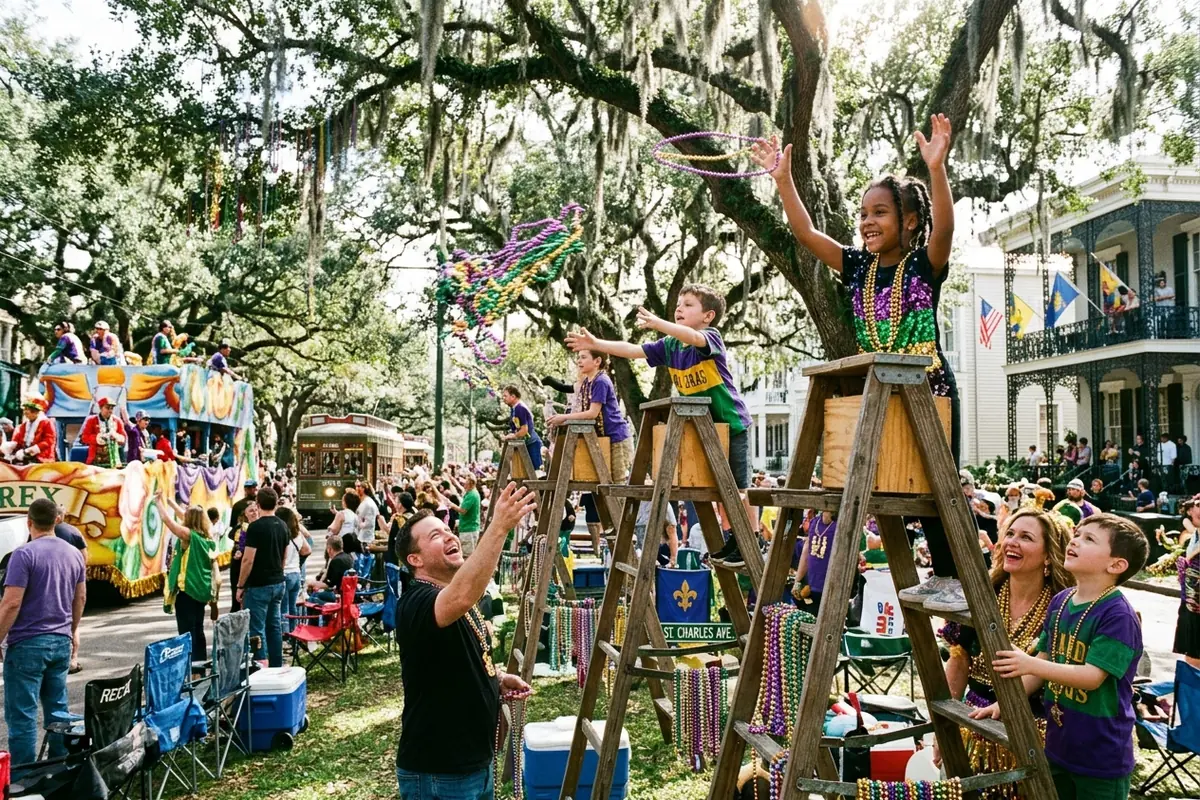
Choosing where to stand affects crowd intensity, restroom access, and how easily you can catch throws. Note that in New Orleans, the grassy median dividing major avenues is called the neutral ground, while the curb on the building side is called the sidewalk side.
| Viewing Area | Crowd Level | Family Suitability | Restroom & Food Access | Key Advantages & Disadvantages |
|---|---|---|---|---|
| Uptown St. Charles Avenue (Napoleon Ave to Jackson Ave) | Moderate to High (Local & family-oriented) | High — widely preferred by local families | Limited public restrooms; rely on nearby churches, schools, or restaurants charging small entry fees | Pros: Floats start here with full supplies of throws; shade from live oaks; space on the neutral ground. Cons: Fewer hotels nearby; portable toilets are banned on public property. |
| Garden District (Jackson Ave to Harmony Circle) | High | Moderate to High | Moderate — cafes and shops along Magazine St (a few blocks away) and St. Charles Ave | Pros: Scenic historic mansions; convenient streetcar access before route closures. Cons: Sidewalks fill quickly on major weekend nights. |
| Canal Street (Between Claiborne Ave and Tchoupitoulas St) | Very High (Dense, energetic) | Low to Moderate | High — hotels, fast-casual restaurants, and CBD businesses nearby | Pros: Easy walking distance from French Quarter and CBD hotels; wide viewing areas. Cons: Loudest, densest crowds; float riders have often thrown much of their stock by the end of the route. |
| Mid-City (Orleans Ave & N. Carrollton Ave) | High (Specifically on Endymion Saturday) | High | Moderate — neighborhood bars, grocery stores, and local eateries | Pros: Neighborhood block-party feel for Krewe of Endymion; less congested than Canal Street. Cons: Only hosts major float action on Endymion Saturday. |
| French Quarter (Bourbon St, Royal St, Jackson Square) | Extremely High (Especially Fat Tuesday) | Low (Especially evening/Bourbon St) | High — restaurants, bars, and public facilities near Jackson Square | Pros: Hub for costumed revelers, street musicians, and walking parades. Cons: No major float parades pass through the Quarter; heavy congestion on Mardi Gras Day. |
Practical Viewing Tips and Rules
- City Ladder & Setup Rules: According to New Orleans municipal ordinances, viewing ladders must be no taller than 6 feet, must be placed at least 6 feet back from the street curb, and cannot be chained together. Tarps, tents, and chairs cannot be placed on public neutral grounds or sidewalks more than 4 hours before a parade starts.
- Arrive Early: For prime curb spots along St. Charles Avenue or Canal Street during super-krewe nights (Endymion, Bacchus, Orpheus), plan to arrive 2 to 3 hours before the scheduled start time.
- Track Amenities: The City of New Orleans operates the Routewise tracker via ready.nola.gov, which displays live parade locations, first-aid tents, lost-child stations, and public restrooms.
Planning Travel Logistics?
Use FareWander tools to calculate flight times, luggage rules, and visa requirements.
Best Time to Visit New Orleans for Mardi Gras
Because Carnival spans five weeks in 2027, travelers can tailor their dates to match their tolerance for crowds and lodging costs:
- Early Carnival Season (January 6 – January 24, 2027): Ideal for travelers seeking a relaxed cultural visit. You can eat king cake, catch walking parades like Joan of Arc, Chewbacchus, and Krewe du Vieux, and explore museums and restaurants without heavy road closures or peak hotel minimums.
- First Major Parade Weekend (January 29 – January 31, 2027): The weekend prior to Mardi Gras week features Uptown daytime and night parades (Cleopatra, Oshun, Sparta, Pygmalion, Carrollton, King Arthur) plus the popular Krewe of Barkus dog parade in the French Quarter. Crowd levels are noticeably lighter than the final weekend, making this window strong for families and first-time visitors.
- Peak Parade Week (Wednesday, February 3 – Monday, February 8, 2027): Beginning with Druids and Alla on Wednesday and building through Muses (Thursday), Hermes (Friday), Endymion (Saturday), Bacchus (Sunday), and Orpheus (Lundi Gras), this stretch delivers non-stop major float parades. Expect high hotel occupancy and mandatory multi-night minimum stays.
- Mardi Gras Day (Tuesday, February 9, 2027): The peak celebration. Morning begins early with Zulu and Rex parades, while costumed walking clubs, brass bands, and Mardi Gras Indians fill neighborhood streets from Treme and Marigny to the French Quarter.
Major Mardi Gras Events and Attractions
While roadside parade viewing is completely free, several ticketed attractions and cultural traditions enrich a Mardi Gras itinerary:
Free Public Celebrations
- Roadside Parade Viewing: All street parades across Uptown, Mid-City, and downtown are free to watch from public sidewalks and neutral grounds.
- Lundi Gras Riverfront Celebrations: Historically held along the Mississippi Riverfront (Woldenberg Park / Spanish Plaza) on Monday, February 8, featuring live music and ceremonial arrivals of Rex and Zulu royalty (confirm 2027 stage lineup on NewOrleans.com).
- Mardi Gras Indians: On Mardi Gras morning (and Super Sunday later in spring), African American Carnival tribes parade through neighborhood streets (such as Claiborne Avenue and Bayou St. John) wearing intricate, hand-beaded feathered suits.
Ticketed Attractions & Experiences

- Mardi Gras World (1380 Port of New Orleans Place): A working warehouse where artists build floats for major krewes. Open 7 days a week from 9:00 AM to 5:30 PM (tours run every 30 minutes from 9:30 AM to 4:30 PM; closed on Mardi Gras Day, February 9, 2027). Admission includes a slice of king cake and a free downtown shuttle. Check current ticket pricing at mardigrasworld.com.
- The Presbytère (751 Chartres Street, Jackson Square): Part of the Louisiana State Museum system, housing the permanent Mardi Gras: It’s Carnival Time in Louisiana exhibition, featuring historic royal costumes, vintage throws, and Carnival artifacts. Verify holiday hours via the Louisiana State Museum before visiting.
- Parade Viewing Grandstands & Balcony Packages: Paid bleacher seating along St. Charles Avenue (such as near Gallier Hall/Lafayette Square) and private French Quarter balcony tickets are sold through official tour operators and municipal partners.

- King Cake Tastings: From January 6 through February 9, local bakeries (such as Manny Randazzo, Haydel’s, Dong Phuong, and Bywater Bakery) sell traditional brioche-style ring cakes topped with purple, green, and gold sugar. Finding the small plastic baby hidden inside traditionally obligates you to buy the next cake.
- Private Krewe Balls: Formal masquerade balls hosted by old-line and super krewes are strictly invitation-only or restricted to krewe members and their guests; they are not open to the general public.
Where to Stay in New Orleans During Mardi Gras
Hotel location dictates whether you can walk to parade routes or risk getting stranded behind police barricades. You can also review our comprehensive New Orleans destination guide for year-round neighborhood orientation.
| Neighborhood | Advantages | Disadvantages | Parade Access | Suitable Traveler |
|---|---|---|---|---|
| Central Business District (CBD) | Modern high-rise hotels; direct walking access to Canal St and St. Charles Ave routes; close to dining. | Heavy street closures during parade hours; elevated holiday rates. | Immediate access to the downtown stretch of Uptown and Mid-City routes. | First-time visitors and parade enthusiasts prioritizing convenience. |
| French Quarter | Historic architecture; walkable to restaurants, live jazz on Frenchmen St, and Fat Tuesday street action. | High evening noise levels (especially near Bourbon St); no big float parades pass inside the Quarter. | 5–15 minute walk to Canal Street parade routes. | Couples, groups, and travelers focused on nightlife and historic atmosphere. |
| Warehouse / Arts District | Quieter than the French Quarter; home to museums, galleries, and top restaurants; modern boutique hotels. | Slightly longer walk to Canal Street; limited streetcar access during parade freezes. | 10–15 minute walk to St. Charles Ave (Harmony Circle) or Canal Street. | Foodies, couples, and travelers wanting a calmer evening base. |
| Garden District / Lower Garden District | Leafy residential streets; historic bed-and-breakfasts and boutique inns; authentic neighborhood feel. | Very limited hotel room inventory; books up earliest for Mardi Gras week. | Steps away from the St. Charles Avenue parade route. | Families and repeat visitors seeking a classic Uptown viewing experience. |
| Uptown | Close to the starting lines of major parades; relaxed local vibe near Audubon Park and Magazine St. | Farther from the French Quarter (requires transit or rideshare outside parade windows). | Immediate access to the early stretch of St. Charles Avenue parades. | Families with children and travelers avoiding downtown crowds. |
| Mid-City | Local neighborhood restaurants; near City Park and Bayou St. John. | Limited traditional hotel options (mostly guesthouses/B&Bs); requires transit to reach Uptown routes. | Direct access to Krewe of Endymion on Saturday, Feb 6. | Repeat visitors and travelers attending Endymion weekend. |
Booking Rules and Policies to Check
- Book Early: For peak Mardi Gras week (February 4–9, 2027), book accommodation 6 to 10 months in advance.
- Minimum-Stay Requirements: Most downtown and French Quarter properties enforce a 3- to 5-night minimum stay over Mardi Gras weekend.
- Strict Cancellation & Prepayment Terms: Many hotels convert peak Carnival bookings to non-refundable deposits 30 to 60 days before arrival. Read cancellation deadlines carefully before confirming.
- Taxes and Resort Fees: New Orleans hotel bills carry combined state, city, and occupancy taxes (typically exceeding 16% plus flat per-night occupancy fees), and several downtown properties add daily destination/amenity fees.
Which Airport Should You Fly Into?
Travelers flying to New Orleans arrive at Louis Armstrong New Orleans International Airport (MSY), located in Kenner, Louisiana, approximately 11 to 15 miles west of downtown New Orleans and the French Quarter.
- Airline Connectivity: MSY is served by all major US carriers (American, Delta, Southwest, United, JetBlue, Spirit, Frontier, Alaska) with nonstop flights from major domestic hubs, alongside select international connections (such as London, Toronto, and Central America).
- Comparing Total Journey Costs: Because flights into MSY during the first week of February experience high holiday demand, compare flying into MSY on Wednesday, February 3 or Thursday, February 4 rather than Friday afternoon. Some travelers also compare regional alternatives like Baton Rouge Metropolitan Airport (BTR, ~70 miles northwest) or Gulfport-Biloxi International Airport (GPT, ~75 miles east), though choosing an alternate airport requires factoring in rental car expenses, fuel, and highway congestion.
How to Get From MSY Airport to New Orleans
Ground transportation departs from the MSY terminal complex. For an in-depth terminal overview, check our Louis Armstrong New Orleans Airport (MSY) transit guide. Always verify current fares and schedules directly on flymsy.com and norta.com prior to landing.
| Transfer Option | Estimated One-Way Cost (Subject to Change) | Typical Duration (Traffic Dependent) | Luggage & Convenience | Where to Board & Verify |
|---|---|---|---|---|
| Licensed Taxicab | $36 flat rate for 1–2 passengers to the CBD/French Quarter (up to Elysian Fields); $15 per passenger for 3 or more riders | 25–40 minutes | High convenience; flat rate eliminates meter anxiety during parade traffic. | Official taxi stand outside Level 1 Baggage Claim. Verify at flymsy.com. |
| Rideshare (Uber / Lyft) | $36 minimum mandated by city ordinance for MSY–Orleans Parish trips; typically $45–$65+ depending on demand | 25–45 minutes | Door-to-door service, though surge pricing applies during peak arrivals and parade road closures. | Designated Rideshare pickup zone outside Level 1. |
| RTA Airport Express (Route 202) | $1.50 single-ride fare (or $3.00 Jazzy Pass day pass) | 40–55 minutes | Budget-friendly; operates hourly between MSY and downtown (Poydras St / Canal St / Convention Center). Limited luggage racks. | Ground Level Zone B5 / Airport bus median. Check schedules on norta.com. |
| Airport Shuttle (Commercial) | ~$30 one-way / ~$56 round-trip per person (verify current operator status) | 40–60 minutes | Shared van service to major downtown hotels; slower due to multiple drop-offs. | Check active shuttle operators via neworleans.com/plan/transportation. |
| Rental Car | Variable daily rates + $40–$65+/night hotel valet parking | 25–40 minutes | Not recommended if staying downtown/French Quarter due to parade street closures and parking costs. | Consolidated Rental Car Facility via MSY shuttle. |
Practical Tip: For one or two travelers heading to the French Quarter or CBD, the flat-rate $36 taxi is frequently cheaper and faster than rideshare apps during busy arrival windows.
Getting Around New Orleans During Mardi Gras
Navigating New Orleans during Carnival requires adapting to the "parade box"—the zone enclosed by active parade routes where vehicular traffic cannot cross.
- Walking Is Primary: Within the French Quarter, CBD, Warehouse District, and Garden District, walking is the most reliable way to move around. Once parades begin rolling, police erect barricades that block cars—and often pedestrians—from crossing the street while floats are in motion.
- RTA Streetcars and Buses: Operated by the New Orleans Regional Transit Authority (norta.com), streetcars (St. Charles, Canal Street, Riverfront, and Rampart/St. Claude lines) are iconic, but streetcar service suspends or detours along parade routes hours before parades start. Download the RTA Le Pass app for mobile tickets ($1.25 single ride; $3.00 1-day pass) and real-time Mardi Gras detour alerts.
- Rideshares and Taxis: Drivers cannot enter closed parade corridors. If you order a rideshare during parade hours, set your pickup or drop-off pin several blocks outside the route perimeter.
- Driving and Parking: Avoid driving near St. Charles Avenue, Canal Street, or the French Quarter during parade days. Vehicles parked along posted parade routes within two hours of a parade are ticketed and towed immediately at the owner's expense.
Mardi Gras Travel Budget
Because live 2027 airfare and hotel rates fluctuate continuously, use the planning framework below to estimate expenses. Assumptions: 4-night stay (Friday, Feb 5 – Tuesday, Feb 9, 2027) for two adults sharing one standard hotel room, expressed in USD.
| Expense Category | Budget-Conscious Framework | Mid-Range Framework | Higher-Spend Framework | Planning Notes & Assumptions |
|---|---|---|---|---|
| Round-Trip Flights | Book early economy fares; pack carry-on only to avoid bag fees. | Main cabin domestic fares with seat selection. | Peak nonstop flights or premium cabin. | Varies widely by departure city; compare flying Wed/Thu vs. Friday. |
| Accommodation (4 Nights, Per Room) | Stay outside downtown (e.g., Metairie or Mid-City) and transit in. | Mid-tier CBD or Warehouse District hotel booked 8+ months early. | Historic French Quarter boutique hotel or St. Charles Ave property. | Peak Carnival rates and ~16%+ lodging taxes apply; split between 2 guests. |
| Airport Transfers | RTA 202 Bus ($3.00 round-trip per person). | Flat-rate taxi ($72 round-trip total for 2 passengers + tip). | Private car service or surge rideshare. | Taxi flat rate covers 1–2 passengers to CBD/Quarter. |
| Local Transit | RTA 3-Day or 7-Day Jazzy Pass + walking. | Walking + occasional off-peak rideshares ($60–$100 total). | Frequent rideshares outside closure zones ($150+). | Streetcars suspend during active parades; walking saves money. |
| Food & Drinks | Po'boys, street vendors, grocery snacks, casual cafes. | Mix of casual Creole lunches and mid-range sit-down dinners. | Fine dining reservations (e.g., Commander's Palace, Galatoire's). | Budget extra for king cake, beignets, and parade-day beverages. |
| Attractions & Tickets | Free street parades + self-guided walking tours. | Mardi Gras World + 1–2 museums (Presbytère, WWII Museum). | Paid grandstand seats or French Quarter balcony passes. | Roadside parade viewing is 100% free. |
What to Pack for Mardi Gras
February weather in southern Louisiana is notoriously unpredictable—temperatures can swing from a crisp 40°F morning to a sunny 70°F afternoon, or turn damp and breezy off the Mississippi River. Check the 7-day forecast before packing:
- Broken-In, Closed-Toe Walking Shoes: Streets accumulate discarded beads, plastic cups, and uneven pavement; leave open-toed sandals and new shoes at home.
- Versatile Layers: Pack a breathable base layer, a lightweight sweater or sweatshirt, and a packable wind- and rain-resistant jacket.
- Compact Crossbody Bag or Clear Daypack: Easy to wear in dense crowds and compliant with venue bag policies; keep valuables zipped in front of you.
- Portable Power Bank & Charging Cable: Taking photos, checking parade trackers, and coordinating meetups drains phone batteries rapidly.
- Reusable Water Bottle & Tissues: Hydration is essential during long daytime parades, and pocket tissues or hand sanitizer come in handy when public restrooms run low on supplies.
- Purple, Green, and Gold Attire: Festive wigs, sequins, and costumes are welcomed throughout Carnival—especially on Lundi Gras and Mardi Gras Day.
Mardi Gras Travel Tips for Families and First-Time Visitors
Mardi Gras has a reputation for adult-oriented nightlife on Bourbon Street, yet daytime Carnival in New Orleans is deeply family-oriented:
- Pick Family-Friendly Zones: Watch parades Uptown along St. Charles Avenue (between Napoleon Avenue and Jackson Avenue) rather than Canal Street or the French Quarter. Local families gather here with picnic blankets and viewing ladders.
- Set a Physical Meeting Point: Cell networks frequently slow down during super-krewe parades and Fat Tuesday due to crowd density. Agree on a clear landmark (a specific street corner or hotel lobby) in case your group separates.
- Plan Restroom Breaks Ahead: Portable toilets are restricted on public parade routes. Many Uptown churches, schools, and local restaurants sell wristband access to their restrooms for a small fee—secure access before the parade arrives.
- Watch for Moving Floats and Marching Bands: Never dart into the street to pick up dropped beads while floats or tractors are moving. Wait until a float passes completely before reaching near the curb.
- Secure Valuables: Keep wallets, phones, and IDs in zippered front pockets or a secure crossbody bag rather than back pockets.
Suggested 3-Day Mardi Gras Itinerary
Note: This flexible sample itinerary assumes a Sunday–Tuesday peak visit (February 7–9, 2027). Always confirm final 2027 parade start times via NewOrleans.com before finalizing daily plans.
Day 1: Sunday, February 7, 2027 (Arrival & Bacchus Night)
- Morning: Arrive at MSY Airport, take a flat-rate taxi to your CBD or Warehouse District hotel, and drop off luggage.
- Afternoon: Walk to Café Du Monde for beignets and café au lait, stroll through Jackson Square, and explore the Mardi Gras exhibit at The Presbytère. Pick up a slice of king cake for an afternoon snack.
- Evening: Walk over to St. Charles Avenue or Canal Street by late afternoon to claim a viewing spot for the Krewe of Bacchus super-krewe parade.
Day 2: Monday, February 8, 2027 (Lundi Gras & Orpheus)
- Morning: Take the free shuttle from downtown to Mardi Gras World to tour the float-building studios up close (closed tomorrow on Mardi Gras Day).
- Afternoon: Head to the Mississippi Riverfront (Woldenberg Park) for traditional Lundi Gras live music and the ceremonial arrivals of the Kings of Carnival. Grab an early dinner in the Warehouse District before street closures tighten.
- Evening: Watch the Krewe of Proteus followed by the Krewe of Orpheus super krewe rolling down St. Charles Avenue to Canal Street.
Day 3: Tuesday, February 9, 2027 (Mardi Gras Day)
- Morning: Start early (around 8:00 AM) along Canal Street or Basin Street to catch the Krewe of Zulu and try to catch a coveted hand-painted coconut, followed by the Krewe of Rex along St. Charles Avenue.
- Afternoon: Walk into the French Quarter or Marigny (away from the densest Bourbon Street blocks—Royal Street and Frenchmen Street offer lively costume-watching and street jazz). Alternatively, for a quieter pace, head to Bayou St. John or Treme to spot Mardi Gras Indians in their hand-sewn suits.
- Evening: Enjoy a relaxed dinner outside the busiest Quarter corridors, or witness the traditional midnight clearing of Bourbon Street by mounted New Orleans police signaling the start of Ash Wednesday.
Common Mardi Gras Travel Mistakes to Avoid
- Booking Accommodation Too Late: Waiting until December or January to book a February stay limits options to distant suburbs or steep last-minute rates.
- Expecting Big Float Parades in the French Quarter: Large tractor-pulled floats cannot fit down narrow French Quarter streets; walk to Canal Street or St. Charles Avenue to see super krewes.
- Renting a Car for a Downtown Stay: Daily hotel parking fees plus citywide parade road closures make a rental car an expensive liability.
- Assuming Every Parade Follows the Same Route: Endymion rolls through Mid-City, Zulu starts in Central City, and Rex rolls Uptown—always check individual route maps.
- Underestimating Walking Distances: With streetcars suspended during parades and rideshares restricted to outer perimeters, expect to walk 5 to 10 miles per day.
- Ignoring Cancellation Policies: Peak Carnival hotel reservations frequently enforce strict non-refundable deadlines.
- Forgetting Restroom Logistics: Portable toilets are not placed along public sidewalks; plan bathroom stops at cafes, hotels, or paid church/school fundraisers before parades start.
Frequently Asked Questions
Mardi Gras Day (Fat Tuesday) is Tuesday, February 9, 2027.
Plan Your 2027 New Orleans Mardi Gras Trip
Celebrating Mardi Gras in New Orleans rewards travelers who plan early and stay flexible. Choose your dates based on whether you want the relaxed pace of late January or the non-stop energy of Fat Tuesday week, lock in refundable lodging near your preferred parade route, and rely on walking and flat-rate airport transfers rather than a rental car. As January 2027 approaches, check NewOrleans.com and the RTA Le Pass app for final City Council parade times and transit detours.
Ready to start comparing flight routes and dates into Louis Armstrong New Orleans International Airport (MSY)? Explore flexible airline options and plan your itinerary with Farewander's flight comparison tools.