Every winter, Venice transforms into a living stage of silk gowns, hand-painted porcelain masks, water parades, and centuries-old theatre. Known locally as Carnevale di Venezia, Venice Carnival, Italy is one of Europe's most celebrated cultural festivals, drawing travellers from the UK, North America, India, and across Europe to the Venetian Lagoon.
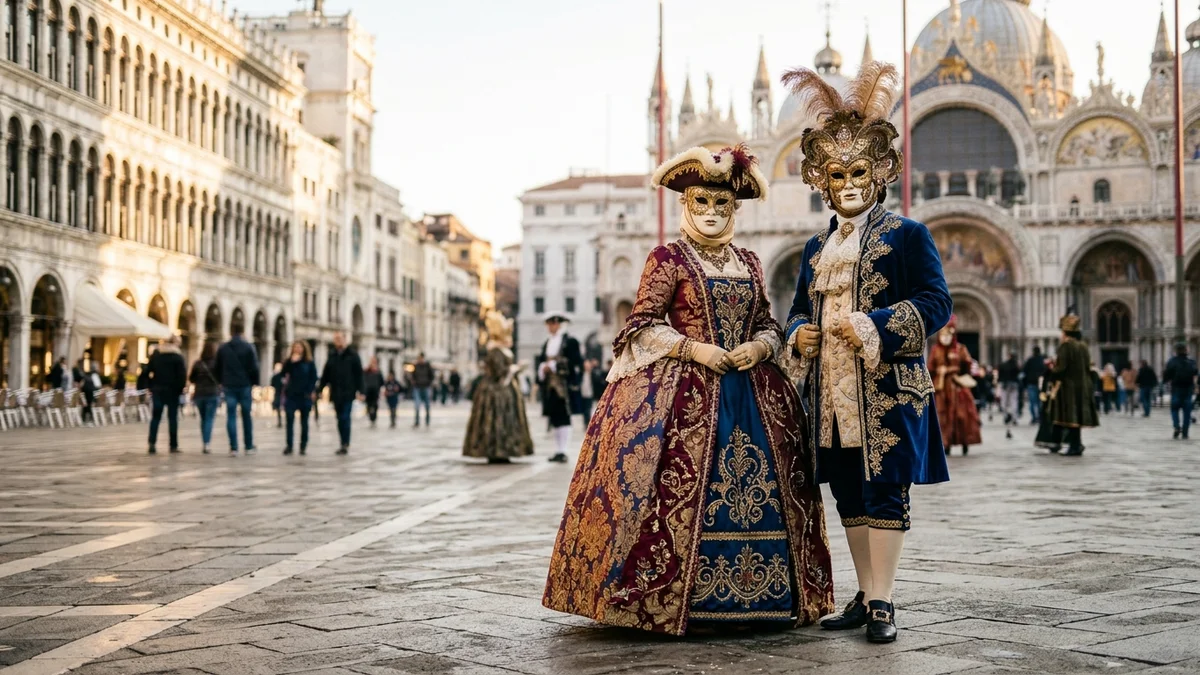
Unlike street festivals built around modern sound systems, Venice Carnival immerses visitors in eighteenth-century elegance. Costumed performers pose beside Gothic palaces, traditional wooden boats glide along the Grand Canal, and historic squares host open-air acrobatics and music.
Because Venice is a pedestrian-only island city with narrow alleyways, seasonal winter tides, and high festival demand, careful planning is essential. This FareWander travel guide covers everything you need to plan your visit, including calendar dates, free versus ticketed events, mask traditions, airport and rail transfers, accommodation areas, realistic EUR budgets, and practical itineraries. (Note: While Shrove Tuesday falls on 9 February 2027, exact official festival dates, the annual theme, and daily event schedules are awaiting official publication by the organisers.)
Quick Venice Carnival Travel Information
| Detail | Key Information |
|---|---|
| Destination | Venice (Venezia), Veneto Region, Italy |
| 2027 Pre-Lenten Calendar Anchor | Shrove Tuesday (Martedì Grasso) falls on Tuesday, 9 February 2027 (Ash Wednesday: 10 February 2027) |
| Official 2027 Festival Dates & Theme | Awaiting official confirmation on carnevale.venezia.it (historically runs for ~2–3 weeks ending on Shrove Tuesday) |
| Main Celebration Hubs | St. Mark's Square (Piazza San Marco), Grand Canal, Rialto area, Cannaregio, Campo San Polo, and Venice Arsenale |
| Admission Model | Public street parades, stage shows, and water processions are free; gala masquerade balls, dinners, and select theatre shows require paid tickets |
| Primary Airport & Rail Hub | Venice Marco Polo Airport (VCE) & Venezia Santa Lucia Railway Station |
| Official Resources | Carnevale di Venezia • Venezia Unica • Comune di Venezia |
What Is Venice Carnival?
Venice Carnival (Carnevale di Venezia) is an annual pre-Lenten festival held across Venice, Italy, culminating on Shrove Tuesday (Martedì Grasso), the day before Ash Wednesday. The festival blends civic pageantry, theatrical performances, historic costume traditions, and canal parades across the city's historic centre and lagoon islands.
International visitors travel to Venice during Carnival for several distinct experiences:
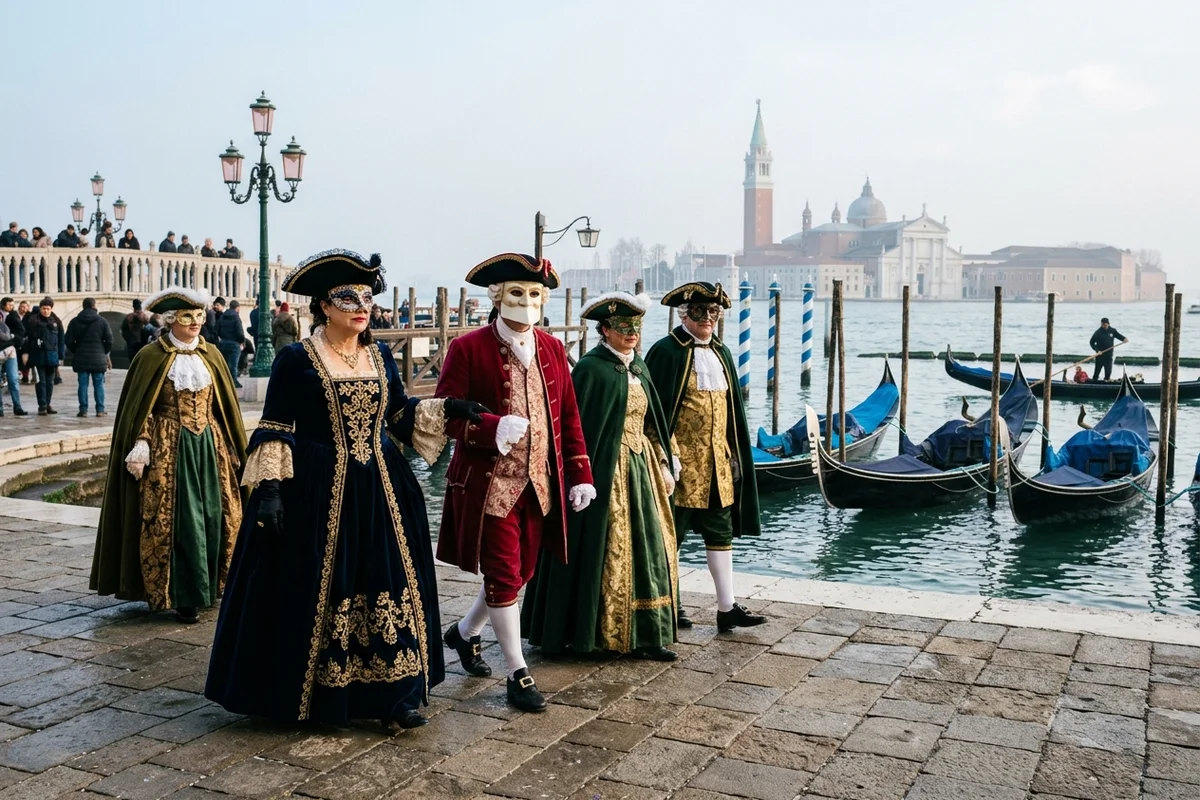
- Elaborate Masks and Period Costumes: Artisans, enthusiasts, and visitors dress in historical Venetian attire—velvet cloaks, brocade gowns, tricorne hats, and hand-crafted masks—turning public squares into open-air galleries.
- Free Public Street Celebrations: The City of Venice stages open-air concerts, Commedia dell'Arte street theatre, acrobatic shows, and water processions at no charge.
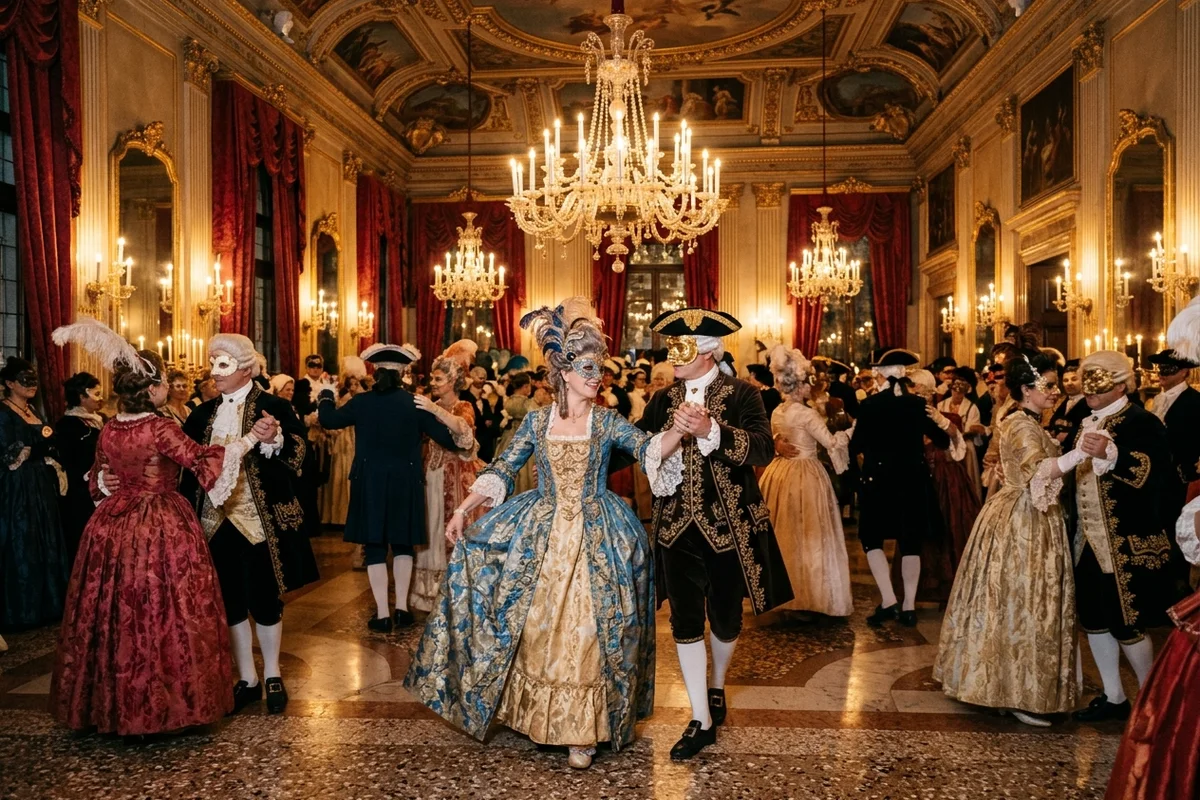
- Private Masquerade Balls: Historic palaces along the Grand Canal host formal, candlelit gala dinners and masked balls featuring classical music, opera, and period dancing.
- Living Cultural Heritage: Rather than being confined to a single stadium or fairground, celebrations unfold across centuries-old campi (squares), bridges, and waterways.
Explore Popular Flight Corridors
Find direct vs connecting routes, airline schedules, and airport transfer tips.
History and Origins of Venice Carnival
Historical records trace public Carnival celebrations in the Republic of Venice back to the Middle Ages, with early documented references appearing in the 11th and 12th centuries and an official Senate decree declaring the day before Lent a public holiday in 1296.
During the Renaissance and the 18th century—the golden age of the Venetian Carnival—the festival served an important social function within the rigidly stratified Venetian Republic:
- Social Anonymity: Wearing a mask and cloak temporarily blurred distinctions between nobility, merchants, and ordinary citizens, allowing people to mingle freely in theatres, coffee houses, and public squares.
- Regulation and Restrictions: Because anonymity sometimes encouraged gambling or public disorder, the Venetian authorities periodically issued decrees regulating when masks could be worn and banning concealed weapons.
- Discontinuation (1797): Following the fall of the Venetian Republic to Napoleon's forces in 1797 and subsequent Austrian rule, public Carnival celebrations were largely suppressed and banned over security concerns, persisting only in small private gatherings for nearly two centuries.
- Modern Revival (1979): In 1979, the Italian government, the City of Venice, and local cultural institutions—including Teatro La Fenice and the Venice Biennale—officially revived Venice Carnival to celebrate Venetian history, theatre, and artisanal mask-making.
Today's festival draws directly on those 18th-century theatrical traditions while incorporating modern international street theatre and contemporary staging.
When Is Venice Carnival Celebrated?
Venice Carnival does not have fixed calendar dates because its schedule follows the Christian liturgical calendar leading up to Easter. Carnival always concludes on Shrove Tuesday (Martedì Grasso), which falls 47 days before Easter Sunday, immediately followed by Ash Wednesday and the start of Lent.
2027 Calendar & Official Confirmation Status
- Shrove Tuesday (Martedì Grasso) 2027: Tuesday, 9 February 2027 (confirmed by the liturgical calendar, as Easter Sunday falls on 28 March 2027).
- Ash Wednesday 2027: Wednesday, 10 February 2027.
- Official 2027 Opening Date, Closing Programme & Theme: Awaiting official confirmation from the City of Venice on carnevale.venezia.it. Historically, the main festival runs for approximately two to three weeks from late January or early February through Shrove Tuesday.
Typical Annual Structure & Planning Windows
- Opening Weekend: Traditionally launches with water parades along the Grand Canal or Cannaregio Canal and street performances across major squares.
- Middle Weekdays: Offer noticeably calmer squares for photography, mask workshops, and museum visits, alongside evening theatre performances.
- Final Weekend Through Shrove Tuesday: Represents the peak of the festival, featuring major costume competitions, crowded parades in St. Mark's Square, and closing ceremonies.
- When to Book: International flights and central Venice hotels should ideally be booked 6 to 9 months in advance for peak weekend dates, while official event tickets should be reserved as soon as the annual programme goes live on carnevale.venezia.it.
Where Does Venice Carnival Take Place?
Celebrations take place across multiple districts (sestieri) of Venice's historic centre and nearby lagoon islands. Not every event occurs at every venue, so checking the daily programme helps you plan your walking route:
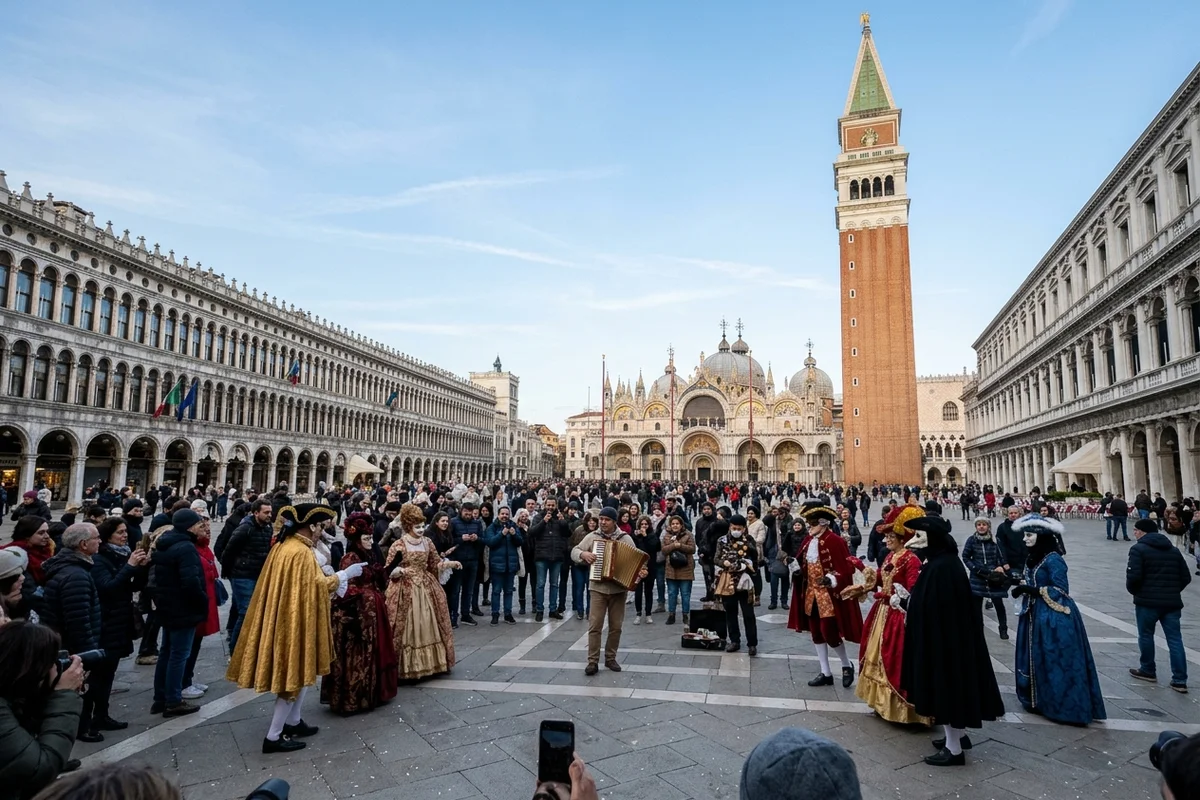
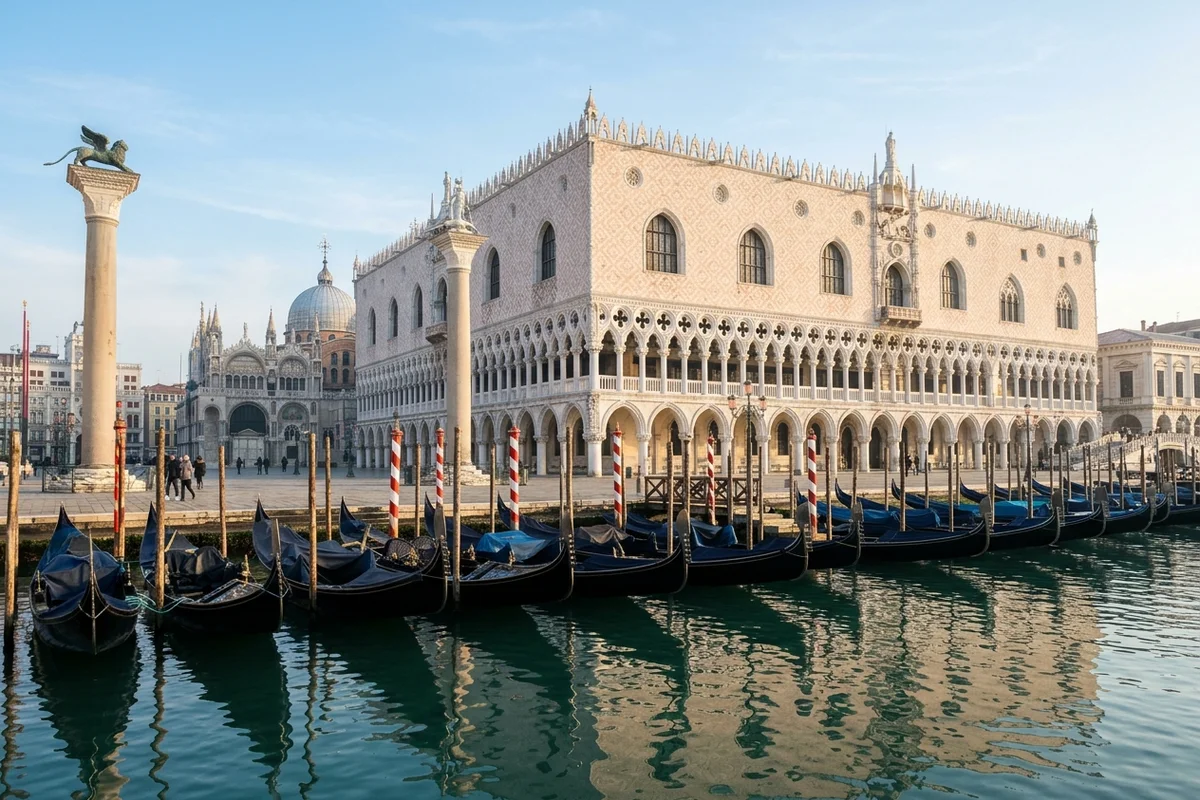
- St. Mark's Square (Piazza San Marco): The ceremonial heart of Carnival, hosting the main outdoor stage, daily costume parades, the Best Mask contest, and iconic photography backdrops beside St. Mark's Basilica and the Doge's Palace surroundings.
- Grand Canal & Cannaregio Canal: Primary waterways for traditional decorated boat parades and floating theatrical spectacles.
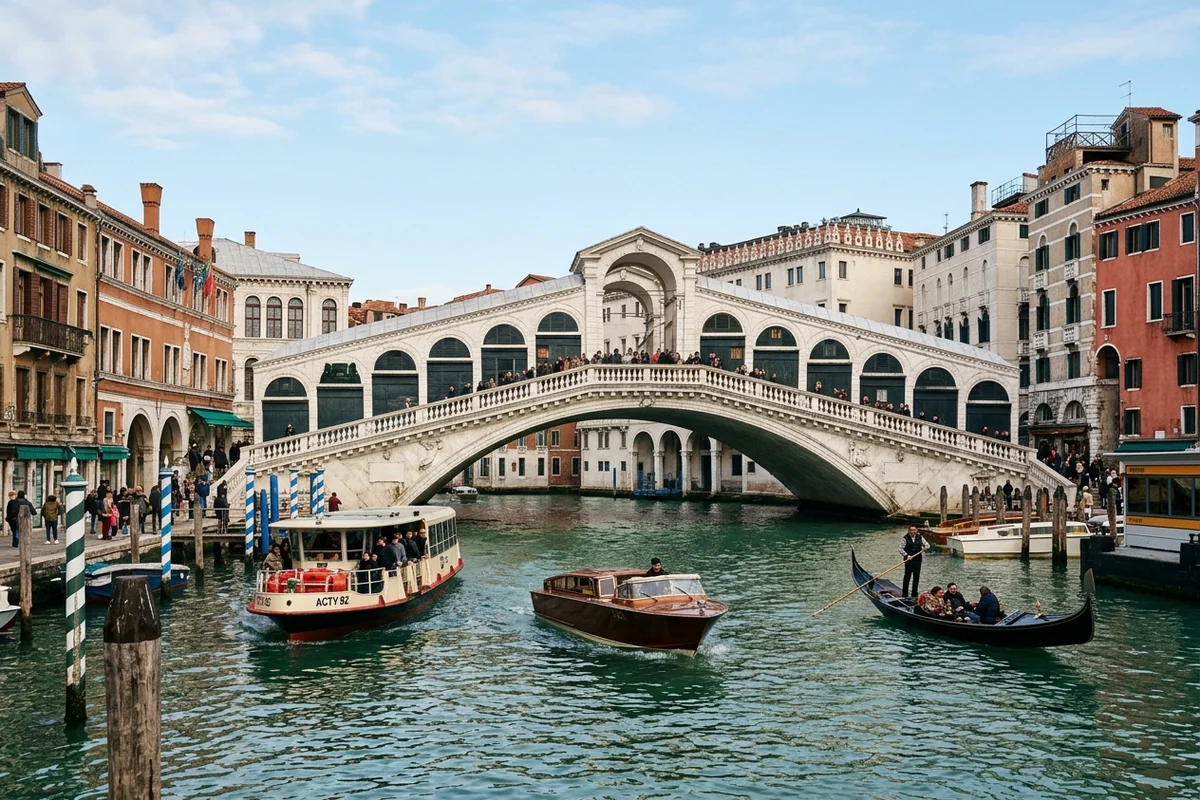
- Rialto Bridge Area: A lively commercial crossroads connecting San Polo and San Marco, offering elevated views of canal traffic and nearby cicchetti bars.
- Campo San Polo: One of Venice's largest public squares, frequently hosting family-friendly entertainment, street performers, and seasonal stalls.
- Venice Arsenale (Arsenale di Venezia): In recent editions, the historic shipyard complex has hosted evening water shows, immersive light displays, and ticketed late-night events.
- Campi Across Historic Venice & Lagoon Islands: Smaller squares such as Campo Santa Margherita, Campo Santo Stefano, and islands including Murano, Burano, and Lido often host neighbourhood performances and children's shows.
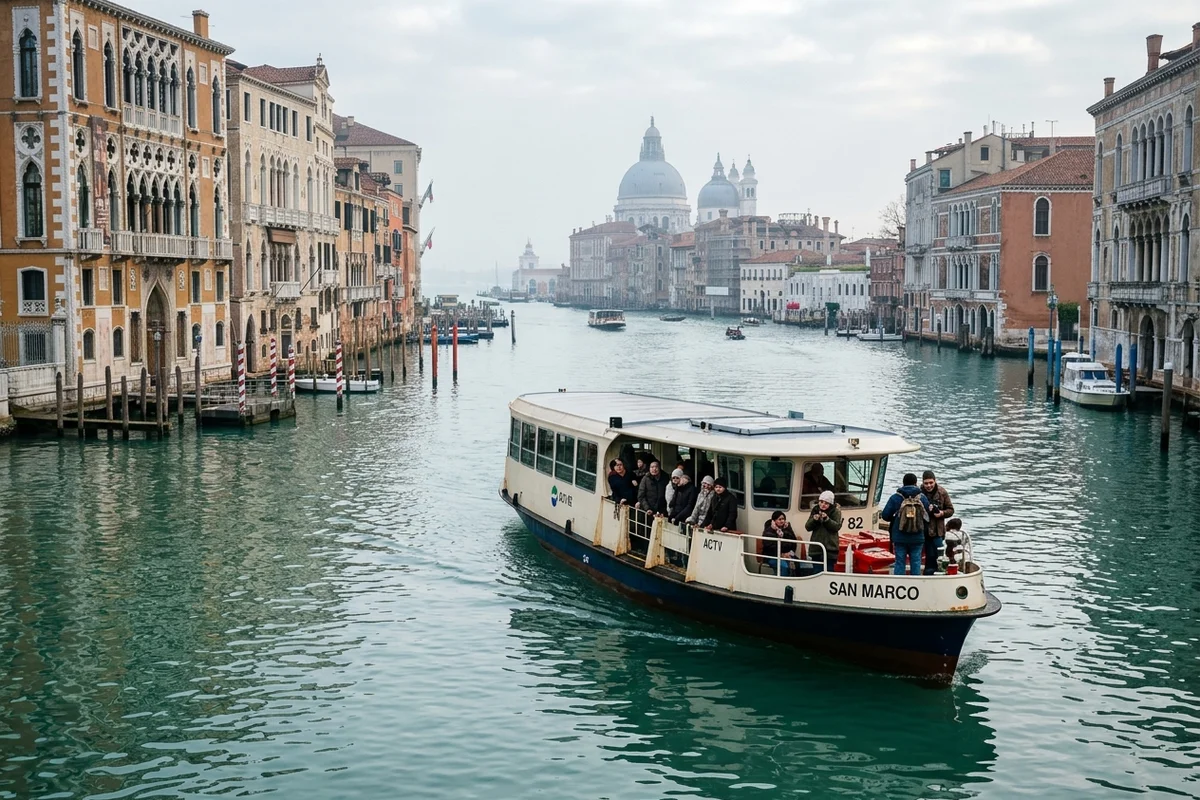
Visitors move between these locations primarily on foot across Venice's network of alleys (calli) and footbridges, or via ACTV vaporetto (water bus) routes along the Grand Canal and lagoon perimeter.
Planning Travel Logistics?
Use FareWander tools to calculate flight times, luggage rules, and visa requirements.
Main Events and Celebrations at Venice Carnival
While the exact 2027 timetable is awaiting official release on carnevale.venezia.it, Venice Carnival traditionally features the following signature events. Always confirm exact dates, venues, and entry rules on the official calendar before travelling.
| Event / Celebration | What Happens | Typical Location | Booking & Admission |
|---|---|---|---|
| Opening Water Parade (Festa Veneziana) | Illuminated boats, floating stages, and costumed rowers parade through the canals to open Carnival. | Grand Canal / Cannaregio Canal | Free public viewing along canal banks (arrive early for bridgeside spots); no booking required. |
| Traditional Costume Parades & Best Mask Contest | Participants in elaborate handmade historical costumes walk the main stage to compete for Best Mask titles. | St. Mark's Square (Piazza San Marco) | Free to watch from the square; competing requires advance official registration on carnevale.venezia.it. |
| Flight of the Angel (Volo dell'Angelo) | A traditional ceremony in which a performer descends on a safety wire from St. Mark's Campanile to the square below. (Note: Not staged in every recent edition—verify whether scheduled for 2027.) | St. Mark's Square (Piazza San Marco) | Free public viewing when scheduled; heavy crowds require early arrival. |
| Street Theatre & Commedia dell'Arte | Open-air acrobatics, jugglers, musicians, and masked theatrical troupes perform throughout the afternoon. | St. Mark's Square, Campo San Polo, Campo Santa Margherita | Free public performances; no advance booking needed. |
| Arsenale Water Show | Evening multimedia performance combining water fountains, lights, music, and dance on the water. (Subject to 2027 confirmation.) | Venice Arsenale (Darsena Grande) | Ticketed; advance online booking required via carnevale.venezia.it. |
| Theatre, Opera & Classical Concerts | Seasonal operas, baroque concerts, and masquerade performances inside historic theatres. | Teatro La Fenice, Teatro Goldoni, historic churches | Ticketed; advance booking strongly recommended through official venue box offices. |
| Official & Private Masquerade Balls | Formal candlelit gala dinners, live baroque orchestras, historical dances, and costume showcases inside noble palaces. | Grand Canal palaces (e.g., Palazzo Pisani Moretta, Ca' Vendramin Calergi) | Ticketed (strict period dress code enforced); advance booking essential. |
| Closing Celebrations (Martedì Grasso) | Awarding of the Best Mask grand prize, final stage shows, and closing ceremonies on Shrove Tuesday. | St. Mark's Square & Venice Arsenale | St. Mark's Square events are free; evening closing galas are ticketed. |
Best Things to Do During Venice Carnival
- Watch Traditional Costume Parades (Free): Gather in St. Mark's Square during late morning or afternoon to admire international costume designers and local Venetian enthusiasts presenting historical garments on the main stage.
- Explore St. Mark's Square at Sunrise (Free): Arrive around dawn before day-trippers reach the island to see costumed participants posing under the arches of the Procuratie in soft morning light.
- Photograph Venetian Masks (Free): Wander around the Doge's Palace waterfront (Riva degli Schiavoni) and quiet squares where costumed participants happily pose for polite photographers.
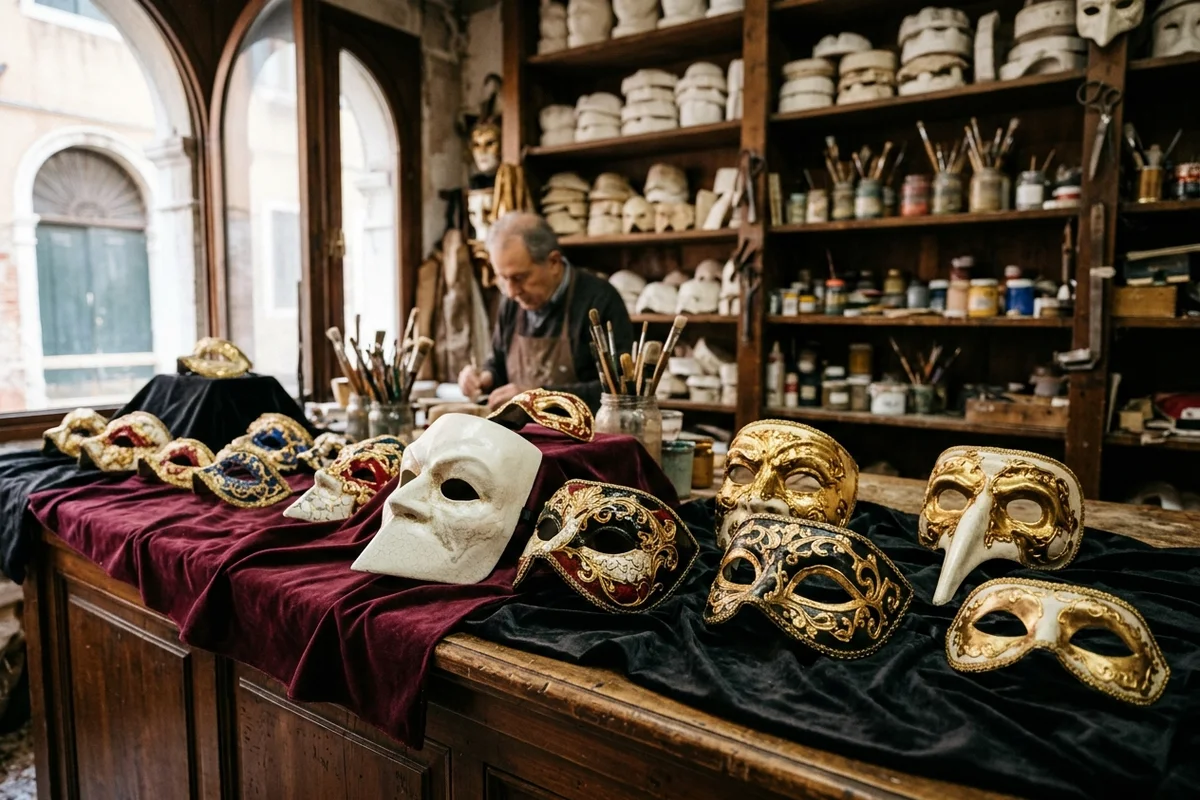
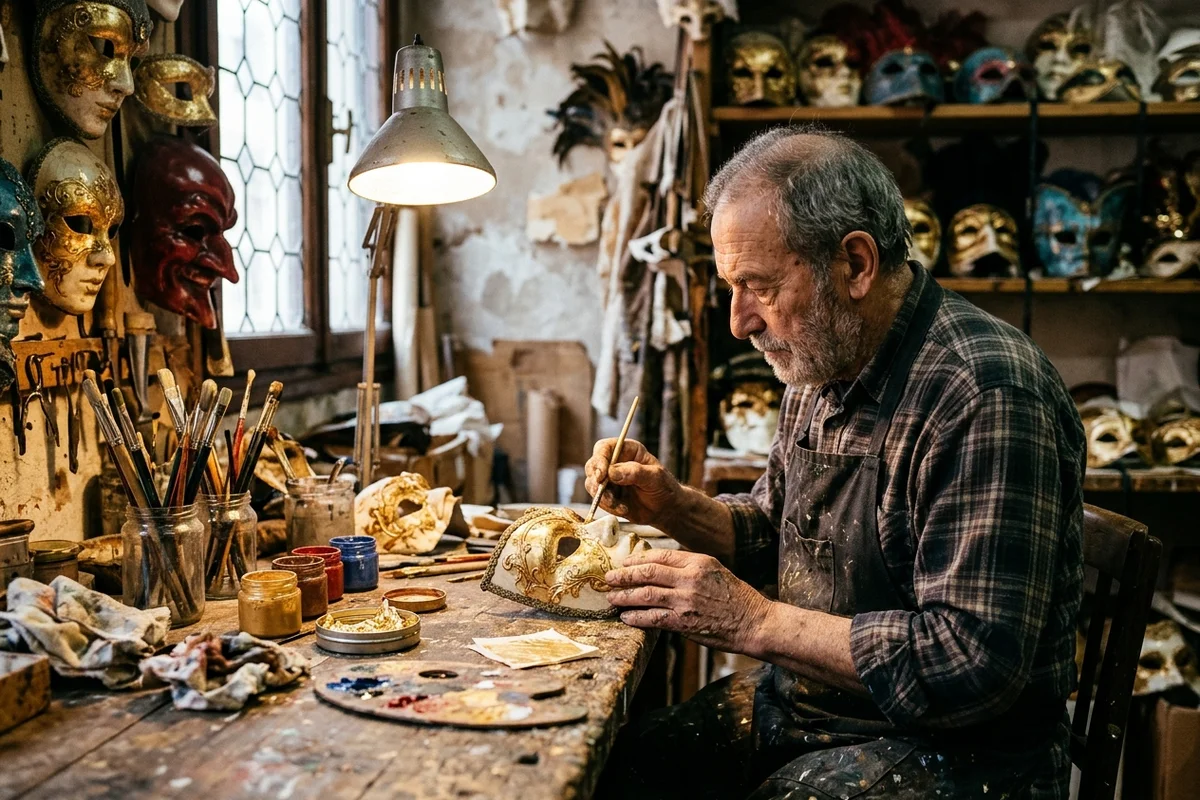
- Visit Traditional Mask-Making Workshops (Paid for Workshops/Purchases): Step inside artisan botteghe (workshops) to watch craftsmen shape papier-mâché masks or book a hands-on mask-painting session.
- Explore Venice's Historic Backstreets (Free): Leave the crowded San Marco–Rialto corridor behind and stroll through Dorsoduro, Castello, and Cannaregio to discover quiet canals and neighbourhood celebrations.
- Attend Official Carnival Street Performances (Free): Follow the daily schedule on carnevale.venezia.it to catch free Commedia dell'Arte plays and acrobatic shows across city squares.
- Experience a Venetian Masquerade Ball (Paid / High Budget): For a once-in-a-lifetime evening, book an official dinner dance or private palace masquerade ball complete with period costume rental.
- Take a Grand Canal Vaporetto Ride (Paid Transport Ticket): Board ACTV Line 1 from Piazzale Roma or Ferrovia to St. Mark's Square for panoramic waterfront views of Gothic and Renaissance palaces.
- Explore Rialto Market and Local Artisan Shops (Free to Browse): Visit the historic Rialto produce and fish market in the morning, then browse nearby glasswork, marbled paper, and textile studios.
- Enjoy Seasonal Venetian Food and Pastries (Paid): Sample traditional fritole (Carnival doughnuts) from local pasticcerie and share cicchetti (Venetian small plates) at traditional wine bars (bàcari).
Venice Carnival Masks and Costumes
Masks are the visual signature of Venice Carnival. Historically crafted from lightweight papier-mâché (carta pesta), leather, or porcelain and decorated with gold leaf, gesso, and hand-painted motifs, traditional Venetian masks originate largely from 18th-century social customs and Commedia dell'Arte theatre:
- Bauta: The classic Venetian mask covering the entire face with a sharply angled, square chin line and no mouth opening, allowing the wearer to eat, drink, and speak easily while disguising their voice. Traditionally paired with a black velvet cloak (tabarro) and a three-cornered tricorno hat.
- Moretta: An oval, strapless black velvet mask historically worn by women, held in place by biting gently on a small internal button—meaning the wearer remained silent while wearing it.
- Colombina: A half-mask covering only the eyes, nose, and upper cheeks, often richly decorated with silver, gold, crystals, and feathers, named after a stock character in Commedia dell'Arte.
- Volto (Larva): A stark, expressionless full-face white mask traditionally worn with a tricorne hat and cloak, creating a ghostly, enigmatic silhouette.
Authentic Handmade Masks vs. Mass-Produced Souvenirs
- Authentic Artisan Masks: Made in Venice using traditional carta pesta moulds, natural glues, and hand-applied paint or metal leaf. They are lightweight, breathable, comfortable against the skin, and often stamped or certified by the artisan's studio.
- Mass-Produced Imports: Sold cheaply at street kiosks around major tourist routes, typically moulded from rigid plastic or resin with synthetic trimmings. These are noticeably heavier and less comfortable for all-day wear.
Costume Rentals and Photography Etiquette
Visitors do not need to pack bulky period gowns from home. Several historic Venetian ateliers offer multi-day costume and mask rentals (often bundled with accessories and fitting appointments—book months ahead for peak weekend dates). When photographing costumed participants in public squares, always make eye contact or ask politely first, and avoid blocking narrow bridges or walkways.
How to Attend Venice Carnival
Participating in Venice Carnival is straightforward once you understand the difference between open public spaces and private events:
- No General Entry Ticket Needed for the Festival: You can walk into Venice, watch street performances, view water parades, and enjoy the atmosphere in St. Mark's Square without buying a Carnival pass.
- Are Masks or Costumes Compulsory? No. Most visitors wear regular warm winter clothing, though wearing a simple half-mask or velvet cloak is welcome and adds to the fun. Formal period costumes are mandatory only at private masquerade balls and gala dinners that specify a dress code.
- Checking Daily Schedules: Weather and lagoon tides can occasionally prompt schedule adjustments. Check the official daily programme on carnevale.venezia.it each morning before heading out.
- Crowd Control Procedures: During peak weekend afternoons, local police (Polizia Locale) may temporarily introduce one-way pedestrian lanes around St. Mark's Square and the Rialto Bridge to prevent bottlenecks. Follow directional signage and stewards' instructions.
Venice Carnival Tickets and Booking Guide
Free vs. Ticketed Experiences
- Free Activities: Street parades, main-stage costume showcases in St. Mark's Square, open-air theatre in public campi, and canal-side viewing of water parades are free.
- Ticketed Activities: Official evening water shows (such as the Arsenale Water Show when scheduled), Carnival dinner shows, classical concerts, theatre productions, and private palace masquerade balls require advance tickets.
Official Booking Channels & Safety Warnings
- Official Carnival Portal: Book official festival events, dinner shows, and Arsenale spectacles directly through carnevale.venezia.it or veneziaunica.it.
- Private Palace Balls: Book directly through the verified event organiser's official website or reputable Venetian cultural agencies listed in official tourism directories.
- Prices & Availability: Because official 2027 event schedules and ticket tiers have not yet been published, verify exact ticket prices, dress codes, and age rules directly on the official portal at checkout.
- Cancellation & Refund Terms: Gala dinners, masquerade balls, and theatre tickets typically carry strict non-refundable terms close to the event date—read cancellation clauses carefully before paying.
- Avoid Unofficial Sellers: Do not purchase Carnival event tickets or skip-the-line passes from unverified street touts or suspicious third-party resale websites. Always check that your booking confirmation includes a verifiable QR code or official box-office voucher.
How to Reach Venice, Italy
Historic Venice is a car-free island city connected to the Italian mainland by the Ponte della Libertà rail and road causeway.
By Air
- Venice Marco Polo Airport (VCE): The primary international gateway (veneziaairport.it), located on the mainland roughly 8 km north of historic Venice, with direct flights from major UK, European, North American, and Middle Eastern hubs (and convenient one-stop connections from India via European or Gulf hubs).
- Airport Transfers to Historic Venice:
- Alilaguna Water Bus: Direct lagoon boat lines connecting the airport dock to St. Mark's Square, Rialto, Murano, and Lido (alilaguna.it).
- ATVO Express Bus & ACTV AeroBus (Line 5): Direct land buses running from outside Arrivals to Piazzale Roma (the road terminus of historic Venice).
- Private Water Taxi: Fast door-to-door boat transfer directly from the airport pier to your hotel's nearest canal landing (convenient for groups sharing luggage, though significantly costlier than buses).
- Treviso Airport (TSF): Located ~40 km north of Venice, primarily serving European low-cost airlines, connected to Piazzale Roma and Venezia Mestre by express airport coaches.
By Train
- Venezia Santa Lucia Railway Station: Located directly on the Grand Canal at the northwestern edge of the historic centre (trenitalia.com).
- High-Speed Rail Connections: Frequent Frecciarossa and Italo high-speed trains connect Venezia Santa Lucia with Milan (~2 hours 25 minutes), Florence (~2 hours 15 minutes), Bologna (~1 hour 30 minutes), and Rome (~3 hours 45 minutes to 4 hours). (Note: Ensure your ticket ends at Venezia Santa Lucia, not mainland Venezia Mestre, unless your hotel is in Mestre.)
By Bus
Long-distance coaches (such as FlixBus and regional Veneto lines) terminate at Tronchetto or Piazzale Roma, where you can walk into Santa Croce or board an ACTV vaporetto.
By Car
Cars cannot enter historic Venice beyond Piazzale Roma and the adjacent artificial island of Tronchetto. If driving, reserve space in advance at the Piazzale Roma garages or Tronchetto parking facilities, as spaces fill rapidly during Carnival weekends. Visitors staying inside Venice have no need for a car.
Getting Around Venice During Carnival
- Walking: Walking is the primary way to explore Venice. However, narrow streets (calli) and bridge bottlenecks mean a walk that normally takes 15 minutes can take 30 to 45 minutes during peak Carnival afternoons.
- ACTV Vaporetto (Water Buses): Operated by ACTV / AVM, public water buses run along the Grand Canal (Lines 1 and 2) and around the island perimeter and outer islands. Purchase 24-, 48-, 72-hour, or 7-day ACTV Tourist Travel Cards via veneziaunica.it, ticket machines, or the AVM Venezia Official App—multi-day passes quickly pay for themselves compared to single-journey tickets.
- Traghetto: Traditional standing-room gondola ferries that cross the Grand Canal at specific points where there are no bridges (such as near Rialto Market and Santa Maria del Giglio) for a small local fare.
- Water Taxis & Gondolas: Private water taxis provide fast point-to-point transport across canals, while traditional gondolas offer scenic 30-minute sightseeing rides (verify official municipal gondola tariffs at boarding piers).
- Carnival-Day Transport Planning: Water buses become heavily crowded between 10:00 AM and 6:00 PM on Carnival weekends. Allow extra buffer time when travelling to train stations or airport docks.
Best Places to Stay During Venice Carnival
Choosing the right Venetian district (sestiere) shapes your daily walking distances, noise levels, and budget. Because hotel inventory across the historic islands is limited, booking 6 to 9 months ahead provides the widest choice of properties and flexible cancellation policies.
| District / Area | Location & Atmosphere | Transport & Walking Convenience | Budget Suitability | Potential Disadvantages |
|---|---|---|---|---|
| San Marco | Heart of Carnival; home to St. Mark's Square, luxury hotels, and historic cafes. | Immediate walking access to main Carnival events; multiple vaporetto stops. | High / Luxury (highest room rates in Venice). | Heaviest daytime crowds, highest restaurant prices, and frequent pedestrian bottlenecks. |
| San Polo | Central, lively commercial district around Rialto Bridge and Rialto Market. | Easy 10–15 min walk to St. Mark's Square and Rialto vaporetto piers. | Mid-Range to High (boutique hotels and apartments). | Very busy along the main Rialto–San Marco walking artery. |
| Cannaregio | Authentic residential northern district along the Cannaregio Canal and Jewish Ghetto. | Easy walk from Venezia Santa Lucia station; direct vaporetto links to Murano and airport boats. | Mid-Range (guesthouses, boutique hotels, apartments). | Longer walk (20–30 mins) to St. Mark's Square. |
| Dorsoduro | Artistic, relaxed university and museum district south of the Grand Canal. | Scenic walk across Accademia Bridge to San Marco; served by Line 1 and Zattere vaporetti. | Mid-Range to High (charming boutique stays and apartments). | Fewer late-night transport options on smaller interior canals. |
| Castello | Venice's largest district, stretching from quiet eastern gardens to the edge of San Marco. | Eastern Castello is peaceful with good vaporetto links; western Castello borders St. Mark's. | Budget to Mid-Range (value apartments and small hotels). | Eastern areas require a 15–25 min walk or boat ride to central sights. |
| Santa Croce | Convenient western district bordering Piazzale Roma and the railway station. | Best access for travellers with heavy luggage arriving by train, bus, or airport transfer. | Budget to Mid-Range (practical hotels and B&Bs). | Furthest walk (~25–30 mins) to St. Mark's Square. |
| Mestre (Mainland) | Modern mainland town just across the railway/road causeway from historic Venice. | 10-minute regional train or frequent ACTV bus ride to Santa Lucia / Piazzale Roma. | Budget (hostels, chain hotels, significantly lower nightly rates). | Lacks historic Venetian atmosphere; requires commuting back and forth each day. |
Estimated Venice Carnival Travel Budget
The table below outlines estimated per-person costs in Euros (EUR) for a 3-night / 4-day trip to Venice during Carnival, assuming two adults travelling together and sharing accommodation. Because live airfares, dynamic hotel rates, and unannounced 2027 event ticket prices vary by season and booking timing, treat these figures as planning estimates rather than guaranteed prices.
| Expense Category | Budget Traveller (EUR) | Mid-Range Traveller (EUR) | Luxury Traveller (EUR) | Pricing Notes & Assumptions |
|---|---|---|---|---|
| Flights (Per Person) | €80 – €220 (European short-haul economy) | €220 – €750 (European flex or advance long-haul economy) | €900 – €2,800+ (long-haul Premium Economy / Business) | Varies widely by origin (UK/Europe vs. USA/India) and baggage allowance. |
| Accommodation (3 Nights, Per Person) | €165 – €270 (Mestre hotel or Venice hostel dorm) | €360 – €660 (3-star Venice hotel/apartment, split 2 ways) | €950 – €2,400+ (5-star Grand Canal / San Marco hotel, split) | Includes estimated municipal overnight tourist tax (Imposta di Soggiorno). |
| Airport Transfers (VCE ↔ Venice) | €18 – €20 (ATVO/ACTV express bus round-trip) | €30 – €35 (Alilaguna water bus round-trip) | €140 – €180 (private water taxi split 2 ways) | Based on standard mainland/water transfer options into historic Venice. |
| Public Transport (72-Hour Pass) | €45 (72-hour ACTV pass) | €45 (72-hour ACTV pass) | €45 – €150 (ACTV pass + optional gondola/water taxi) | Walking is free; multi-day ACTV passes cover island and Murano/Burano boats. |
| Food & Drinks (4 Days) | €90 – €140 (bakery breakfasts, cicchetti, casual pasta) | €180 – €300 (cafe breakfasts, trattoria lunches and dinners) | €450 – €900+ (fine dining, historic cafes, wine pairings) | Standing at the bar (al banco) for coffee/pastries costs far less than table service. |
| Carnival Tickets & Experiences | €0 (free street parades, stage shows, and water parades) | €40 – €120 (optional Arsenale show or theatre/concert ticket) | €450 – €1,200+ (official gala dinner or palace masquerade ball) | Free public events require €0; gala ball prices vary by palace and package. |
| Masks & Costumes | €15 – €35 (simple half-mask or papier-mâché souvenir) | €60 – €180 (authentic handmade artisan mask) | €300 – €850+ (multi-day period costume and mask rental) | Buying a mask is completely optional. |
| Sightseeing & Museums | €25 – €45 (1–2 museums or church passes) | €55 – €90 (Doge's Palace, St. Mark's Basilica, Fenice tour) | €150 – €300+ (private guided tours and skip-the-line passes) | Verify seasonal winter museum opening hours before booking. |
| Estimated 4-Day Total (Incl. Flights) | €438 – €965 | €990 – €2,180 | €3,435 – €8,980+ | Excl. Flights: ~€358–€745 (Budget) • ~€770–€1,430 (Mid-Range) • ~€2,535–€6,180+ (Luxury). |
Best Time to Visit Venice During Carnival
- Opening Weekend: Great for energetic water parades and festive opening ceremonies, with slightly lighter hotel demand than the final weekend.
- Mid-Festival Weekdays (Monday to Thursday): The best overall balance for first-time visitors, couples, and photographers. Streets are easier to navigate, museum queues are shorter, and costumed participants still gather in St. Mark's Square each morning.
- Final Weekend Through Shrove Tuesday: Delivers the grandest parades, the Best Mask finals, and peak festival buzz, accompanied by maximum crowd density and highest room rates.
Weather in Venice During Carnival
Because Venice Carnival takes place in late January and February, visitors should prepare for crisp, damp winter weather rather than mild Italian spring temperatures. (Note: Historical climate averages are a planning guide, not a guaranteed weather forecast—check MeteoAM (Italian Air Force Meteorological Service) or ARPAV Veneto a few days before departure.)
- Typical Temperatures: Daytime highs typically average 7°C to 10°C (45°F to 50°F), dropping to 0°C to 3°C (32°F to 37°F) overnight.
- Humidity, Fog & Wind: Lagoon humidity and the chilly Bora wind from the northeast can make temperatures feel colder than the thermometer suggests, while atmospheric morning mist (nebbia) frequently drifts across the canals.
- Rainfall & Acqua Alta (High Water): Winter brings occasional rain showers and periodic seasonal high tides (acqua alta). Venice's MOSE flood barrier system protects the city against extreme surges, though minor localised puddles can still appear in low-lying parts of St. Mark's Square.
Practical Packing Checklist
- Thermal base layers, warm knitwear, and an insulated windproof winter coat.
- Waterproof outer shell or compact foldable umbrella.
- Comfortable, broken-in waterproof walking shoes or ankle boots with good grip for damp stone bridges.
- Warm scarf, gloves, and a knit hat (easily tucked into a bag if wearing a mask).
- Portable power bank (cold weather drains smartphone batteries faster).
Food and Traditional Venetian Cuisine
Venice's culinary culture revolves around fresh Adriatic seafood, lagoon produce, and winter Carnival pastries:
- Fritole Veneziane: The signature sweet of Venice Carnival—warm, sugar-dusted fried dough balls studded with raisins and pine nuts, or filled with custard (crema) or zabaglione. Available exclusively during the Carnival season at Venetian pasticcerie.
- Galani (Chiacchiere): Crisp, paper-thin ribbons of fried sweet pastry dusted with icing sugar.
- Cicchetti: Bite-sized Venetian snacks served in traditional wine bars (bàcari)—such as baccalà mantecato (whipped salted cod on grilled polenta), marinated anchovies, or small meatballs (polpette).
- Sarde in Saor: Sweet-and-sour fried sardines marinated with caramelized onions, vinegar, pine nuts, and raisins.
- Risotto al Nero di Seppia: Rich black risotto cooked with cuttlefish and its ink.
- Risi e Bisi: A classic comforting Venetian dish of rice and sweet green peas simmered in broth with pancetta and Parmigiano-Reggiano.
Dining Tip: For authentic value, enjoy morning espresso and fritole standing at a bakery counter (al banco), and book dinner reservations several days in advance during Carnival weekends.
Best Attractions to Visit in Venice
Balance Carnival festivities with Venice's landmark cultural sites (book timed-entry tickets online ahead of peak February dates):
- St. Mark's Basilica (Basilica di San Marco): Famous for its golden Byzantine mosaics, Pala d'Oro altarpiece, and rooftop terrace overlooking Piazza San Marco. Reserve timed entry via basilicasanmarco.it.
- Doge's Palace (Palazzo Ducale): The Gothic seat of Venetian government, featuring Tintoretto's vast paintings, the institutional chambers, and passage across the enclosed Bridge of Sighs (palazzoducale.visitmuve.it).
- Rialto Bridge (Ponte di Rialto): The oldest bridge spanning the Grand Canal, offering classic views of passing vaporetti and gondolas.
- Grand Canal: Venice's main waterway, lined with over 170 historic palaces built between the 13th and 18th centuries.
- Teatro La Fenice: Venice's ornate historic opera house, open for daytime audio-guided visits as well as evening performances (teatrolafenice.it).
- Peggy Guggenheim Collection: Premier modern art museum housed in Peggy Guggenheim's former Grand Canal palazzo in Dorsoduro (guggenheim-venice.it).
- Murano Island: Renowned since 1291 for master glassblowing furnaces and the Glass Museum (Museo del Vetro).
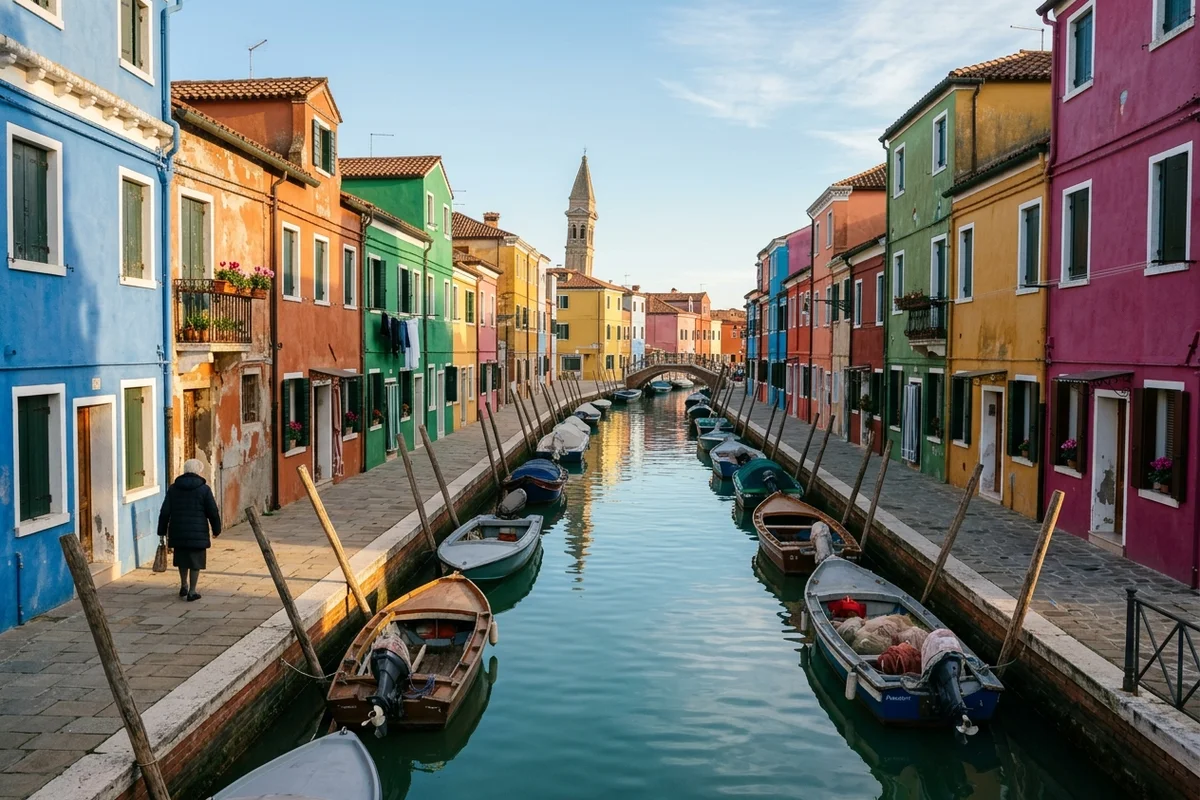
- Burano Island: Famous for brightly painted fishermen's houses and traditional needle-lace craftsmanship.
- Torcello Island: Peaceful, sparsely populated northern lagoon island home to the 7th-century Cathedral of Santa Maria Assunta and ancient mosaics.
Suggested Venice Carnival Travel Itineraries
1-Day Venice Carnival Itinerary (Highlights & Atmosphere)
- 08:00 AM: Arrive at St. Mark's Square early to photograph costumed participants beside the Doge's Palace and Basilica before crowds build.
- 10:00 AM: Grab espresso and warm fritole at a nearby pasticceria, then watch the morning costume showcase on the main stage.
- 12:00 PM: Walk through the backstreets of Castello or San Marco toward the Rialto Bridge, stopping for cicchetti and a glass of local Prosecco near Rialto Market.
- 02:30 PM: Board ACTV vaporetto Line 1 at Rialto for a full-length Grand Canal cruise down to Accademia or Piazzale Roma.
- 05:00 PM: Stroll through Dorsoduro and Campo Santa Margherita for afternoon street performances, followed by a traditional Venetian seafood dinner.
2-Day Venice Carnival Itinerary (Festival & Landmarks)
Day 1 — Carnival Pageantry & San Marco:
- Morning: Sunrise mask photography in St. Mark's Square, followed by a pre-booked timed visit to St. Mark's Basilica and the Doge's Palace.
- Afternoon: Watch afternoon costume parades and street theatre in Piazza San Marco; browse traditional mask-making workshops in Castello.
- Evening: Attend a classical concert, opera at Teatro La Fenice, or an official Carnival evening show.
Day 2 — Canals, Markets & Neighbourhood Celebrations:
- Morning: Explore Rialto Market and cross the Rialto Bridge into San Polo; visit a mask-painting workshop or Campo San Polo Carnival activities.
- Afternoon: Cross the Grand Canal into Dorsoduro to visit the Peggy Guggenheim Collection and walk along the sunny Zattere promenade.
- Evening: Enjoy a leisurely cicchetti crawl in Cannaregio along Fondamenta della Misericordia.
3-Day Venice Carnival Itinerary (Complete Venice & Lagoon Islands)
- Day 1 — Historic Heart & Main Stage: Morning costume photography at St. Mark's Square, Doge's Palace tour, afternoon stage parades, and evening theatre or masquerade event.
- Day 2 — Rialto, Mask Artisans & Dorsoduro: Morning Rialto Market visit, hands-on Venetian mask workshop, Grand Canal vaporetto ride, and afternoon in Dorsoduro.
- Day 3 — Murano & Burano Lagoon Excursion:
- Morning: Catch an early ACTV Line 4.1/4.2 or Line 12 vaporetto from Fondamente Nove to Murano to watch a glassblowing demonstration.
- Afternoon: Continue on Line 12 to Burano to photograph the colourful canals, sample bussolai butter biscuits, and return to Venice before dusk for a farewell Carnival dinner.
Venice Entry Fee and Tourist Regulations
The City of Venice operates the Venice Access Fee (Contributo di Accesso) on selected peak-demand dates to manage day-tripper crowd levels (cda.ve.it / comune.venezia.it).
- Who Must Pay vs. Who Is Exempt: The access fee applies only to day-trippers visiting the Old City of Venice on designated calendar dates during daytime hours (typically 08:30 AM to 4:00 PM). Overnight guests staying in registered hotels, B&Bs, or holiday rentals inside the Municipality of Venice are exempt, as they already pay the standard municipal overnight accommodation tax (Imposta di Soggiorno).
- Registration Requirement for Exempt Guests: Even if you are exempt (including overnight hotel guests, children under 14, or visitors with disabilities), you must still register online via cda.ve.it to generate a free exemption QR code for spot checks at Venezia Santa Lucia and Piazzale Roma.
- Applicable Carnival Dates: Whether the Access Fee applies to specific 2027 Carnival weekends is determined annually by Venice City Council resolution. Check cda.ve.it before travelling to verify whether your dates require payment or free exemption registration.
Safety and Essential Travel Tips During Venice Carnival
- Pickpocket Awareness: Dense crowds around St. Mark's Square, the Rialto Bridge, and vaporetto boarding piers attract opportunistic pickpockets. Use a zipped crossbody bag worn in front, keep wallets and passports in inner coat pockets, and never leave bags unattended while taking photos.
- Crowd Management: If an alleyway or bridge becomes tightly packed, step aside into a wider campo or use parallel backstreets rather than pushing forward.
- Respect Historic Monuments: Sitting on historic church steps, picnicking on bridges, swimming in canals, or attaching padlocks to railings is strictly prohibited and carries municipal fines.
- Comfortable Footwear & Acqua Alta: Stone steps on Venice's 400+ bridges become slick when damp. Wear non-slip soles, and if high water occurs in St. Mark's Square, use the raised wooden walkways (passerelle) installed by the city.
- Emergency Contacts: Dial 112 (the universal European emergency number) for police, ambulance, or fire assistance anywhere in Italy.
- Verify Tickets & Documents: Keep digital and printed copies of your passport, travel insurance, hotel booking, and any official Carnival tickets or Venice Access Fee QR codes easily accessible.
Is Venice Carnival Family-Friendly?
Yes, Venice Carnival is very welcoming for families during daytime hours, though careful pacing makes a big difference:
- Family-Friendly Highlights: Children love spotting colourful masks, watching daytime acrobats and jugglers in Campo San Polo and St. Mark's Square, painting their own masks in local workshops, and eating fritole.
- Things to Keep in Mind: St. Mark's Square can feel overwhelming for young children on peak weekend afternoons due to dense standing crowds. Evening masquerade balls are adult-oriented formal events.
- Practical Family Tips: Visit major squares before 11:00 AM, pack snacks and water, carry a lightweight foldable pushchair (stroller) rather than a bulky pram due to bridge steps, and write a parent's mobile number on a wristband for young children.
Accessibility During Venice Carnival
Venice presents structural challenges for wheelchair users and visitors with reduced mobility because of its historic stepped bridges, though substantial accessible infrastructure exists:
- Bridges and Ramps: While many small neighbourhood bridges have steps, the City of Venice maintains accessible step-free zones and temporary ramps along key routes—consult the official Accessible Venice itineraries on comune.venezia.it.
- Accessible Vaporetti: Most ACTV water buses and main landing piers (including Piazzale Roma, Ferrovia, Rialto, and San Marco) feature level boarding ramps and dedicated wheelchair spaces.
- Accessible Attractions: Major landmarks including the Doge's Palace, St. Mark's Basilica (ground floor), and the Peggy Guggenheim Collection offer wheelchair access and lifts—contact venues ahead to confirm Carnival-day entry routes.
Common Mistakes to Avoid During Venice Carnival
- Booking Accommodation Too Late: Waiting until December or January leaves very few central rooms and steep rates—book refundable lodging 6–9 months ahead.
- Assuming All Events Are Free: Street parades are free, but gala dinners, palace balls, and Arsenale water shows require advance tickets.
- Not Checking the Official Daily Schedule: Event times and locations vary daily; always check carnevale.venezia.it each morning.
- Packing Light Spring Clothes: February in Venice is cold and damp—pack thermal layers, a warm coat, and waterproof shoes.
- Underestimating Crowd Delays: Allow double your normal walking time when moving between Rialto and St. Mark's Square during afternoon peak hours.
- Skipping Advance Museum Reservations: St. Mark's Basilica and the Doge's Palace sell out days ahead during Carnival; reserve timed tickets online.
- Overlooking Bridge Steps with Heavy Luggage: Choose a hotel near a vaporetto stop or book porter assistance rather than dragging large suitcases over dozens of bridges.
- Relying Only on Private Water Taxis: Water taxis are expensive and subject to canal queues; combine walking with a multi-day ACTV vaporetto pass.
- Buying Tickets from Unofficial Websites: Only purchase festival tickets from carnevale.venezia.it or verified official partners.
- Ignoring Venice Access Fee Registration: Check cda.ve.it to see whether your travel dates require day-tripper payment or free overnight-guest QR registration.
- Trying to Visit Murano, Burano, and Torcello in Half a Day: Lagoon boat transfers take time—dedicate a full day if visiting multiple islands.
- Leaving Too Little Buffer for Airport Transfers: Allow at least 3 to 3.5 hours before international flight departures for vaporetto/bus transfers and airport security.
Frequently Asked Questions
Venice Carnival is famous for its intricate handmade masks, 18th-century historical costumes, Grand Canal water parades, free street theatre, and candlelit masquerade balls inside Venetian palaces.
Final Travel Planning Advice
Planning a memorable Venice Carnival, Italy trip comes down to combining early logistics with unhurried exploration. Lock in refundable accommodation 6 to 9 months ahead, verify official 2027 dates and event tickets directly on carnevale.venezia.it, pack warm waterproof layers for February lagoon weather, and give yourself time to wander beyond St. Mark's Square into Venice's quieter canals, bakeries, and outer islands.
Ready to compare international flight routes into Venice Marco Polo Airport (VCE) or plan a multi-city Italian rail itinerary? Explore FareWander's flights and destination guides to organize your trip with confidence.