Every July, Pamplona, the historic capital of Spain’s Navarra region, hosts the San Fermín Festival, one of Europe’s best-known cultural celebrations. Celebrated annually from 6 July to 14 July, the nine-day event blends religious devotion to Saint Fermín with street parades, live music, regional cuisine, and round-the-clock public gatherings. International media attention centers largely on the morning Running of the Bulls (Encierro), which draws spectators and runners from around the world. Yet the festival encompasses far more than its morning bull runs, including centuries-old processions, traditional dances, and fireworks. This San Fermín Festival Spain Travel Guide explains what to expect, how to reach Pamplona, where to stay, how to budget realistically, and how to stay safe throughout the celebrations.
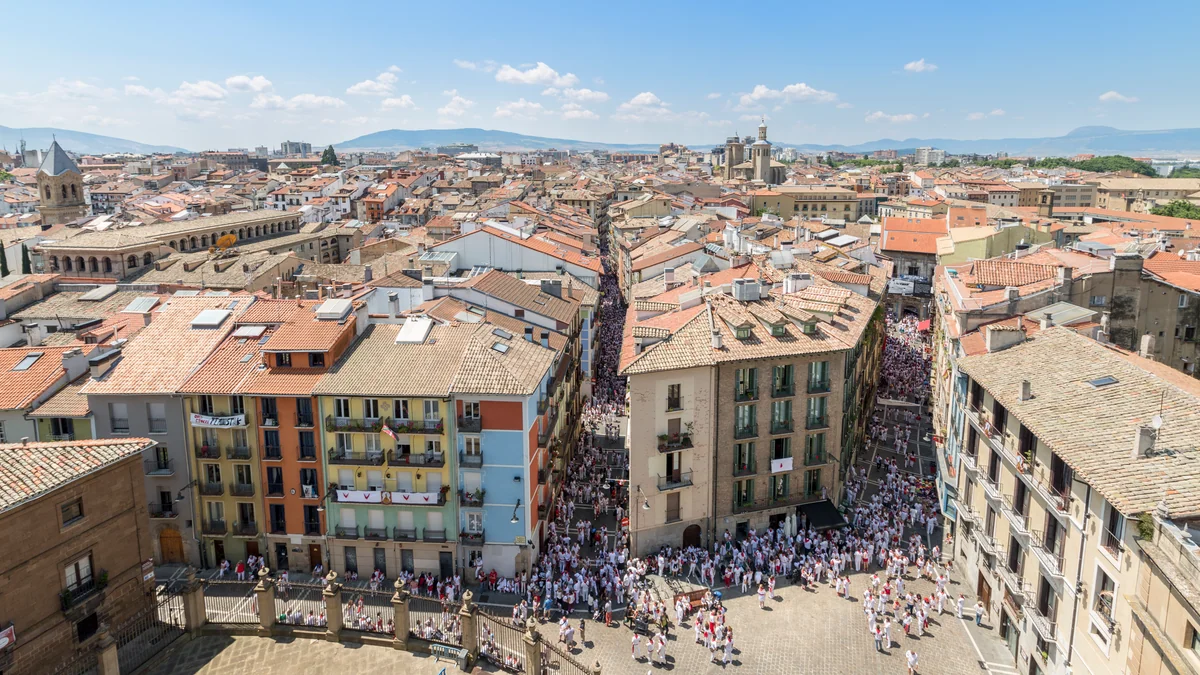
Residents and international visitors gather in Pamplona’s historic center during the annual San Fermín Festival (6–14 July).
What Is San Fermín Festival in Spain?
The San Fermín Festival (locally known as Los Sanfermines) is Pamplona’s annual civic and religious celebration honoring Saint Fermín, the co-patron saint of Navarra alongside Saint Francis Xavier. Held continuously for nine days each July, the event transforms the city’s historic center into an open-air gathering space for residents and international visitors alike.
Understanding San Fermín requires separating its two interconnected dimensions:
- The Religious Celebration: Historically rooted in medieval church observances honoring Saint Fermín—a 3rd-century Christian missionary and Pamplona’s first bishop—the religious core centers on the formal Procession of Saint Fermín on 7 July, morning masses, and solemn liturgical traditions organized by the local parish and Pamplona City Council.
- The Wider Festival Programme: Over centuries, religious observances merged with summer cattle fairs and secular civic festivities. In 1591, Pamplona moved the celebration from October to July to take advantage of warmer summer weather, uniting trade fairs, bullfights, music, and street entertainment into a single festival.
International fame expanded dramatically in the 20th century, particularly after American author Ernest Hemingway featured the festival in his 1926 novel The Sun Also Rises. Today, Pamplona’s population swells substantially during festival week as visitors travel from across Europe, North America, Asia, and Australia to experience Navarra’s cultural heritage, traditional attire, and communal street life.
Where Is San Fermín Festival Celebrated?
San Fermín takes place in Pamplona (Basque: Iruña), the capital city of the Chartered Community of Navarra in northern Spain. Situated in a fertile valley south of the western Pyrenees, Pamplona sits roughly 400 kilometers northeast of Madrid, 480 kilometers northwest of Barcelona, 155 kilometers southeast of Bilbao, and 85 kilometers southeast of San Sebastián.
While smaller events occur across several districts, first-time visitors should familiarize themselves with the core geography of Pamplona’s Casco Antiguo (Historic Old Town) and its immediate surroundings:
- Plaza Consistorial (Town Hall Square): The compact square in front of Pamplona’s baroque City Hall, serving as the epicenter for both the Chupinazo opening ceremony and the Pobre de Mí closing ceremony.
- Plaza del Castillo: Pamplona’s grand main square, lined with historic arcades, cafés, and terraces. It acts as the city’s central meeting hub and social living room throughout the festival.
- The Encierro Route (Santo Domingo to Plaza de Toros): An 875-meter stretch of narrow cobblestone streets running uphill from the Santo Domingo corrals, past Plaza Consistorial, through Mercaderes, around the sharp Estafeta corner, and down Calle Estafeta into Pamplona’s bullring (Plaza de Toros).
- Paseo de Sarasate and Parque de la Taconera: Broad boulevards and parkland bordering the Old Town that host open-air concerts, food stalls, craft markets, and calmer daytime gathering areas.
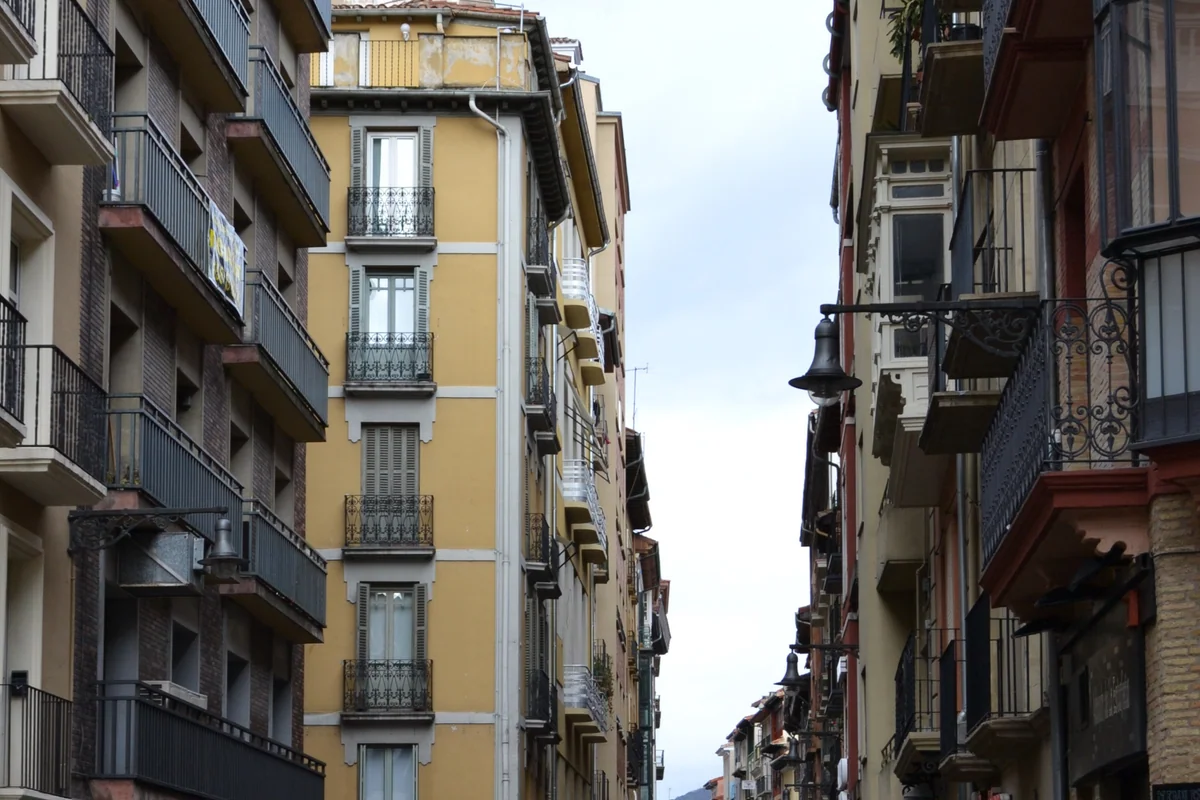
Pamplona’s historic Old Town (Casco Antiguo) forms the heart of the nine-day celebration.
Explore Popular Flight Corridors
Find direct vs connecting routes, airline schedules, and airport transfer tips.
San Fermín Festival Dates and Schedule
San Fermín follows a fixed annual calendar from 6 July through 14 July, beginning at noon on the first day and concluding at midnight on the final night.
| Date | Festival Event | Description |
|---|---|---|
| 6 July | Chupinazo | Official opening ceremony at 12:00 PM from the balcony of Pamplona City Hall. |
| 7–14 July | Running of the Bulls | Traditional morning Encierro along the Old Town route, typically starting at 8:00 AM. |
| 6–14 July | Festival Celebrations | Daily Giants and Big-Heads parades, religious processions (7 July), concerts, cultural events, fireworks, and street celebrations. |
| 14 July | Pobre de Mí | Traditional candlelit closing ceremony at midnight in Plaza Consistorial. |
Important Planning Note: While the 6–14 July dates, the noon Chupinazo, the 8:00 AM Encierro window, and the midnight Pobre de Mí are longstanding annual traditions, exact daily concert times, parade routes, and municipal operational notices vary by edition. Always verify the specific year’s official programme on pamplona.es and sanfermin.com before finalizing your itinerary.
Main Events and Traditions of San Fermín Festival
Chupinazo – The Festival Opening Ceremony
The Chupinazo is the official rocket launch that marks the start of San Fermín on 6 July at 12:00 PM. A designated civic representative steps onto the main balcony of Pamplona City Hall in Plaza Consistorial, addresses the crowd with the traditional shout "Pamplonesas, Pamploneses, ¡Viva San Fermín! Gora San Fermín!", and lights the firework rocket.
Seconds after the rocket explodes overhead, thousands of packed spectators raise and tie their red neckerchiefs (pañuelos) around their necks simultaneously, officially initiating nine days of celebration. Plaza Consistorial and nearby streets become extraordinarily dense hours before noon. Visitors who prefer to avoid tight crowd compression can watch the ceremony live on large municipal screens set up in Plaza del Castillo and Paseo de Sarasate.
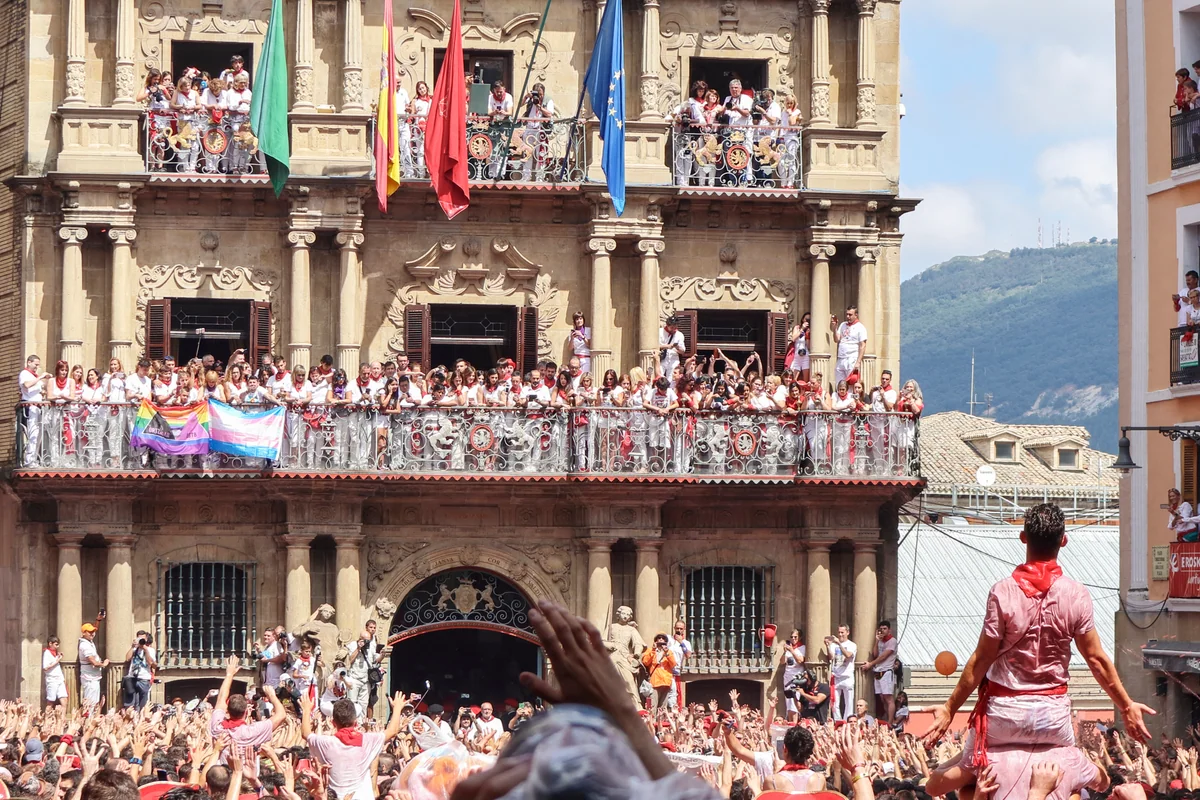
Crowds tie their red pañuelos on 6 July at noon following the Chupinazo rocket launch from Pamplona City Hall.
Running of the Bulls – Encierro
The Encierro (Running of the Bulls) is a daily morning event held from 7 July to 14 July, traditionally beginning at 8:00 AM when a warning rocket signals the opening of the Santo Domingo corral gates. Six fighting bulls and six guiding steers sprint roughly 875 meters through fenced Old Town streets toward the Plaza de Toros bullring, usually completing the course in two to four minutes.
Historically, the Encierro originated from the practical necessity of herding bulls from outside the city walls into the bullring for afternoon bullfights, with local townspeople running alongside to guide the animals.
[!WARNING] Critical Safety Warning: The Running of the Bulls is an extremely dangerous event that has caused severe injuries and fatalities. Do not treat participation as a casual tourist activity or bucket-list thrill. Inexperienced visitors should not attempt to run.
Participation is strictly regulated by Pamplona City Council municipal ordinances (pamplona.es). Key official rules include:
- Minimum Age: Runners must be at least 18 years old.
- Sobriety and Fitness: Anyone showing signs of alcohol or drug intoxication is barred and removed by police.
- No Obstruction or Provocation: Runners may not touch, grab, or distract the bulls, hide in doorways, or run backward.
- No Recording Devices: Carrying cameras, smartphones, selfie sticks, or backpacks onto the active course is strictly prohibited and carries heavy fines.
- Appropriate Footwear and Attire: Loose clothing, open-toed sandals, and flip-flops are forbidden.
How to Watch Safely: Instead of entering the course, visitors should watch from safe, authorized locations. Public viewing behind the double wooden street barriers (vallado) requires arriving very early (often before 6:30 AM) to claim a spot along the lower fence rail. Alternatively, visitors can reserve private balcony spaces overlooking Calle Estafeta or Mercaderes through licensed local agencies, or buy morning grandstand tickets inside the Plaza de Toros to watch the bulls enter the arena.
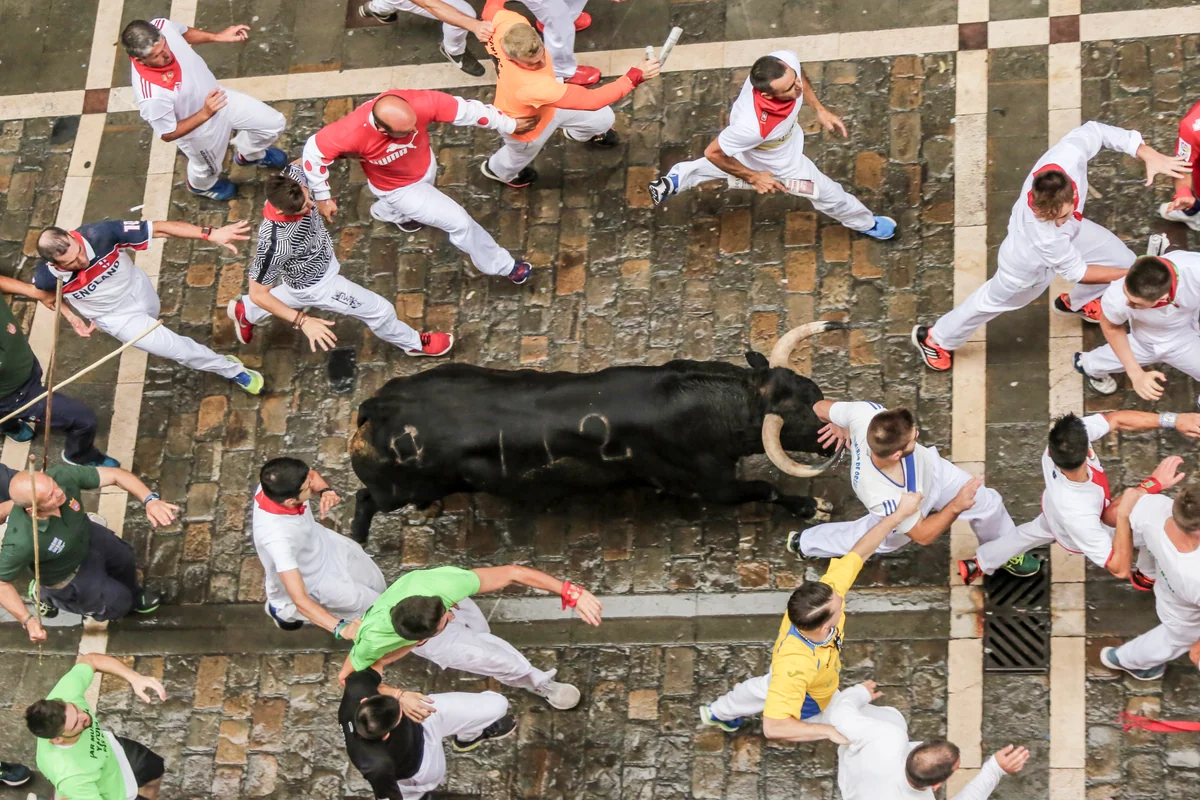
Visitors can observe the morning Encierro safely from behind authorized wooden street barriers or reserved balconies.
Pobre de Mí – Closing Ceremony
At 12:00 AM (midnight) on 14 July, crowds gather once again in Plaza Consistorial holding lit candles for Pobre de Mí ("Poor Me"). The Mayor of Pamplona addresses the square from the City Hall balcony, officially declaring the festival over. Attendees untie their red pañuelos, wave them overhead, and sing the traditional lament "Pobre de mí, pobre de mí, que se han acabado las fiestas de San Fermín" ("Poor me, poor me, the San Fermín fiestas have ended"), followed by a final firework display.
Giants and Big-Heads Parade
Every morning during the festival, families and visitors line the Old Town streets for the Comparsa de Gigantes y Cabezudos (Giants and Big-Heads Parade). Dating back to the 19th century, this beloved troupe features eight towering papier-mâché figures (standing over four meters tall) representing four royal couples from Europe, Asia, Africa, and America, accompanied by five Cabezudos (big-headed figures), six Kilikis (who playfully tap children with foam bladders), and six Zaldikos (hobby-horse riders). Check the official municipal programme on pamplona.es for daily morning departure points and routes.
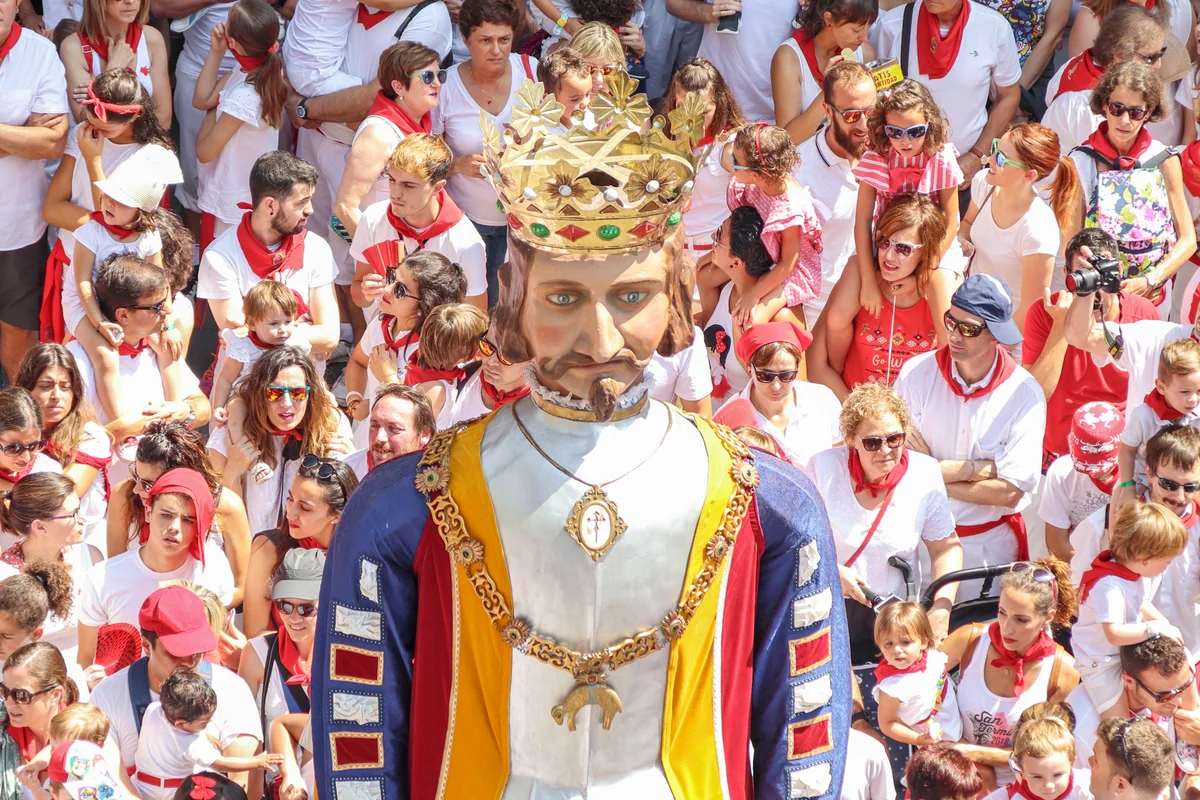
The Comparsa de Gigantes y Cabezudos performs daily morning parades enjoyed by families and visitors.
Music, Street Parties and Cultural Events
Beyond headline ceremonies, San Fermín features continuous cultural programming across Pamplona:
- Traditional Brass Bands (Peñas and Txarangas): Local social clubs (peñas) march through the streets playing regional brass and percussion music throughout the day and night.
- Basque Rural Sports (Herri Kirolak) and Folk Dance: Daily exhibitions in Plaza de los Fueros showcase traditional wood-chopping, stone-lifting, and jota folk dancing.
- Nightly Fireworks (Fuegos Artificiales): Each evening at 11:00 PM, international pyrotechnic teams launch choreographed displays from the Ciudadela (Citadel), best viewed from the surrounding parks and Paseo de Sarasate.
- Free Public Concerts: Stages at Plaza de los Fueros and Paseo de Sarasate host evening concerts featuring Spanish and international performers; confirm specific artist lineups on the official programme prior to travel.
How to Get to Pamplona for San Fermín Festival
By Air – Nearest Airports
Pamplona has a small regional airport, so most international travelers combine a flight into a major Spanish or northern regional airport with a train, bus, or car transfer:
- Pamplona Airport (PNA): Located roughly 6 km south of central Pamplona (aena.es). Serves domestic connecting flights (primarily via Madrid and Barcelona). Flights during early July sell out quickly, and local taxi transfers reach the city center in about 15 minutes.
- Bilbao Airport (BIO): Located ~155 km northwest of Pamplona (~1 hour 45 minutes by road). Offers wide European flight connectivity, making it one of the most convenient gateways for UK and European visitors.
- San Sebastián Airport (EAS): Located ~90 km north near Hondarribia (~1 hour 15 minutes by road), serving domestic Spanish routes.
- Zaragoza Airport (ZAZ): Located ~175 km south (~1 hour 50 minutes by road), handling select European and domestic routes.
- Madrid-Barajas Airport (MAD) & Barcelona-El Prat Airport (BCN): Spain’s primary long-haul intercontinental hubs for travelers flying from North America, Asia, or Australia, offering frequent onward train and bus connections to Pamplona.
Tip: Compare total door-to-door journey time—including ground transfer connections—rather than looking solely at airfare, as connecting flights into PNA can sometimes take longer than flying into MAD or BIO and taking direct ground transport.
From Madrid to Pamplona
- By Train: Renfe operates direct Alvia trains from Madrid Atocha (and select Chamartín services) to Pamplona Station in approximately 3 to 3.5 hours. Book well in advance, as festival trains reach full capacity weeks ahead.
- By Bus: Intercity coaches (including ALSA and regional operators) connect Madrid’s Avenida de América station or MAD Terminal 4 with Pamplona’s central bus station (Estación de Autobuses de Pamplona), typically taking 4.5 to 5.5 hours depending on stops.
- By Car: Drive northeast via the A-2 and A-15 motorways (~400 km, roughly 4 to 4.5 hours under normal traffic conditions).
From Barcelona to Pamplona
- By Train: Renfe runs direct Alvia trains from Barcelona Sants to Pamplona in roughly 3 hours 45 minutes to 4 hours.
- By Bus: ALSA and Monbus operate intercity coaches from Barcelona Nord or Barcelona Airport to Pamplona in approximately 5.5 to 6.5 hours.
- By Car: Travel west via the AP-2 and AP-68/AP-15 toll motorways (~480 km, around 4.5 to 5 hours).
From Bilbao and San Sebastián to Pamplona
- By Bus: Regional bus operators (such as La Burundesa / La Unión and Conda/ALSA) run frequent direct coaches from Bilbao Termibus (~2 hours) and San Sebastián central bus station (~1 hour 15 minutes) straight into Pamplona’s underground bus terminal beside the Ciudadela.
- By Car: Both northern coastal cities connect to Pamplona via modern highways—the A-1/A-15 from Bilbao (~1 hour 45 minutes) and the A-15 from San Sebastián (~1 hour 10 minutes).
Getting Around Pamplona During the Festival
- Walking: Pamplona’s historic core is compact and best explored entirely on foot.
- Local Public Transport (Villavesas): Pamplona’s regional urban bus network (Transporte Urbano Comarcal) operates special 24-hour festival routes linking outlying neighborhoods with the city center, though central stops relocate outside the pedestrian perimeter. Check updated festival route maps via Pamplona City Council (pamplona.es).
- Road Closures & Pedestrian Restrictions: Much of the Casco Antiguo and surrounding avenues are closed to private vehicles during San Fermín, and security barriers block the Encierro route every morning from roughly 6:30 AM until 9:00 AM.
- Taxis: Official taxis operate from designated perimeter ranks (such as Avenida Baja Navarra and Plaza de la Paz), though wait times increase substantially after evening concerts and fireworks.
Planning Travel Logistics?
Use FareWander tools to calculate flight times, luggage rules, and visa requirements.
Where to Stay During San Fermín Festival
Pamplona has a relatively modest hotel inventory compared to Madrid or Barcelona, causing nightly room rates to rise sharply and sell out months before July.
Hotels in Pamplona City Centre
Staying in the Casco Antiguo or adjacent Segundo Ensanche puts you within a 5- to 15-minute walk of Plaza del Castillo, Plaza Consistorial, and the Encierro barriers. However, central streets experience continuous music, pedestrian noise, and early-morning street-cleaning machinery around the clock. Reserve early and review cancellation policies carefully, as many central properties enforce strict non-refundable rules for 6–14 July.
Budget Accommodation and Hostels
Hostels, pilgrim albergues (Pamplona is a major stop on the Camino de Santiago), guesthouses (pensiones), and shared university residences offer more affordable beds for solo travelers and backpackers. Note that many municipal Camino albergues prioritize bona fide pilgrims carrying a valid Credencial during July rather than festival tourists, so confirm eligibility before booking.
Staying Outside Pamplona
When central Pamplona reaches capacity, travelers often base themselves in nearby Navarra towns (such as Noáin, Burlada, Villava, Barañáin, or Estella) or commute from San Sebastián or Vitoria-Gasteiz. If staying outside walking distance, verify late-night regional bus timetables in advance and do not assume standard weekday schedules operate normally during festival week.
| Accommodation Type | Advantages | Considerations |
|---|---|---|
| City-centre hotel | Immediate walking access to main squares, parades, and dining. | Highest demand, elevated festival rates, and potential street noise day and night. |
| Hostel | Budget-friendly option ideal for solo travelers and groups. | Shared bathrooms/dorms, limited availability, and some Camino hostels restrict stays to pilgrims. |
| Guesthouse (Pensión) | Smaller, locally run accommodation experience near the Old Town. | Limited room count, basic amenities, and early sell-outs. |
| Nearby town | Potentially more availability and quieter sleeping conditions. | Additional daily commuting time; requires verifying late-night bus or taxi options. |
San Fermín Festival Travel Cost and Budget
Travel expenses in Pamplona increase substantially between 6 July and 14 July, particularly for lodging and last-minute rail tickets. The framework below outlines indicative per-person costs in Euros (EUR) for a 3-night / 4-day stay (based on research conducted in November 2026). These figures are planning estimates rather than guaranteed rates.
| Expense | Budget Travel (EUR) | Mid-Range Travel (EUR) | Premium Travel (EUR) |
|---|---|---|---|
| Flights (Round-trip to Spain) | €90 – €220 (European short-haul economy booked early) | €220 – €450 (European/UK standard or domestic connection) | €650 – €1,400+ (Intercontinental round-trip or flexible cabin) |
| Accommodation (3 nights, per person) | €180 – €330 (Hostel dorm or nearby town guesthouse) | €420 – €750 (3-star hotel double room split between 2 guests) | €950 – €1,800+ (4- to 5-star central Pamplona hotel) |
| Food (4 days) | €90 – €140 (Bakery breakfasts, supermarket snacks, casual pintxos) | €180 – €280 (Sit-down menú del día lunches, tapas bars, drinks) | €350 – €600+ (Fine Navarra dining, wine pairings, terrace tables) |
| Transport (Domestic rail/bus + local) | €45 – €85 (Advance intercity bus + local Pamplona bus pass) | €85 – €150 (Renfe Alvia train from Madrid/Barcelona + taxis) | €200 – €400+ (Connecting flight to PNA or private transfers) |
| Other expenses (Attire, viewing, insurance) | €30 – €60 (White shirt/trousers, pañuelo, basic travel insurance) | €80 – €160 (Bullring Encierro seat, museum entries, insurance) | €250 – €550+ (Private Encierro balcony rental, bullfight tickets) |
(Note: Street celebrations, parades, concerts, and fireworks are free to attend; you only pay for optional seated bullring tickets, private viewing balconies, food, and lodging.)
Best Time to Book Your San Fermín Festival Trip
Because festival dates never change, experienced travelers plan well ahead:
- Accommodation (8 to 12 Months Ahead): Central Pamplona hotels and apartments begin booking up almost immediately after the previous year’s festival ends. Lock in refundable rooms early to preserve flexibility.
- International and Domestic Flights (5 to 8 Months Ahead): Monitor airfares into Madrid, Barcelona, Bilbao, and Pamplona early, factoring in ground transfer connections.
- Renfe Trains and ALSA Buses (2 to 3 Months Ahead): Spanish high-speed and long-distance rail tickets typically release 60 to 90 days before departure and sell out quickly for 5–7 July arrivals and 14–15 July departures.
- Travel Insurance: Purchase comprehensive medical and trip-cancellation insurance at the time of booking. Verify policy exclusions carefully, as standard travel insurance policies commonly exclude injuries sustained while participating in high-risk activities such as running with bulls.
- Official Programme Monitoring: Follow pamplona.es and visitnavarra.es in spring for confirmed concert lineups, accessibility notices, and public transport updates.
Visa and Entry Requirements for Spain
Spain is a member of the Schengen Area, so entry requirements depend on your nationality and passport:
- Visa-Exempt Travelers (UK, USA, Canada, Australia, New Zealand, Japan, etc.): Citizens of visa-exempt countries may enter Spain and the wider Schengen zone for up to 90 days within any 180-day period for tourism without a visa. Check official EU travel authorization timelines (such as ETIAS once implemented) prior to departure.
- Schengen Visa Nationals (India, China, South Africa, etc.): Travelers from countries requiring a visa must apply in advance for a Short-Stay Schengen Visa (Type C) through the official Spanish embassy, consulate, or authorized visa application center in their country of residence. Visa approval is never guaranteed and depends on individual documentation.
- Passport Validity & Documentation: Your passport must have been issued within the past 10 years and remain valid for at least three months beyond your planned departure date from the Schengen Area. Carry proof of return flights, confirmed accommodation, sufficient financial means, and valid Schengen travel medical insurance.
- Official Verification: Always confirm current entry requirements directly with the Spanish Ministry of Foreign Affairs (exteriores.gob.es) before traveling.
What to Wear at San Fermín Festival
One of San Fermín’s most striking visual traditions is the sea of white and red clothing worn by locals and visitors alike:
- White Shirt and White Trousers: Clean white cotton shirts and comfortable white trousers form the base outfit, symbolizing purity and egalitarian unity where every participant dresses alike.
- Red Neckerchief (Pañuelo): A triangular red scarf tied around the neck immediately after the Chupinazo on 6 July—representing the martyrdom of Saint Fermín—and worn continuously until the Pobre de Mí ceremony.
- Red Waist Sash (Faja): A traditional red fabric belt wrapped around the waist with the fringed ends hanging down on the left side.
- Footwear and Weather Layers: July daytime temperatures in Pamplona regularly reach 25°C–32°C (77°F–90°F), while early mornings (6:00–8:00 AM) and late nights can drop to 12°C–16°C (54°F–61°F). Wear sturdy, closed-toe walking shoes with good grip (streets become sticky with spilled drinks) and pack a light white jacket or sweatshirt for chilly mornings.
Traditional white-and-red attire is not legally mandatory, and you can buy inexpensive pañuelos and fajas at local Pamplona shops upon arrival, though dressing in white and red helps you blend respectfully into local tradition.
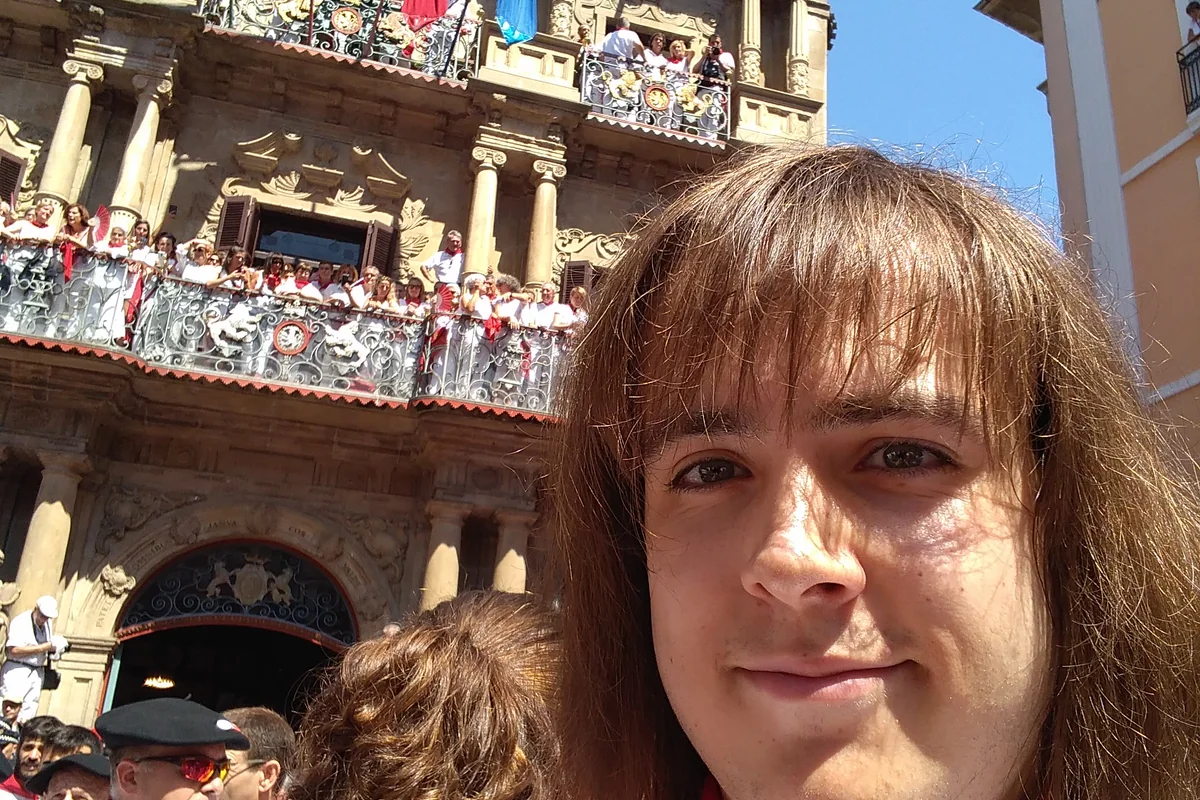
Traditional San Fermín attire pairs white clothing with a red pañuelo neckerchief and faja waist sash.
Food and Drinks to Try in Pamplona
Navarra is renowned across Spain for its agricultural produce, cured meats, and wines:
- Pintxos: Northern Spain’s signature bar snacks—small slices of crusty bread topped with ingredients such as cured ham, anchovies, tortilla, peppers, or seafood, secured with a toothpick and ordered at Old Town bar counters.
- Tapas and Raciones: Larger shared plates of Spanish classics including patatas bravas (crispy potatoes with spicy tomato sauce), croquetas (creamy ham or mushroom fritters), and tortilla española (potato omelet).
- Chistorra: A thin, paprika-seasoned Basque-Navarrese pork sausage, typically grilled or fried and served in crusty bread (bocadillo de chistorra) or on a skewer—a staple morning snack after the Encierro.
- Navarra Regional Specialties: Look for pimientos del piquillo (sweet roasted red peppers from Lodosa, often stuffed with cod or meat), espárragos de Navarra (thick white asparagus), cordero al chilindrón (braised lamb in red pepper and tomato sauce), and pacharán (a traditional anise-flavored sloe berry liqueur from Navarra).
- Vegetarian Options & Crowd Tips: While traditional menus lean heavily toward meat and seafood, pimientos del piquillo, white asparagus, tortilla española, salads, and mushroom pintxos offer satisfying vegetarian choices. Old Town bars become extremely crowded during meal times—plan lunches around 1:30–2:00 PM and carry bottled water alongside alcoholic drinks.
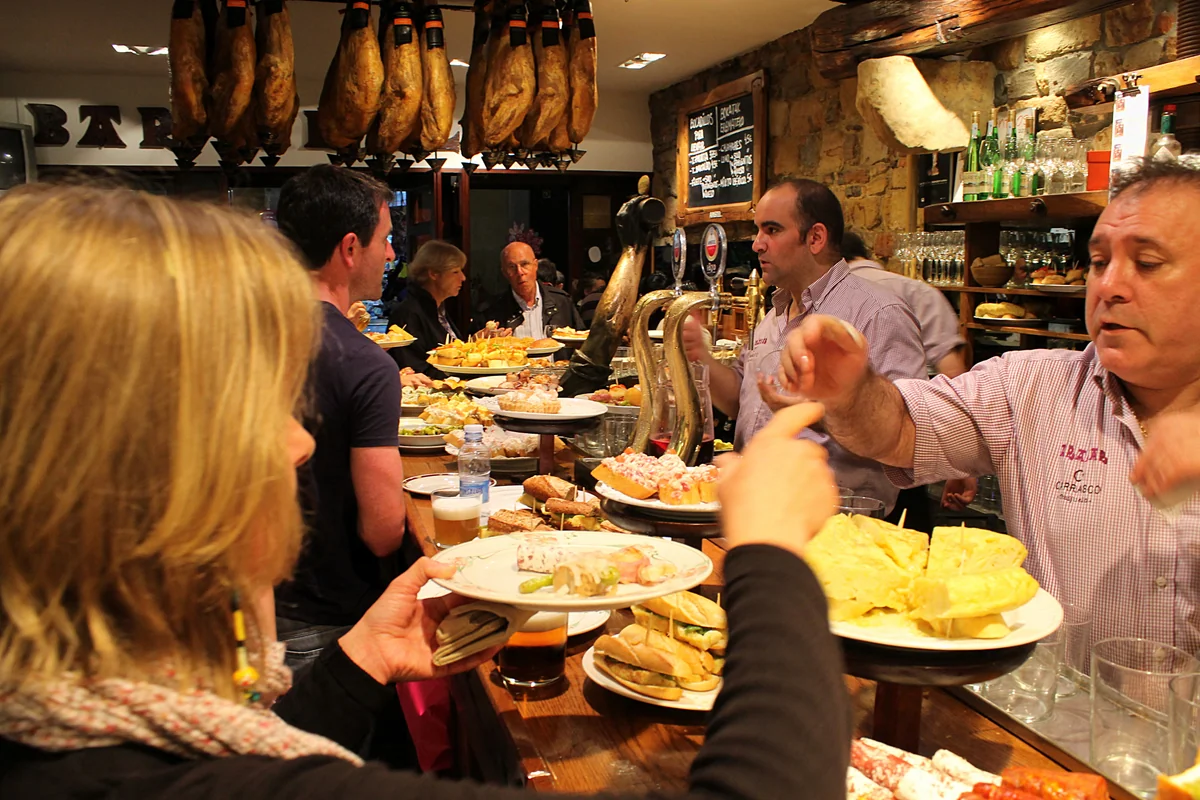
Old Town bars serve regional Navarra pintxos, stuffed piquillo peppers, and chistorra sausage.
Best Things to Do in Pamplona Beyond the Festival
Stepping just outside the busiest festival squares reveals Pamplona’s rich medieval and Renaissance heritage:
- Pamplona Cathedral (Catedral de Santa María la Real): A Gothic cathedral featuring a neoclassical facade, a serene 14th-century Gothic cloister, and the Occidens museum exhibition.
- Plaza del Castillo: Ideal for morning coffee under historic stone arcades and people-watching beside the central kiosk pavilion.
- Pamplona City Hall (Ayuntamiento de Pamplona): Admire its ornate 18th-century baroque and neoclassical facade in Plaza Consistorial during quieter afternoon hours.
- Historic Old Town (Casco Antiguo) & City Walls: Walk along Pamplona’s remarkably preserved 16th- and 17th-century Renaissance defensive ramparts (Murallas de Pamplona) overlooking the Arga River valley.
- Ciudadela de Pamplona: A star-shaped pentagonal Renaissance fortress surrounded by expansive green lawns (Vuelta del Castillo), offering a peaceful escape from Old Town crowds.
- Paseo de Sarasate: A tree-lined promenade linking the Old Town with the 19th-century Ensanche district, featuring the Monument to the Fueros and historic buildings.
- Museo de Navarra: Housed in a former 16th-century hospital near Santo Domingo, showcasing Roman mosaics, Romanesque capitals, and Francisco Goya’s portrait of the Marqués de San Adrián.
- Mercado de Santo Domingo: Pamplona’s traditional indoor food market, great for browsing local Navarra cheeses, peppers, and seasonal produce.
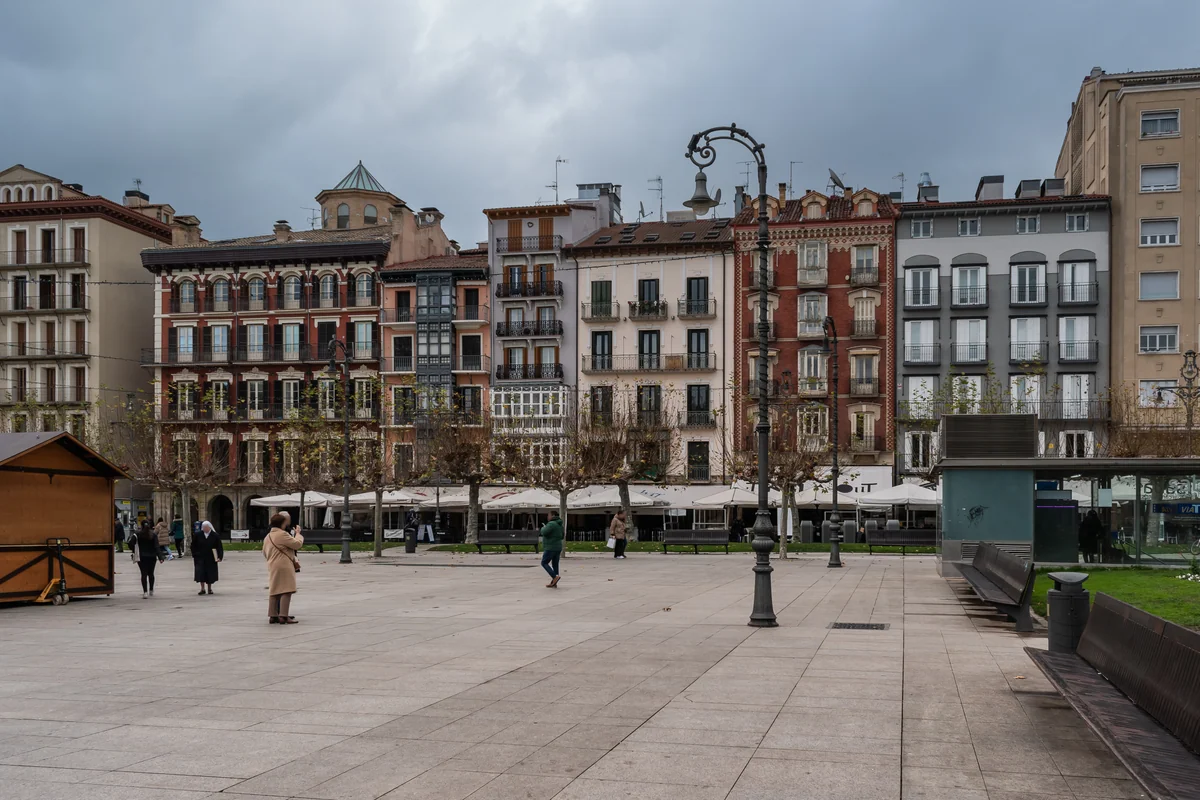
Plaza del Castillo serves as Pamplona’s main social square and central meeting point.
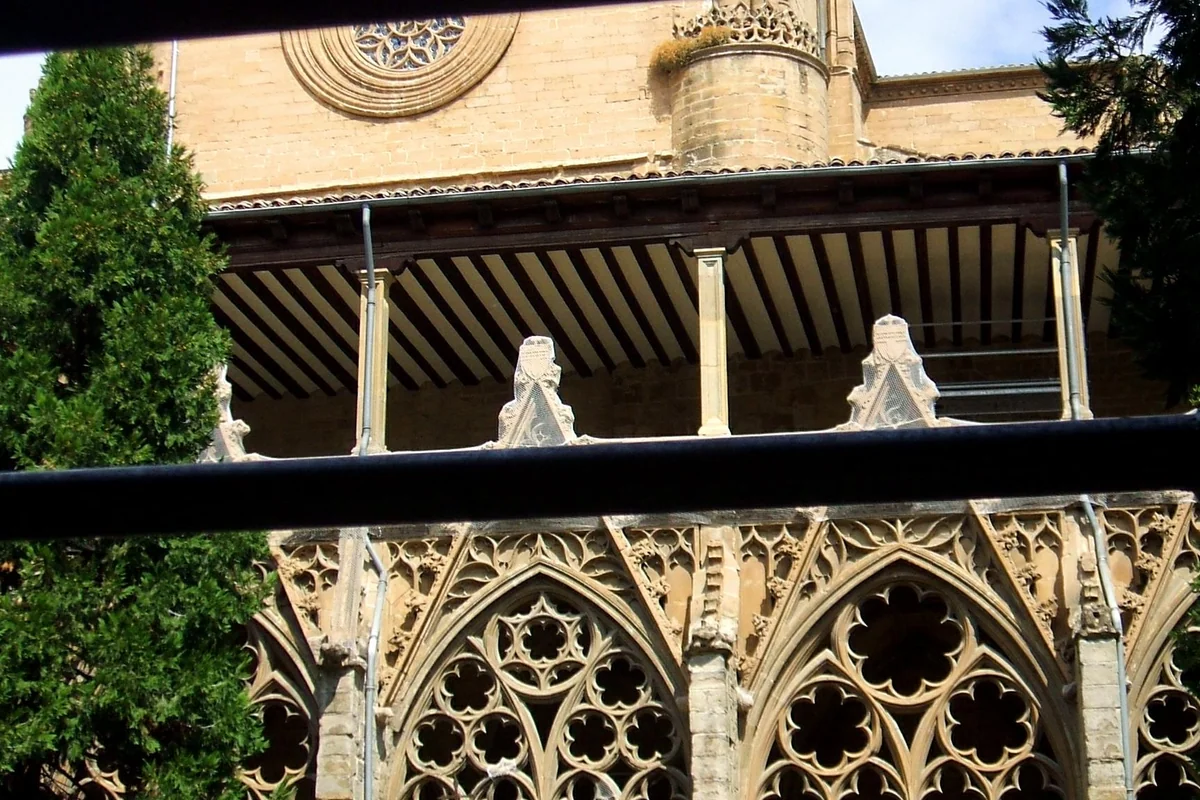
Pamplona Cathedral offers a peaceful architectural contrast to the lively festival streets.
Safety Tips for First-Time San Fermín Visitors
San Fermín is a joyful civic celebration, but dense crowds and high-risk morning events require disciplined personal safety habits:
- Avoid Unauthorized Participation in the Encierro: Do not enter the running course unless you are physically prepared, sober, and fully compliant with official municipal regulations. Watch from behind authorized barriers, reserved balconies, or bullring seats instead.
- Follow Police and Municipal Instructions: Obey directions from Policía Municipal, Policía Foral, and Cruz Roja (Red Cross) medics at all times, especially during barrier closures.
- Protect Valuables in Dense Crowds: Pickpocketing occurs during the Chupinazo, parades, and late-night concerts. Use a zipped crossbody bag worn in front or an under-clothing money belt, and leave passports in your hotel safe (carry a photocopy or digital copy instead).
- Stay Hydrated and Pace Alcohol Intake: Alternate alcoholic drinks with water, eat regular meals, and avoid excessive intoxication in crowded squares where emergency exit routes are slow.
- Set Group Meeting Points: Mobile networks frequently experience congestion during peak ceremonies. Agree on a clear landmark outside the tightest crowds (such as a specific corner of Plaza del Castillo or Paseo de Sarasate) in case your group separates.
- Respect Local Residents and Culture: Treat Pamplona’s historic streets, balconies, and traditions with courtesy; public urination, glass bottles in restricted zones, and climbing monuments carry police fines.
- Know Emergency Contacts: Save 112 (the universal European emergency number for police, ambulance, and fire services) in your phone before arriving.
[!IMPORTANT] Official Safety Reminder: The Running of the Bulls is a high-risk event that can cause serious injury or death. Visitors should not treat it as a casual tourist activity. Anyone considering participation must understand the official eligibility rules, restrictions, and risks.
Is San Fermín Festival Suitable for Families?
San Fermín can be enjoyed by families during daytime hours, provided parents plan carefully around crowd density and noise levels.
- Family-Friendly Activities: Morning Giants and Big-Heads parades, traditional dance exhibitions, puppet shows, fairground attractions, and evening fireworks from the open lawns of the Ciudadela are welcoming for children.
- Times and Areas to Avoid with Young Children: The Chupinazo in Plaza Consistorial, the Encierro barriers, late-night Old Town streets after 10:00 PM, and the midnight Pobre de Mí are excessively crowded, loud, and unsuitable for strollers or young children.
- Practical Family Tips: Bring ear protection for young children during brass band parades and fireworks, attach ID wristbands with a parent’s phone number, and book accommodation slightly outside the Old Town core (such as near Parque de la Taconera or Segundo Ensanche) for quieter nights.
Suggested 3-Day Pamplona Travel Itinerary
While three days cannot cover every concert, procession, and bullfight across the nine-day calendar, this balanced itinerary captures Pamplona’s core festival traditions and historic landmarks. Adjust morning timings against the official programme on pamplona.es if attending on specific Encierro dates.
Day 1: Arrival and City Exploration
- Morning/Afternoon: Arrive in Pamplona by train, bus, or flight, check into your accommodation, and pick up a red pañuelo and faja at a local shop.
- Late Afternoon: Orientation walk through Plaza del Castillo, Plaza Consistorial, and along the wooden barriers of Calle Estafeta to understand the festival layout.
- Evening: Sample local pintxos and chistorra in the Old Town, followed by the 11:00 PM fireworks display from the Ciudadela parklands.
Day 2: San Fermín Festival Experience
- Early Morning (Optional Safe Viewing): Arrive early at a designated public barrier section or pre-booked balcony/bullring seat to watch the 8:00 AM Encierro safely, followed by coffee and churros in Plaza del Castillo.
- Late Morning: Watch the Giants and Big-Heads Parade wind through the Old Town streets.
- Afternoon: Enjoy a traditional Navarra menú del día lunch, take an afternoon rest, and watch folk music or rural sports demonstrations at Plaza de los Fueros.
- Evening: Experience street brass bands (txarangas) and open-air concerts at Paseo de Sarasate.
Day 3: Sightseeing and Departure
- Morning: Visit Pamplona Cathedral and stroll along the historic City Walls overlooking the Arga River.
- Midday: Browse local Navarra delicacies at Mercado de Santo Domingo or visit the Museo de Navarra before collecting your luggage.
- Afternoon: Depart Pamplona via pre-booked Renfe train, ALSA bus, or airport transfer.
Common Mistakes to Avoid During San Fermín Festival
- Booking Accommodation Too Late: Waiting until spring leaves very few central rooms at inflated rates. Solution: Reserve refundable lodging 8–12 months in advance.
- Ignoring Official Event Schedules: Parade routes and concert locations shift slightly each year. Solution: Download the official municipal programme from pamplona.es upon arrival.
- Underestimating Crowd Levels: Plaza Consistorial during the Chupinazo is tightly packed. Solution: Watch from Plaza del Castillo’s big screens if you dislike dense crowds.
- Assuming Normal Transport Schedules: Central roads close and buses detour throughout festival week. Solution: Walk within the city center and verify altered Villavesa bus stops in advance.
- Carrying Unnecessary Valuables: Loose phones and wallets are vulnerable in dense street crowds. Solution: Carry only essential cards, small cash, and an ID copy in a secure zipped pouch.
- Treating the Running of the Bulls as a Casual Tourist Activity: Entering the course unprepared or with a camera violates city rules and risks severe injury. Solution: Watch safely from authorized barriers, balconies, or bullring seats.
- Failing to Plan Return Transportation: Trains and buses departing Pamplona on 14–15 July sell out early. Solution: Book your outbound train or coach ticket at the same time as your arrival ticket.
- Not Checking Travel Documents: Expired passports or missing Schengen visas can halt your trip at border control. Solution: Verify passport validity and visa rules on exteriores.gob.es months before departure.
Is San Fermín Festival Worth Visiting?
Yes—for travelers who appreciate living European cultural traditions, communal street music, regional gastronomy, and vibrant public celebrations, San Fermín is an unforgettable experience. Few festivals match the visual unity of thousands of residents and visitors dressed in white and red celebrating together across medieval squares.
However, San Fermín is not ideal for everyone. High July accommodation prices, loud 24-hour street festivities, and dense crowds can overwhelm travelers seeking a quiet, slow-paced cultural break. If you want to admire Pamplona’s Gothic cathedral, Renaissance walls, and Navarra cuisine without intense crowds or peak festival rates, consider visiting in May, June, September, or October instead.
Frequently Asked Questions
San Fermín is celebrated every year from 6 July to 14 July in Pamplona, Spain. The festival officially begins at 12:00 PM on 6 July with the Chupinazo opening ceremony and concludes at midnight on 14 July with the Pobre de Mí ceremony.
Final Tips for Planning Your San Fermín Festival Trip
A rewarding trip to the San Fermín Festival in Pamplona relies on early preparation and respect for local traditions:
- Verify the Official Programme: Check pamplona.es and sanfermin.com before traveling for confirmed event schedules and municipal safety notices.
- Book Early with Flexibility: Reserve refundable accommodation and intercity train or bus tickets months in advance.
- Plan Safe Viewing and Transit: Watch the Encierro from authorized barriers, balconies, or bullring seats, and map out walking routes around street closures.
- Respect Traditions and Safety Rules: Embrace the white-and-red dress code, follow police instructions, protect your valuables, and explore Pamplona’s historic walls and Navarra cuisine beyond the main squares.
Ready to map out your northern Spain itinerary? Explore route options, flight connections, and European travel planning guides on FareWander to organize your journey to Pamplona.
Official External Sources Used
- Official San Fermín Information Portal: Sanfermin.com — Festival traditions, Chupinazo, Encierro background, and Pobre de Mí context.
- Pamplona City Council (Ayuntamiento de Pamplona): Pamplona.es — Official municipal festival programme, Encierro safety ordinances, Comparsa de Gigantes y Cabezudos, and local transport notices.
- Navarra Official Tourism Board: VisitNavarra.es — Regional cultural heritage, Navarra gastronomy (pintxos, chistorra, piquillo peppers), and Pamplona landmarks.
- Spain Official Tourism Portal: Spain.info — National cultural context and regional travel planning.
- AENA Spanish Airports: Aena.es — Official airport operations for Pamplona (PNA), Bilbao (BIO), San Sebastián (EAS), Zaragoza (ZAZ), Madrid-Barajas (MAD), and Barcelona-El Prat (BCN).
- Renfe Spanish National Rail: Renfe.com — Official Alvia rail corridors connecting Madrid and Barcelona with Pamplona.
- ALSA Intercity Coach Transport: Alsa.com — Long-distance coach connections from Madrid, Barcelona, and northern Spain to Pamplona.
- Spanish Ministry of Foreign Affairs: Exteriores.gob.es — Official Schengen visa, passport validity, and entry requirements for international travelers.