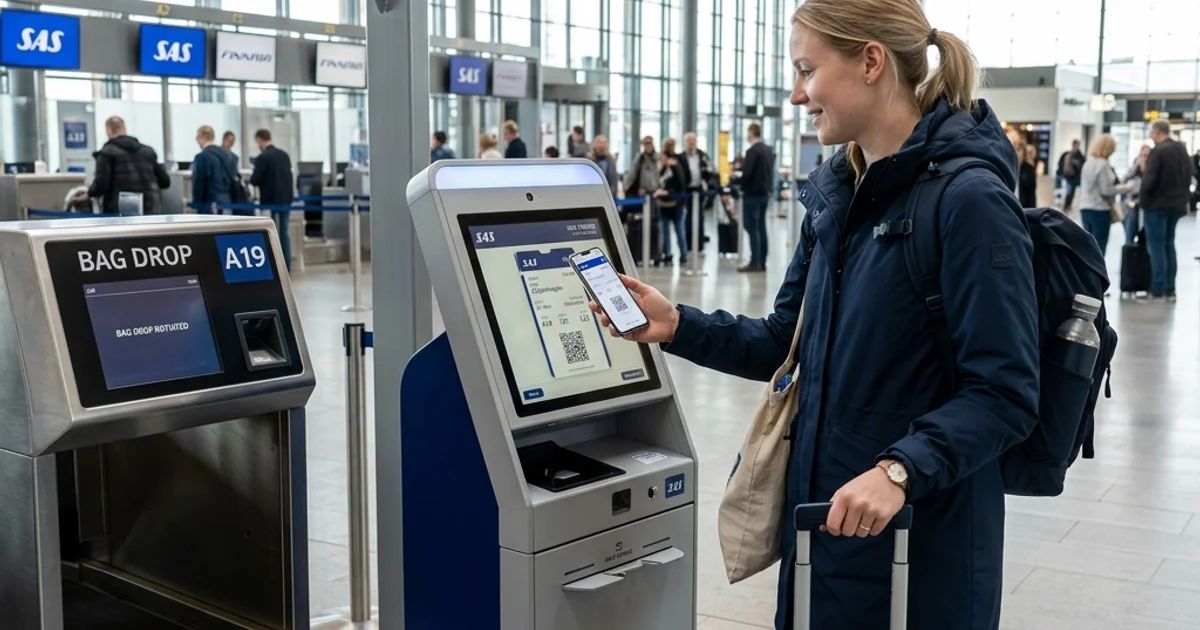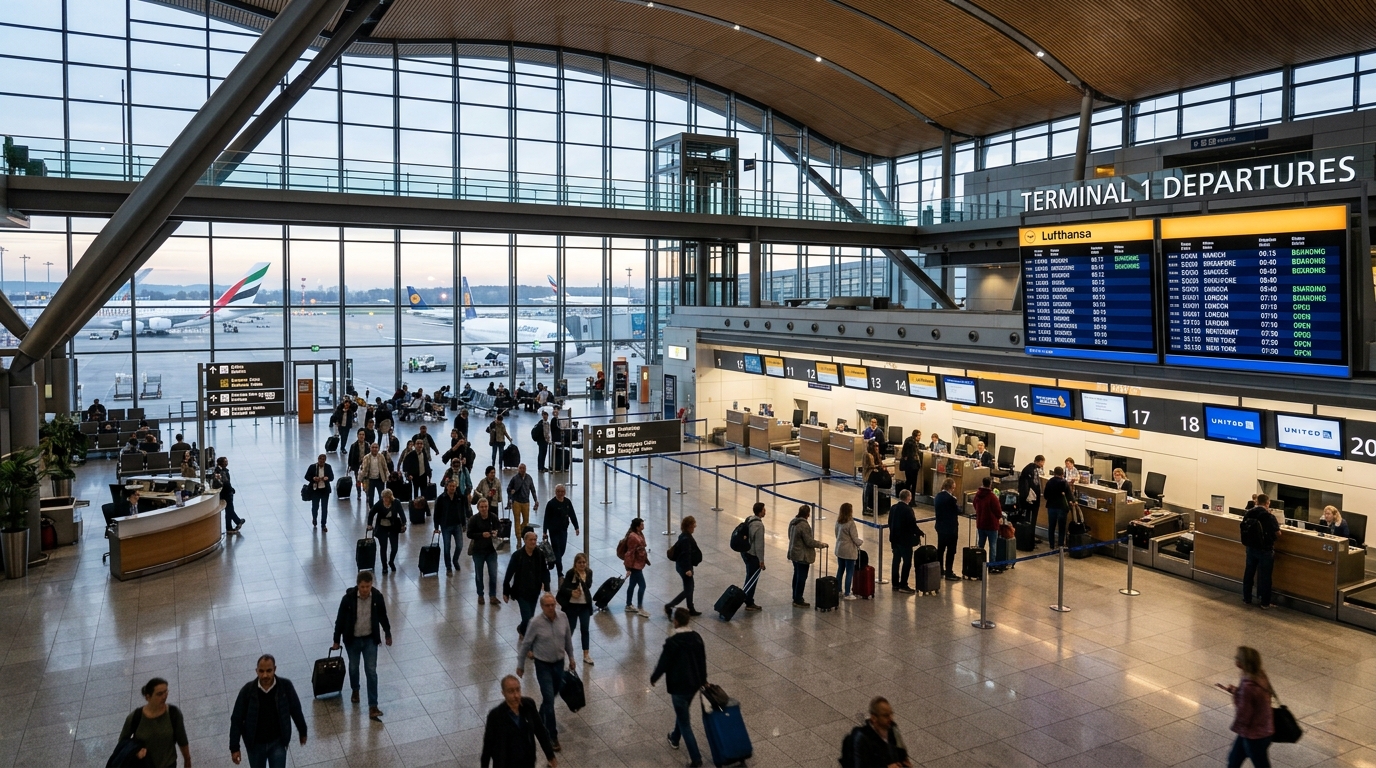
For most international flights, arriving about three hours before scheduled departure gives travelers a reasonable buffer for check-in, baggage drop, security, immigration, and the walk to the gate. But three hours is a guideline, not a universal rule.
The actual time you need depends heavily on your airline, the departure airport, your luggage, and whether you are traveling during a peak period. Arriving too late risks missed check-in deadlines and delayed baggage, while arriving excessively early can mean waiting outside closed counters.
Quick Answer: How Early to Arrive
- International flight recommended planning window: Around 3 hours before departure.
- Arriving earlier may make sense when:
- Airport is large or unfamiliar
- Peak travel periods or holidays
- Checking baggage or special equipment
- Traveling with a family or large group
- Manual visa/document verification is required
- Special mobility assistance is requested
- Terminal transfers are necessary
- Always verify with your airline:
- Check-in cutoff times
- Bag-drop cutoff times
- Boarding/gate closing deadlines
- Airport-specific instructions
Why Should You Arrive Early for an International Flight?
International travel generally requires significantly more time to process than domestic flights. The exact requirements vary by route, but an international departure usually involves several mandatory checkpoints:
- Airline check-in and document verification: Airlines are legally required to verify that you possess the correct passport validity and visas for your destination country.
- Checked baggage: Dropping off luggage requires queuing at the airline's counter.
- Security screening: International terminals often experience heavier security queues, especially during morning or evening departure banks.
- Immigration/passport control: Depending on the departing country, you may need to clear outbound border control.
- Walking to the gate: Large international terminals often require long walks or transit trains to reach the boarding area.
- Boarding deadlines: International flights utilize larger aircraft, meaning boarding begins and ends earlier than on regional jets.
Calculate Baggage Allowance & Fees
Avoid surprise check-in charges with our instant multi-airline baggage calculator.
Is 3 Hours Before an International Flight Enough?

For many travelers, arriving 3 hours before an international flight is a sensible and reliable target. Airlines like Hawaiian Airlines, Copa Airlines, and LATAM specifically advise travelers to arrive at least 3 hours prior to international departures to complete passport control, security, and baggage drop. Similarly, for long-haul transatlantic departures from London Heathrow, arriving 3 hours early is standard guidance to navigate security and gate boarding procedures.
However, 3 hours may be:
- More than necessary at smaller, highly efficient regional airports where you only have a carry-on bag.
- Not enough during major holiday rushes, at massive global hubs like New York JFK, or if you require extensive manual visa checks. For instance, travelers flying from JFK to Dubai are often advised to arrive 3 to 4 hours prior to scheduled long-haul departures.
Can You Arrive 2 Hours Before an International Flight?
While some travelers manage an international departure with only a 2-hour buffer, doing so removes almost all margin for error.
A 2-hour arrival might be workable if:
- You are departing from a small or simple airport.
- You have completed online check-in and possess a digital boarding pass.
- You are traveling with carry-on baggage only.
- You are a frequent flyer with fast-track security access.
- The airline explicitly permits a later check-in window.
However, arriving 2 hours prior becomes highly risky if there is an unexpected delay in traffic, a long security queue, or if the airline's bag-drop deadline is strictly enforced at the 60-minute mark. Always follow your specific airline's deadline rather than intentionally cutting it close.
Is 1 Hour Before an International Flight Enough?
Usually, 1 hour is too tight to use as a general planning strategy for international travel.
If you arrive exactly 60 minutes before scheduled departure:
- Check-in deadlines may have already passed. Many airlines strictly close international check-in 60 minutes prior to departure.
- Bag drop may be closed. The luggage system requires time to route bags to the aircraft.
- Boarding may already be underway. Large aircraft often begin boarding 45 to 50 minutes before takeoff.
- Gate closing deadlines are earlier than the scheduled departure time. If the gate closes 20 minutes before departure, you only have 40 minutes to clear security, immigration, and run to the gate.
Planning Travel Logistics?
Use FareWander tools to calculate flight times, luggage rules, and visa requirements.
What Time Should You Arrive Based on Your Situation?
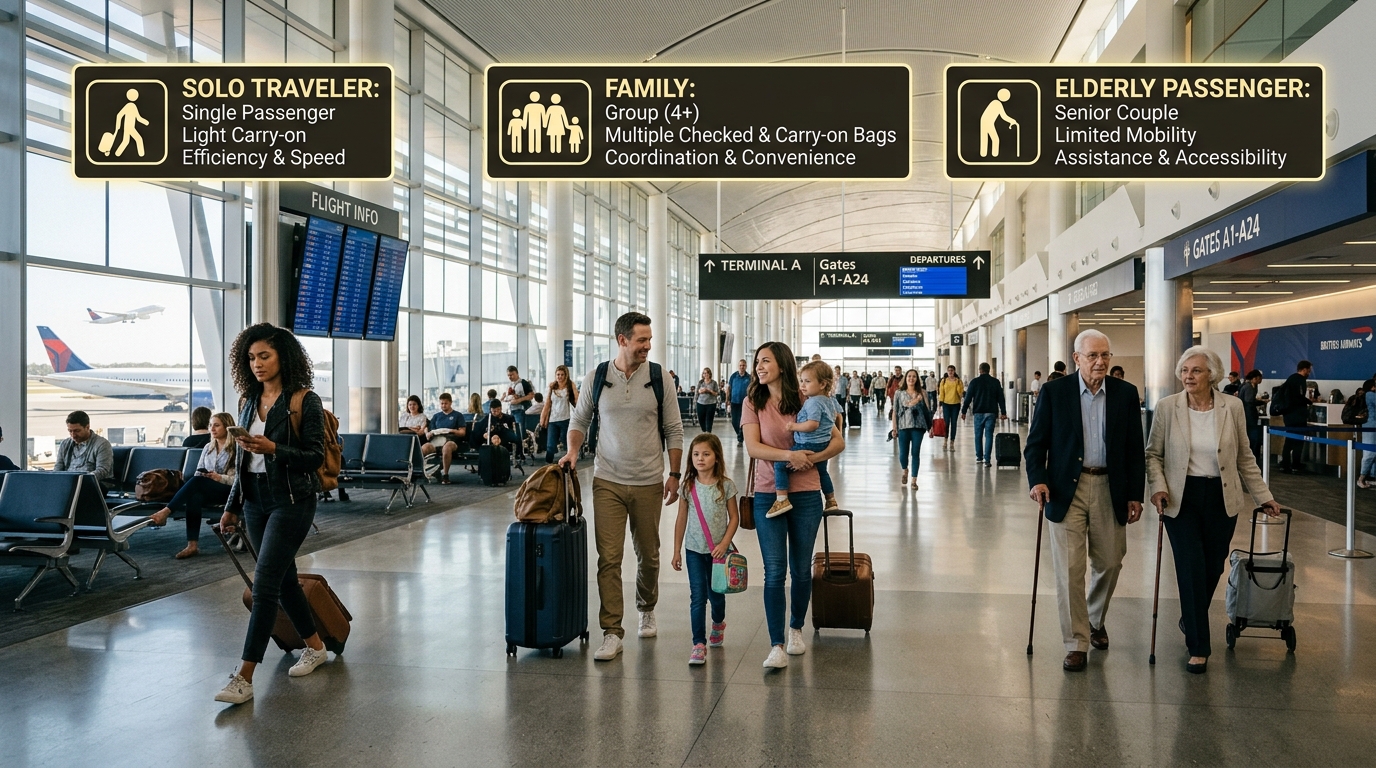
| Traveler Situation | Suggested Planning Approach | Why Extra Time May Help |
|---|---|---|
| Solo traveler, carry-on only, online check-in | Follow airline minimums (Often 2–2.5 hours) | You bypass the bag-drop queue, but still need time for security and walking to the gate. |
| Traveler with checked baggage | ~3 hours | Bag-drop queues can be long, and luggage cutoff times are strictly enforced. |
| Family with children | ~3 hours + extra buffer | Moving through terminals, security, and bathroom breaks takes longer with a group. |
| Elderly traveler or Special assistance | 3+ hours | Navigating large terminals or waiting for wheelchair escorts requires a comfortable time margin. |
| First-time international traveler | ~3 hours | Provides peace of mind to navigate unfamiliar signs, checkpoints, and terminal layouts. |
| Peak holiday travel | 3.5 – 4 hours | Security lines, check-in desks, and airport traffic are at maximum capacity. |
| Visa/document verification required | ~3 hours | Even with no checked bags, agents must manually verify travel documents before issuing a boarding pass. |
International Flight With Checked Baggage

Checking baggage inherently adds time to your airport experience. You must factor in the queue for the check-in counter, the time it takes the agent to tag your bag, and the airline's strict baggage acceptance cutoff.
If you bring oversized baggage, such as sports equipment or heavy cases, you may also need to take your items to a separate oversized luggage scanner after the main desk, adding an extra step to your morning. Always check your airline's baggage policy to understand exact cutoff times.
International Flight With Only Carry-On Baggage
Traveling with only a carry-on bag allows you to utilize online check-in and potentially skip the main ticketing lobby entirely.
However, traveling without checked baggage does not mean you can arrive at the last minute. You still need to account for passport checks, security queues, immigration, and the physical distance to your departure gate. Skipping the bag-drop line simply reduces one queue; it does not eliminate the entire airport process.
What Happens After You Arrive at the Airport?
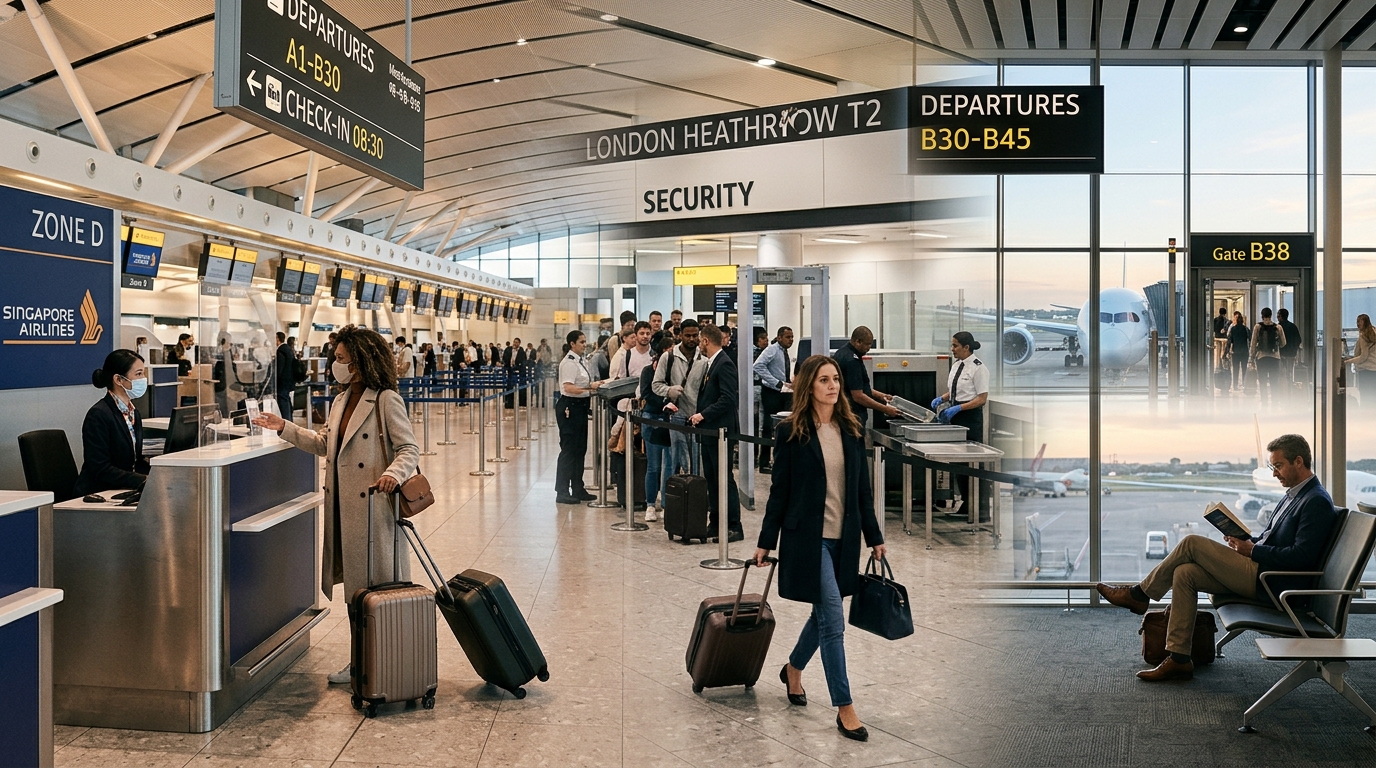
The typical flow for an international departure follows these steps, though the exact order can vary by airport:
- Enter the correct terminal: Verify your airline's operating terminal before arriving.
- Find airline check-in/bag drop: Drop off luggage and verify documents.
- Complete document checks: Show your passport and destination visas to airline staff.
- Receive/confirm boarding pass: Get your physical pass or activate your mobile version.
- Clear security: Passenger and carry-on bags are screened.
- Complete immigration/passport control: Exit border checks (where required by the departing country).
- Find departure gate: Follow terminal signage to your specific gate.
- Monitor flight information: Watch digital screens for gate changes or delays.
- Board before the airline's deadline: Present your pass and passport to board the aircraft.
How Long Do International Check-In Counters Stay Open?
There is no single universal cutoff time for international flights. Different airlines and airports mandate different check-in opening and closing times.
For example:
- Air India currently recommends arriving at least 3 hours before scheduled departure for international flights, while its airport check-in generally opens 3 hours before and closes 1 hour before departure.
- Emirates currently says most airports require arrival 3 hours before departure, with some airports allowing or requiring up to 4 hours.
- Delta currently suggests arriving at least 3 hours before international departures and states a 1-hour minimum check-in cutoff, while noting some airports have earlier requirements.
- KLM's current guidance varies by flight type and airport, providing different check-in opening and closing times.
Always check directly with your operating carrier, as these examples are guidelines, not universal rules.
When Should You Arrive Earlier Than 3 Hours?
Building an additional buffer is a sensible strategy under specific circumstances:
- Major national holidays or school holiday periods
- Departing from massive international hubs (e.g., London Heathrow or New York JFK)
- Traveling with pets, sports equipment, or oversized baggage
- You require a manual visa check or complex entry documentation
- You are traveling with a large group or young children
- You are using an unfamiliar airport or require a terminal transfer via bus/train
- Uncertainty regarding local traffic, trains, or airport transportation
When Might You Not Need the Full 3 Hours?
You might not need a full three hours if you are departing from a very small regional airport with a simple layout, you have already completed online check-in, you are traveling with carry-on luggage only, and you have no complex visa requirements.
However, the airline and airport's specific instructions always take priority. If your carrier mandates a strict 3-hour arrival, it is best to comply.
What Is the Difference Between Check-In, Security, Immigration and Boarding?
Understanding aviation terminology helps clarify why international departures take time.
| Stage | What Happens | Why It Matters |
|---|---|---|
| Check-in | Passenger confirms travel, verifies documents, and receives boarding pass. | Must be done before the airline's cutoff (often 60 mins prior). |
| Bag drop | Checked baggage is handed to the airline. | Bags must be routed through security to the aircraft. |
| Security | Passenger and carry-on baggage are screened. | Wait times fluctuate heavily based on terminal traffic. |
| Immigration | Travel documents are checked by government border officials. | Required in many countries to officially exit the nation. |
| Gate | Passenger waits in the designated boarding area. | Gate assignments can change; monitoring screens is essential. |
| Boarding | Passenger enters the aircraft before the deadline. | Doors close before the scheduled departure time. |
| Departure | Aircraft pushes back and leaves. | This is the time printed on your ticket, not the time you board. |
How Long Before Departure Should You Be at the Gate?
Gate deadlines vary significantly by airline and aircraft size.
For instance, Emirates currently tells passengers to reach the gate no later than 60 minutes before departure in Premium Economy/Economy and 45 minutes in First/Business. Delta recommends being at the gate and ready to board 45 minutes before an international departure.
These are airline-specific examples. Always check your boarding pass for the exact "Gate Closes" or "Boarding Ends" time. If flying overnight, review our guide to red-eye flights to prepare for late-night gate logistics.
What Happens If You Arrive Late at the Airport?
If you arrive late, the consequences cascade quickly:
- Missed check-in/bag-drop: The system automatically locks, and agents cannot accept your luggage.
- Missed security/immigration: You may not physically reach the gate in time.
- Missed boarding (No-show): Failing to board results in a "no-show" status, which generally forfeits the ticket value and cancels all remaining downstream segments of your itinerary.
- Rebooking costs: If you miss your flight, rebooking is subject to fare differences and penalty fees, depending on your ticket rules.
If you know you will be late, contact your airline immediately before the flight departs.
How Early Should Families Arrive for an International Flight?

Families traveling internationally should generally build extra buffer time rather than cutting it close. Navigating an airport with children, strollers, car seats, and multiple pieces of baggage naturally takes longer. Consolidating travel documents, managing bathroom breaks, and walking at a slower pace through massive terminals require a relaxed schedule. Following the standard 3-hour recommendation—or adding 30 extra minutes—reduces travel day stress.
How Early Should You Arrive If You Need Special Assistance?
Passengers requesting wheelchair assistance, mobility support, medical equipment handling, unaccompanied minor services, or pet travel should always follow the airline's special-assistance reporting instructions. Processing these requests takes dedicated staff time. Use official airline guidance, which often recommends arriving well ahead of standard minimums to ensure a smooth escort through security and to the gate.
Does Online Check-In Mean You Can Arrive Later?
Online check-in can save time at the airport, but it does not eliminate airport procedures. While you might bypass the ticketing kiosk, you still need to drop checked bags, verify your passport (if the airline requires a physical document check), stand in security lines, clear immigration, and walk to your gate. Online check-in streamlines your arrival; it does not make your arrival time irrelevant.
Does a Red-Eye or Early-Morning International Flight Change the Recommended Arrival Time?
The general recommendation remains based on the airport and airline's official instructions, regardless of the hour. However, early-morning or red-eye flights can have different operational constraints. Public transport schedules might be limited at 3:00 AM, and airport check-in desks or specific security lanes may not open until a fixed hour. Always check the airport and airline operating hours to ensure you don't arrive so early that the terminal doors are locked, or so late that you miss the morning rush.
International Flight From India: How Early Should You Arrive?
For many international departures from India, arriving around 3 hours before departure is a useful general planning target, though the airline and airport's exact deadlines always take priority.
Departing from major Indian hubs involves multiple layers of processing:
- Terminal Entry: You must present your ticket and passport to security personnel just to enter the building.
- Airline Check-in: Document checks and baggage drop.
- Immigration: Outbound passport control can experience heavy queues during peak international departure banks.
- Security: Hand baggage screening occurs after immigration.
Because large airports manage immense volume during peak nighttime departure banks, allowing ample time is crucial.
How Early Should You Arrive at Delhi Airport for an International Flight?
When flying internationally out of Delhi's Indira Gandhi International Airport (DEL) (typically Terminal 3), current general guidance aligns with arriving approximately 3 hours before your scheduled departure. Airlines like Air India recommend a 3-hour buffer for international flights to navigate terminal entry, check-in, immigration, and security. Always factor in Delhi's variable traffic conditions separately; your transportation buffer should be added on top of your airport processing time.
How to Plan Your Airport Arrival Time
To calculate your ideal departure from home, use this practical planning framework:
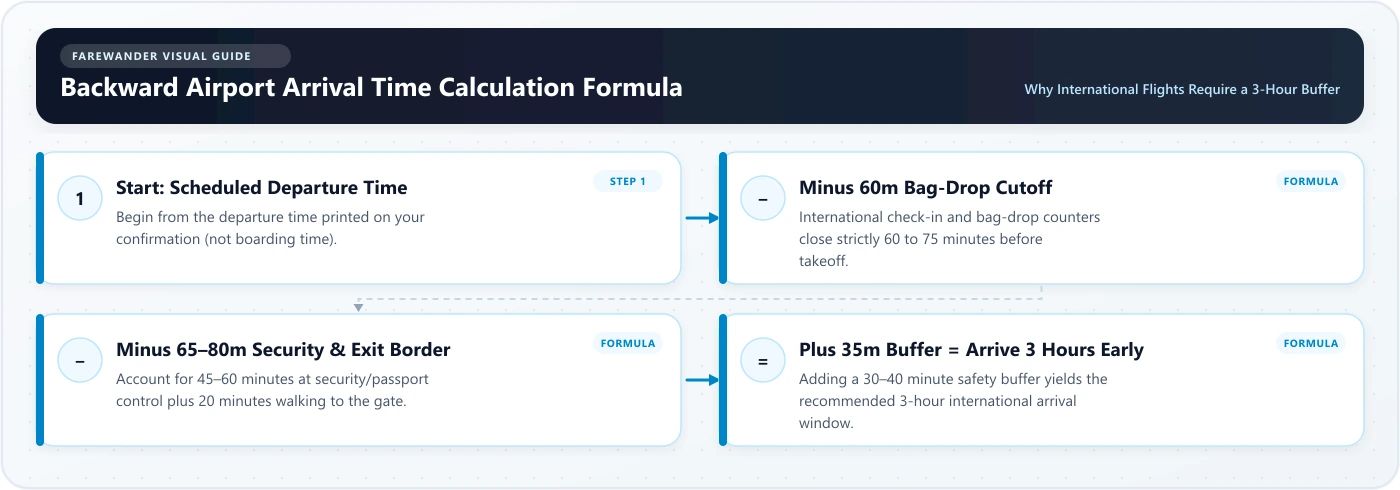
Always work backward from the airline's actual deadlines, then factor in your travel time to the airport.
International Airport Arrival Checklist
BEFORE LEAVING HOME:
- Check departure terminal
- Check live flight status
- Complete online check-in if available
- Confirm passport validity (usually 6 months required)
- Confirm destination visa/entry requirements
- Check baggage allowance and weigh bags
- Prepare physical and digital documents
- Check airport transportation and traffic
AT THE AIRPORT:
- Check in / drop baggage
- Complete airline document verification
- Clear security
- Clear immigration/passport control
- Find your departure gate
- Monitor flight status screens
- Be at the gate before the boarding deadline
Airport Arrival Time: Common Mistakes
- Treating "3 hours" as a guaranteed rule rather than a guideline.
- Ignoring the airline's strict check-in and bag-drop deadlines.
- Assuming online check-in removes all airport queues.
- Arriving at the wrong terminal at a massive global hub.
- Ignoring peak holiday travel periods and massive security lines.
- Forgetting that outbound immigration takes time.
- Not checking the walking distance to the departure gate.
- Confusing the "boarding time" with the "departure time."
- Leaving home with zero transportation buffer for traffic.
Frequently Asked Questions
For most international flights, arriving around 3 hours before scheduled departure is a highly recommended planning target to clear check-in, security, and immigration smoothly.
Conclusion
For most international departures, planning to be at the airport around three hours before scheduled departure is a sensible starting point. But your airline's check-in and bag-drop deadlines, the airport's procedures, and your own circumstances should determine your final timing.
Authoritative Aviation Security & Operations Sources
- Transportation Security Administration (TSA): Security Screening Wait Times & Checkpoint Guidelines.
- International Air Transport Association (IATA): Airport Passenger Terminal Design & Processing Queue Standards.
- Airports Council International (ACI World): Airport Service Quality (ASQ) Passenger Processing Time Benchmarks.
- U.S. Customs and Border Protection (CBP): Advance Passenger Information System (APIS) & Boarding Pass Gate Closes Rules.