Neither is universally better. A round-trip flight is usually the simplest option when you know your return date, while a one-way flight can be more useful when your plans are flexible or you are continuing elsewhere.
When planning a trip, travelers often assume that a standard round-trip ticket is the default choice. However, price alone should not determine your decision. Finding the best flight requires comparing the total cost alongside factors like flexibility, baggage allowances, change fees, and cancellation rules. Furthermore, for international itineraries, destination entry requirements may dictate whether you can travel on a one-way ticket at all.
This guide breaks down exactly how one-way and round-trip flights compare, the risks of combining separate tickets, and how to choose the right itinerary for your travel style and destination.
 Comparing one-way and round-trip flights involves looking beyond just the base fare.
- • You do not know your return date
- • You are relocating permanently or long-term
- • You are continuing to another destination
- • You have a flexible backpacking itinerary
- • You found a better total price across different airlines
- • You know your exact return date
- • The same airline offers a competitive bundled fare
- • You want single-booking convenience for both legs
- • The fare rules & bag policies are favorable
- • Immigration requires return / onward proof
What Is a One-Way Flight?
A one-way flight takes a traveler from their origin to their destination without including a return flight in the same ticket or itinerary.
Example:
Delhi → London
If you book this one-way ticket, the airline's obligation ends once you land in London. You can later book a separate flight from London back to Delhi, or you can continue your journey to another country. One-way searches are helpful for open-ended travel, relocation, or when combining different modes of transportation.
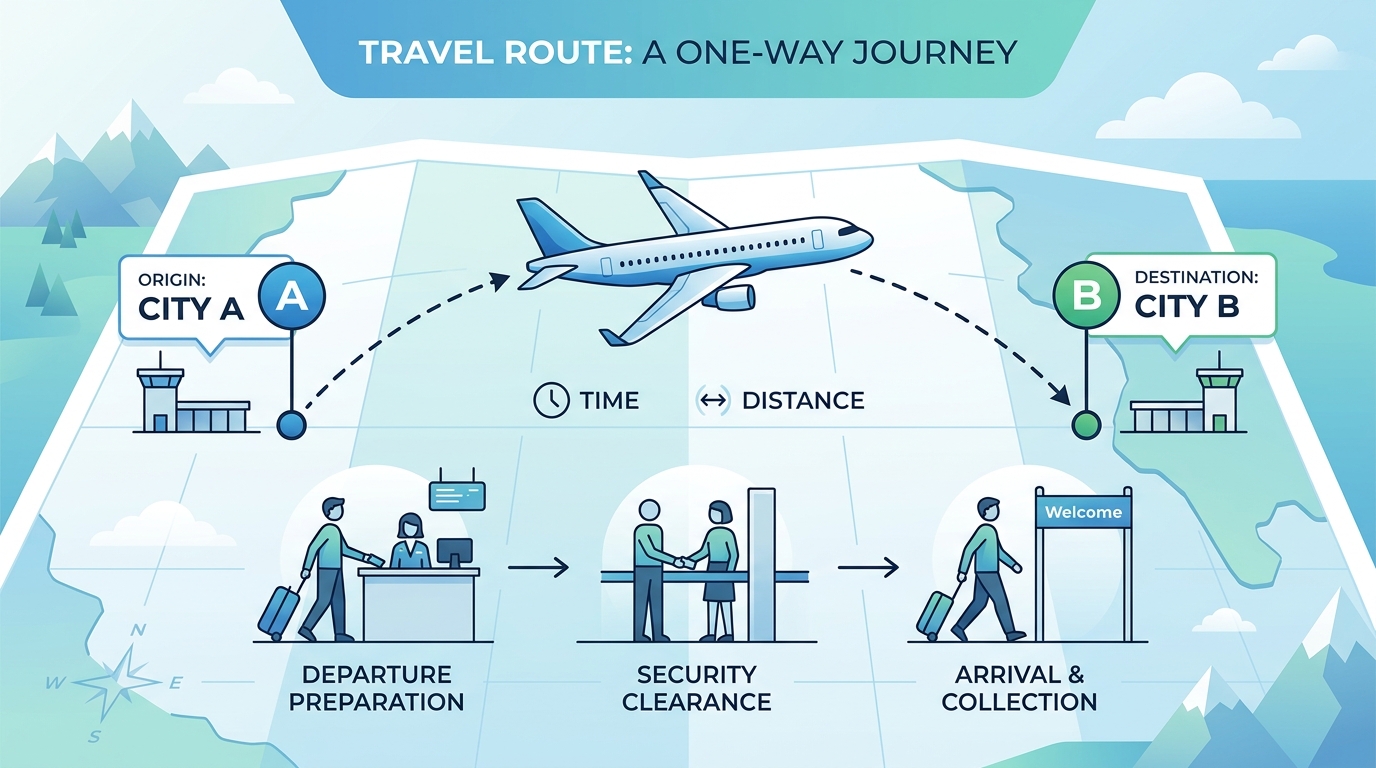 A one-way flight takes you from your origin to a single destination.
What Is a Round-Trip Flight?
A round-trip itinerary generally includes transportation from your origin to your destination and back again. Flying from your home origin to a single destination and returning to that same origin point is the standard definition of a round trip.
Example:
Delhi → London (Outbound)
London → Delhi (Return)
In a standard round-trip booking, both directions are booked together as one continuous itinerary under a single reservation record. Keep in mind that fare rules (like change fees and baggage limits) usually apply to the entire round-trip ticket, though specific cabin classes can sometimes be mixed.
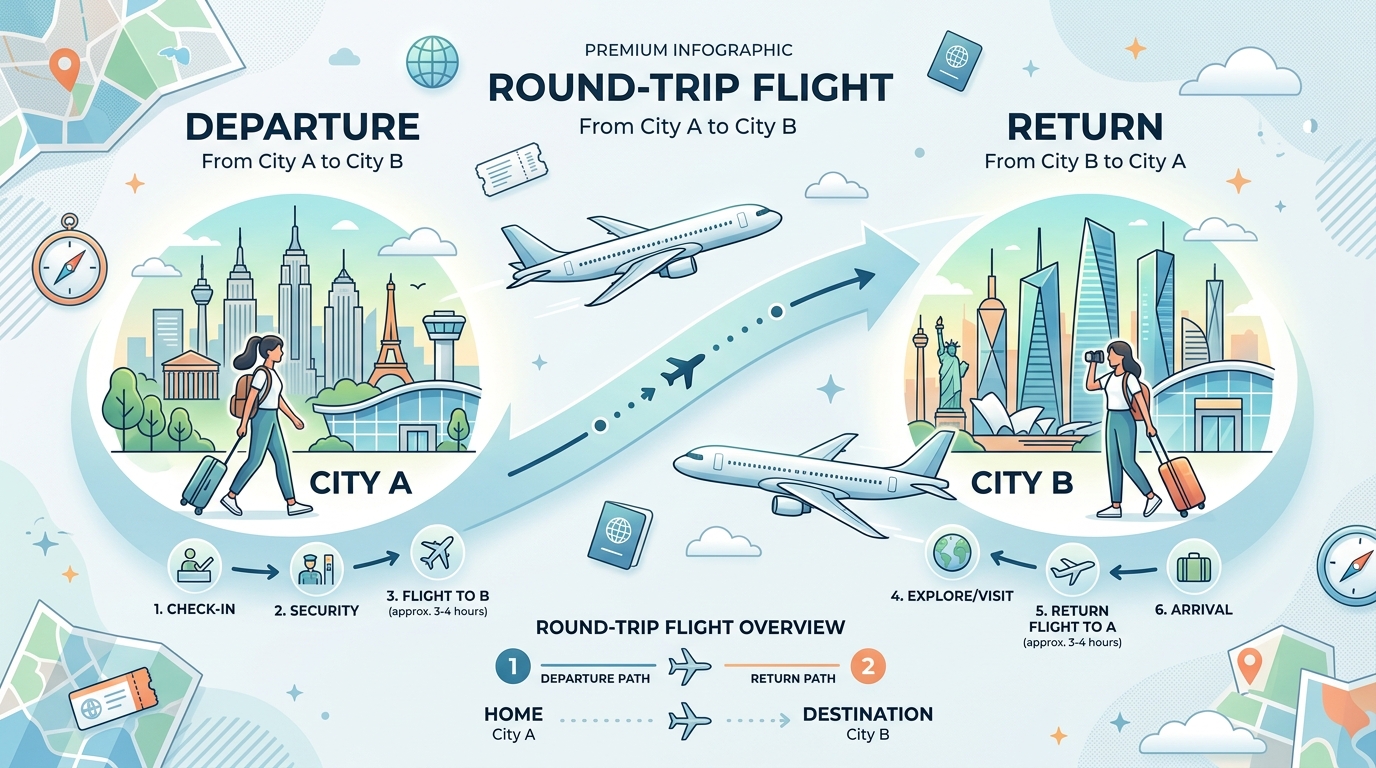 A round-trip flight returns you to your original departure point on a single ticket.
Comparing Fares for Your Route?
Search live multi-airline schedules, spot discount windows, and baggage fee rules on FareWander.
One-Way vs Round-Trip: At-a-Glance Comparison
| Feature | One-Way | Round-Trip |
|---|---|---|
| Includes return flight | No | Yes |
| Upfront simplicity | Lower (requires booking return later) | Higher |
| Flexibility | High (for open-ended travel) | Depends on airline/fare |
| Price | Varies by route and demand | Varies by route and demand |
| Changes | Depends on airline/fare | Depends on airline/fare |
| Cancellation | Depends on airline/fare | Depends on airline/fare |
| Baggage | Depends on airline/fare | Depends on airline/fare |
| International travel | May require proof of onward travel | Generally satisfies return rules |
| Open-ended travel | Excellent | Poor |
| Return-date certainty | Not required | Required |
Are Round-Trip Flights Cheaper Than One-Way Flights?
Sometimes—but not always.
Whether a round-trip flight is cheaper depends on airline pricing strategies, route-specific pricing, fare inventory, seasonality, and overall market demand.
On many domestic and regional routes, airlines use one-way pricing. This means a round-trip ticket simply costs the exact sum of the outbound one-way fare plus the return one-way fare.
However, on long-haul international routes (such as India to the USA or Europe), round-trip pricing can be substantially more competitive than buying a single one-way ticket. Airlines heavily discount international round-trip fares to secure your business for both legs of the journey. In some legacy carrier pricing models, a single international one-way ticket can actually cost almost as much as the entire round trip.
This pricing behavior is NOT universal. Low-cost carriers often price flights segment-by-segment regardless of borders. Always compare flight prices across both fare types.
Is It Cheaper to Buy Two One-Way Tickets?
Sometimes combining two separate one-way tickets on different airlines can produce lower total airfare or provide better departure times. For example, you might fly outbound on a legacy carrier and return on a budget airline.
However, if using separate tickets, you must be aware of the trade-offs:
- Each ticket has its own rules: You must navigate two different sets of cancellation and change policies.
- No connection protection: If your outbound flight is delayed or cancelled, the return carrier is under no legal obligation to refund or alter your return ticket without standard change fees.
- Baggage arrangements can be different: One airline may include a checked bag, while the other charges a steep fee.
- Rebooking is your responsibility: In the event of a major disruption, managing two separate bookings is more complex.
Planning Travel Logistics?
Use FareWander tools to calculate flight times, luggage rules, and visa requirements.
One-Way vs Two One-Way Tickets
When comparing a single round-trip itinerary against two separate one-way tickets, consider these factors:
| Feature | One Round-Trip Ticket | Two Separate One-Way Tickets |
|---|---|---|
| Price | Often discounted on international routes | Can be cheaper if utilizing different airlines |
| Flexibility | Must adhere to one set of fare rules | Can mix flexible vs non-refundable fares |
| Changes | Changing one leg may repricing the whole ticket | Change fees apply independently to each ticket |
| Cancellation | Canceling cancels the entire trip | You can cancel one direction independently |
| Baggage | Usually consistent across both flights | May vary wildly depending on airlines chosen |
| Connection Protection | High (single contract) | Low (distinct contracts) |
| Airline Choice | Limited to one airline or its partners | Unlimited (choose best carrier for each direction) |
When Is a One-Way Flight Better?
Traveler Scenario:
Traveler B has an open-ended travel plan and wants to backpack across Southeast Asia. A one-way ticket offers the flexibility they need.
A one-way flight can make sense when:
- Return date is unknown: You want the freedom to stay longer.
- Relocation: You are moving to a new city permanently.
- Long-term travel: You are embarking on a trip lasting several months.
- Backpacking: Your route is flexible and largely unplanned.
- Multi-country trip: You are traveling overland to neighboring countries.
- Studying abroad: Your academic semester end-date is flexible.
- Moving abroad: You have acquired long-term residency.
- Continuing to another city: You do not intend to return to your origin.
- Different return airport: You plan to fly back from a completely different region.
- Different airline preference: You want to use frequent flyer miles for the return leg on a different carrier.
When Is a Round-Trip Flight Better?
Traveler Scenario:
Traveler A knows the exact return date for their two-week vacation. A round-trip ticket provides peace of mind and convenience.
A round-trip flight is typically better when:
- Fixed return date: Your vacation time or business schedule is set.
- Short vacation: You are traveling for a few days or weeks.
- Business trip: You have a scheduled conference or meeting.
- Visiting family: Your travel dates are bound by a holiday period.
- Same origin and destination: You are flying A → B and B → A.
- One booking is more convenient: You want one confirmation code for easy management.
- Round-trip fare is cheaper: The airline offers a heavy discount for booking both ways.
- Simpler itinerary management: You want a single airline to handle disruptions.
One-Way Flights for International Travel
 International one-way travel often requires proof of onward travel at border control.
A one-way ticket is perfectly valid for international travel, but destination-country entry rules are strictly enforced by immigration authorities and the operating airline.
When arriving as a tourist or short-term visitor, border officials frequently request evidence of booked return flights or onward travel tickets before granting entry clearance. You may also be asked for evidence of sufficient funds, accommodation, and an approved visa.
Entry requirements vary greatly by nationality, destination, and immigration status. Never assume that a one-way ticket is universally forbidden, but equally, never assume you can board an international flight one-way without verifying the rules. Check our comprehensive Visa Guides before booking.
Can You Travel Internationally on a One-Way Ticket?
Yes, in many situations. For instance, if you are an Indian citizen holding a valid work permit, student visa, or long-term residence permit for the UK, you can safely travel on a one-way ticket from India to London.
However, if you are traveling on a standard tourist visa, the airline check-in staff may verify your documentation before boarding. If you cannot provide proof that you intend to leave the destination country within the permitted timeframe, the airline can legally deny you boarding to avoid immigration fines.
Proof of Onward Travel vs Return Ticket
If you are traveling internationally on a one-way ticket, you may need to satisfy immigration rules by showing proof of travel out of the country.
- Return ticket: A flight taking you from your destination back to your original departure country or city.
- Onward ticket: A flight taking you from your destination to another sovereign destination.
Example:
India → Thailand (One-way inbound)
Thailand → Vietnam (Onward ticket)
The flight from Thailand to Vietnam serves as proof of onward travel, satisfying Thai immigration that you will leave before your tourist visa expires. Whether proof is required depends on the destination's rules and your traveler status.
One-Way vs Round-Trip for Visa Applications
Some embassy visa applications may request evidence of onward travel, return plans, a flight itinerary, or accommodation bookings.
Requirements vary by country. A round-trip ticket does not automatically guarantee visa approval, nor does a one-way ticket automatically cause a visa refusal, provided you supply the alternative documentation requested by the consulate (such as a detailed overland itinerary or onward flight). Always use official embassy sources to confirm exactly what flight documentation is required for your visa category.
Baggage: One-Way vs Round-Trip
Baggage allowance is generally determined by the airline, the specific fare family purchased, the route, the ticket cabin, and your frequent-flyer status.
A round-trip ticket does not automatically mean more baggage, and a one-way ticket does not automatically mean less baggage. However, if you book two separate one-way tickets on different airlines, you must carefully check the baggage rules for both. Airline A might allow 23 kg of checked luggage, while Airline B might charge a premium for anything over 15 kg.
Changing Your Return Date
- Round-trip: Changing the return segment may be possible depending on the fare rules. You will typically pay a change fee plus the fare difference between the old flight and the new flight. If you purchased a flexible fare, the change fee may be waived.
- One-way: There is no return segment to change. If you need to stay longer, you simply delay booking your return one-way ticket.
If your travel dates are highly volatile, buying a one-way ticket and purchasing the return later can sometimes be more cost-effective than repeatedly paying change fees on a round-trip ticket. Review our guide on Basic Economy vs Economy for details on ticket flexibility.
What Happens If You Don't Use the Return Portion of a Round Trip?
If a traveler intentionally misses or abandons a flight segment (often called "throwaway ticketing"), airline fare rules immediately affect the remaining itinerary.
If you fly the outbound leg of a round-trip ticket but are a "no-show" for the return leg, the airline will automatically cancel any subsequent segments on that itinerary. While you may simply lose the value of the return flight, doing this frequently violates airline terms and conditions. Always contact the airline before skipping a segment.
Can You Book a One-Way Flight and Add the Return Later?
Yes, travelers can generally purchase a separate return ticket at a later date.
This offers ultimate flexibility, but you must accept the financial risk. By the time you are ready to book, the fare may have increased significantly, seat availability may be scarce, and schedules may have changed. Furthermore, buying the return on a different airline introduces the risks of separate-ticket baggage and loyalty rule differences.
One-Way vs Round-Trip for Families
For families traveling with children, round-trip tickets generally simplify itinerary management. It ensures all family members are on the same booking record, making it easier to select seats together and manage schedule changes.
However, one-way flights can make sense for families embarking on a relocation, extended sabbatical, or dealing with an uncertain return date. Be sure to check children's fare discounts, as some international airlines only apply child discounts to round-trip fares.
One-Way vs Round-Trip for Business Travel
Round-trip tickets are highly convenient when business meetings have fixed dates. Corporate travel policies often prefer standard round trips for expense reporting.
Conversely, one-way tickets can help when a business schedule is uncertain, the onward destination is unknown (e.g., a sales tour), or the return is being booked separately based on client needs. Emphasize fare flexibility when booking business one-ways to avoid sunk costs.
One-Way vs Round-Trip for International Relocation
One-way flights make practical sense when moving abroad, studying abroad, starting a new job, or taking up long-term residence in a foreign country. In these cases, you likely have a visa that permits a long stay, negating the need for a return ticket at border control. Just ensure your documentation is fully compliant before arriving at the airport.
One-Way vs Round-Trip vs Open-Jaw vs Multi-City
Do not limit yourself to standard one-way or round-trip bookings.
 Open-jaw and multi-city itineraries offer flexibility when traveling to multiple regions.
- One-way: A → B
- Round-trip: A → B → A
- Open-jaw: A → B, then C → A (e.g., fly into London, take a train to Paris, fly home from Paris).
- Multi-city: A → B, then B → C, then C → A (all on one ticket).
Booking a multi-city itinerary under one master reservation is significantly cheaper and easier to manage than purchasing multiple separate one-way tickets between individual cities. It provides connection protection and centralized baggage rules. Read our analysis of Direct vs Nonstop vs Connecting Flights for routing insights.
How to Decide Which Flight Type Is Better
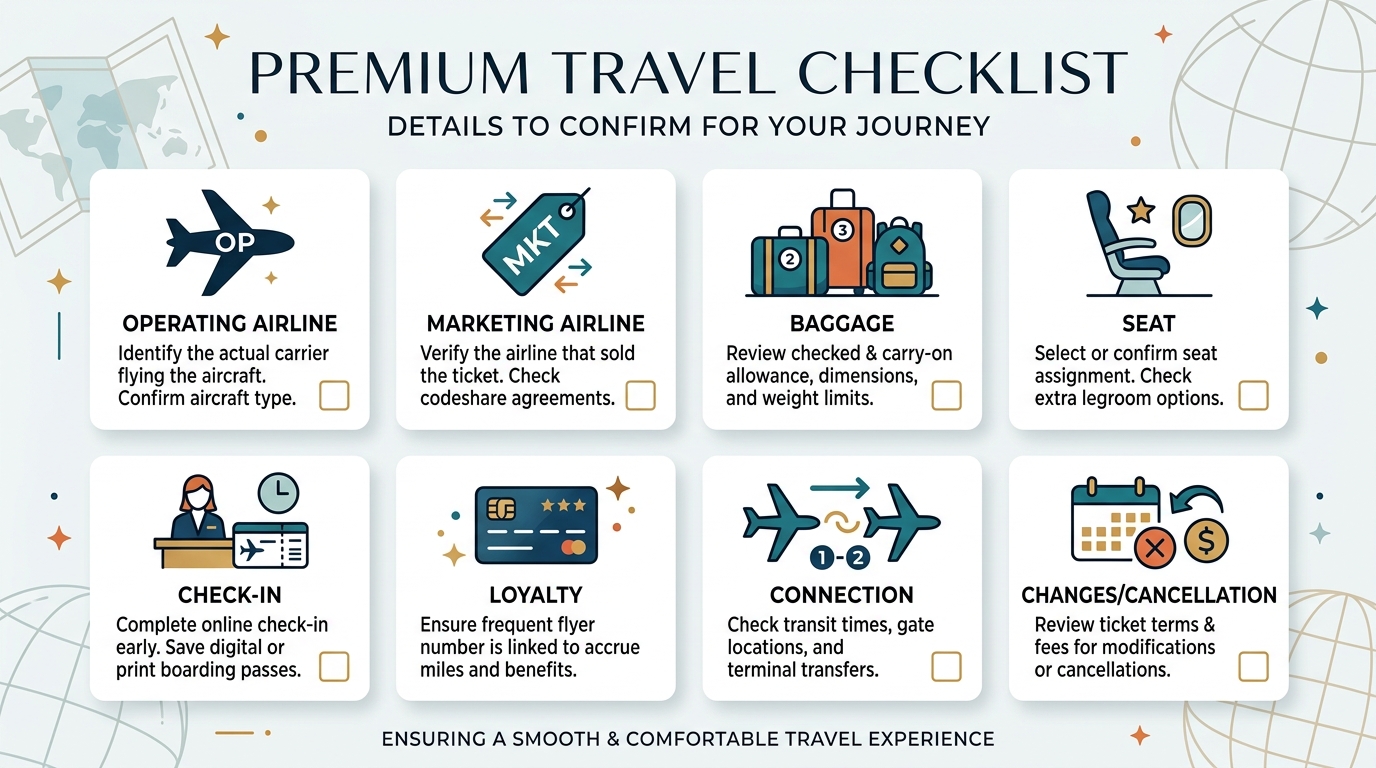 Use this simple framework to decide which flight type fits your itinerary.
- STEP 1: Do you know your return date?
- YES → Compare round-trip prices first.
- NO → Compare one-way options.
- STEP 2: Are you continuing to another destination?
- YES → Compare one-way, multi-city, and open-jaw options.
- STEP 3: Is the trip international?
- YES → Check official visa and onward-travel requirements for your passport.
- STEP 4: Compare total cost.
- Include the base fare, baggage fees, seat selection, change/cancellation fees, and mandatory taxes.
- STEP 5: Check ticket structure.
- Evaluate the risks of a single itinerary vs separate tickets.
- STEP 6: Choose based on total value and flexibility.
How to Compare One-Way and Round-Trip Prices Properly
Do not simply compare a one-way headline fare against a round-trip headline fare.
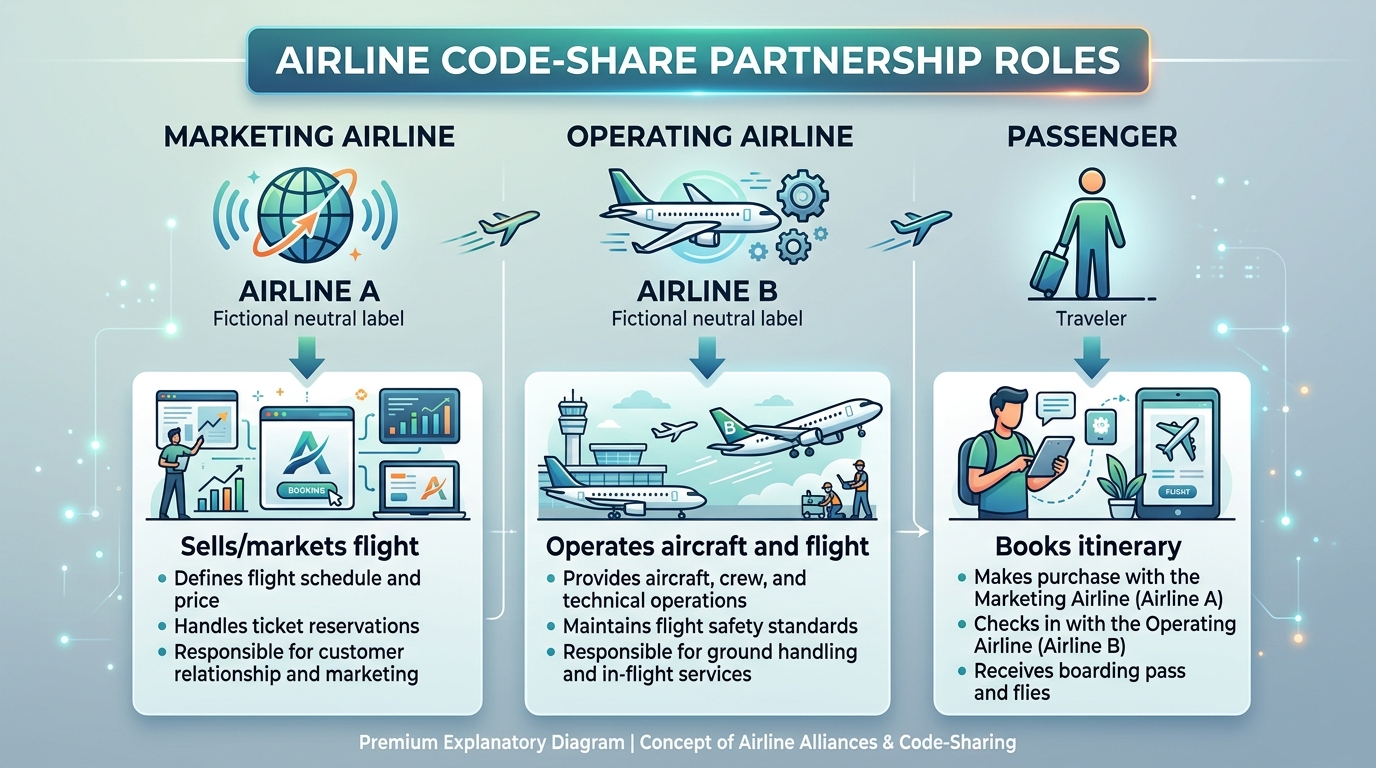 Always compare the total cost, including baggage and seat selection, not just the headline fare.
Instead, compare:
- OPTION A: Round-trip total cost
- OPTION B: Outbound one-way total cost + Return one-way total cost
Include baggage, seats, taxes, change/cancellation fees, and connection risks for both options. (For example, learn how to find cheap flights using segment-by-segment comparisons).
Common Mistakes to Avoid
- Assuming a round-trip flight is always cheaper.
- Assuming a one-way ticket is always more flexible.
- Ignoring the cost of checked and carry-on baggage.
- Ignoring change and cancellation fees.
- Ignoring fare class differences.
- Forgetting to verify destination visa and onward-travel requirements.
- Buying separate one-way tickets with risky, unprotected connections.
- Ignoring airport or terminal changes on complex itineraries.
- Assuming cheap return fares will still be available weeks later.
- Skipping the return segment of a round trip without checking airline penalty rules.
Booking Checklist
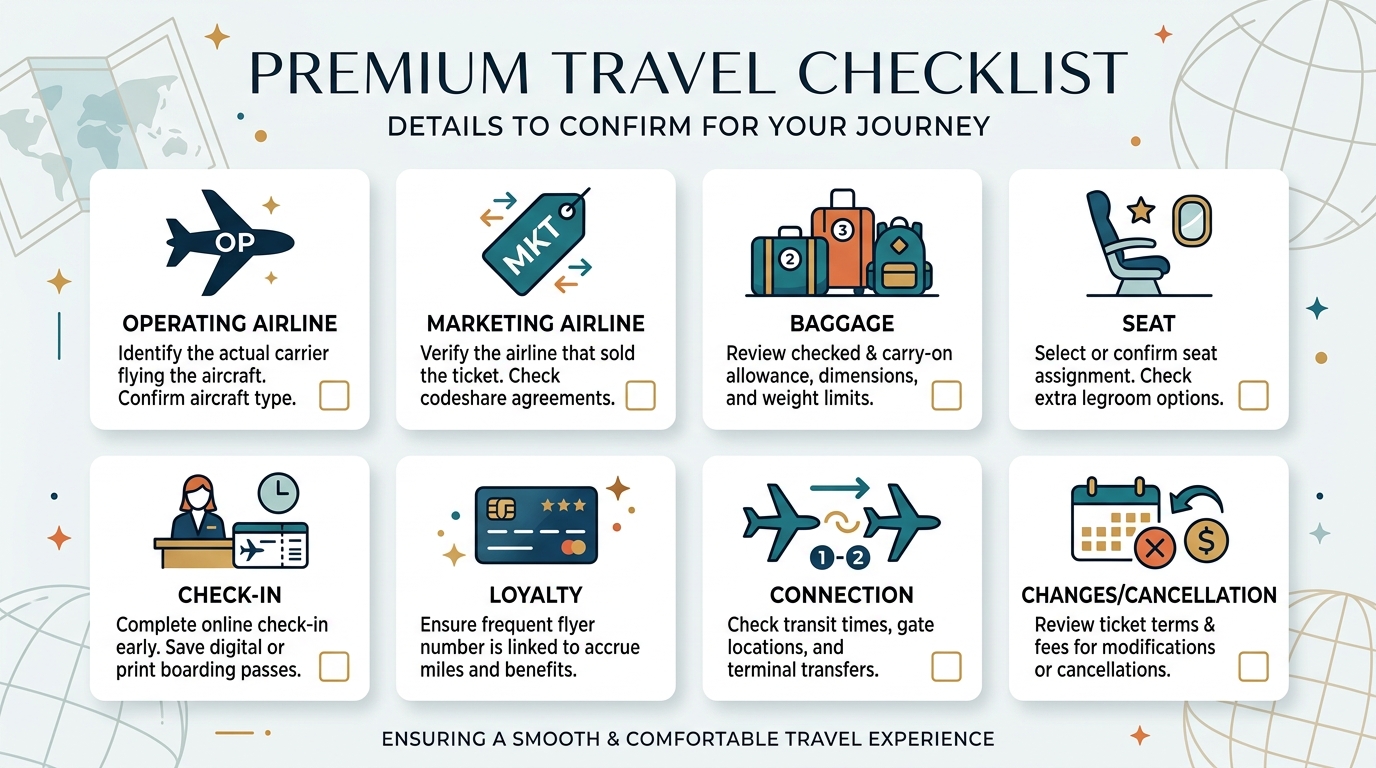 Verify baggage rules, connection protection, and visa requirements before booking your flight.
- Know your return date
- Compare round-trip price
- Compare two one-way prices
- Check baggage policies
- Check seat fees
- Check change policy
- Check cancellation policy
- Check refund conditions
- Check visa requirements
- Check onward/return travel requirements
- Check whether tickets are separate
- Check connection protection
- Check airport/terminal layout
- Check total price before payment
Frequently Asked Questions
Sometimes, but not always. On domestic routes, a one-way is usually exactly half the price of a round-trip. On international routes, one-way tickets can sometimes be disproportionately expensive compared to discounted round-trip fares.
Conclusion
Neither one-way nor round-trip is universally better. If your return date is fixed, a round-trip may be the simplest option and can sometimes offer competitive pricing. If your plans are flexible, you're relocating, or you're continuing to another destination, a one-way or multi-city itinerary may make more sense.
Before booking, always compare the total cost, baggage allowances, flexibility, and change rules. Most importantly for international journeys, verify your destination's entry requirements—ensuring you hold the necessary proof of onward travel or visa documentation if you opt for a one-way ticket.