How to Choose the Best Seat on a Plane
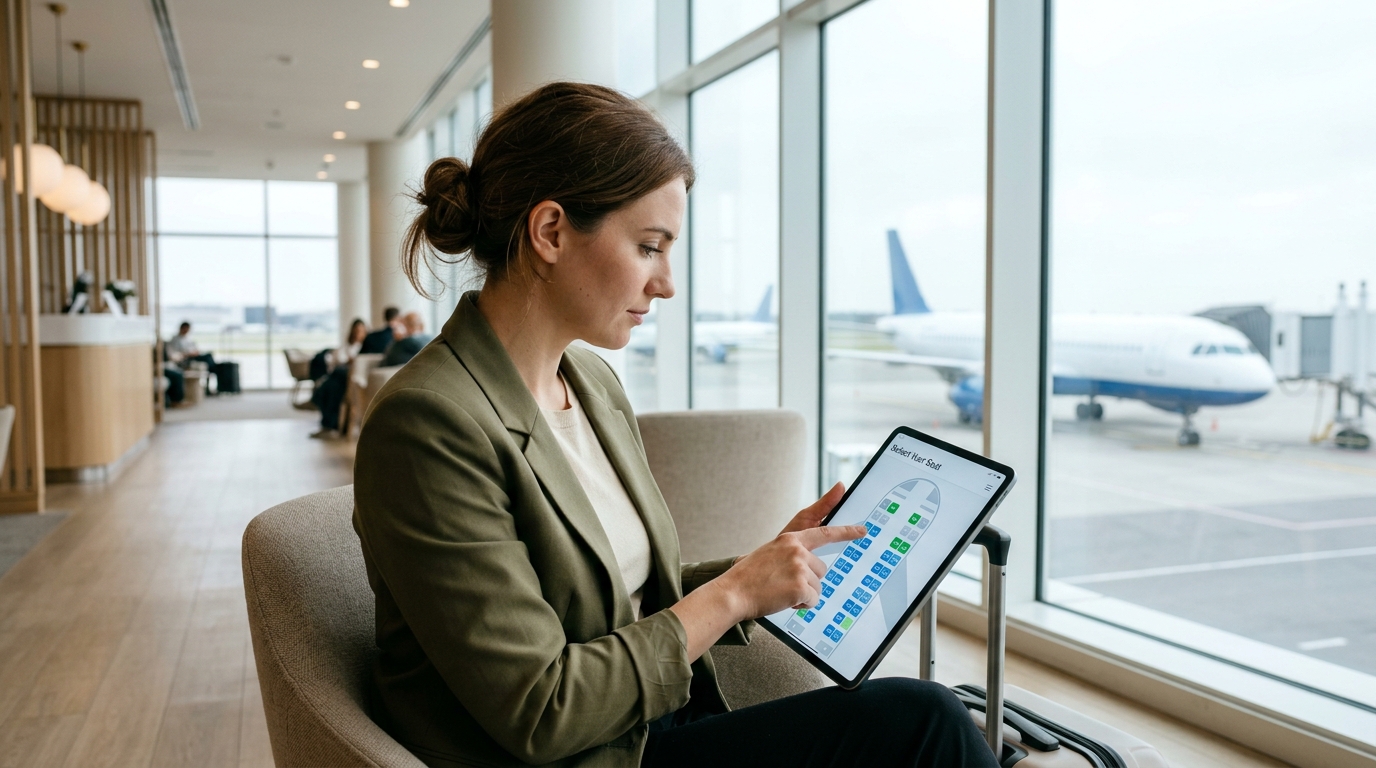 Check the exact aircraft seat map before finalizing your seat selection.
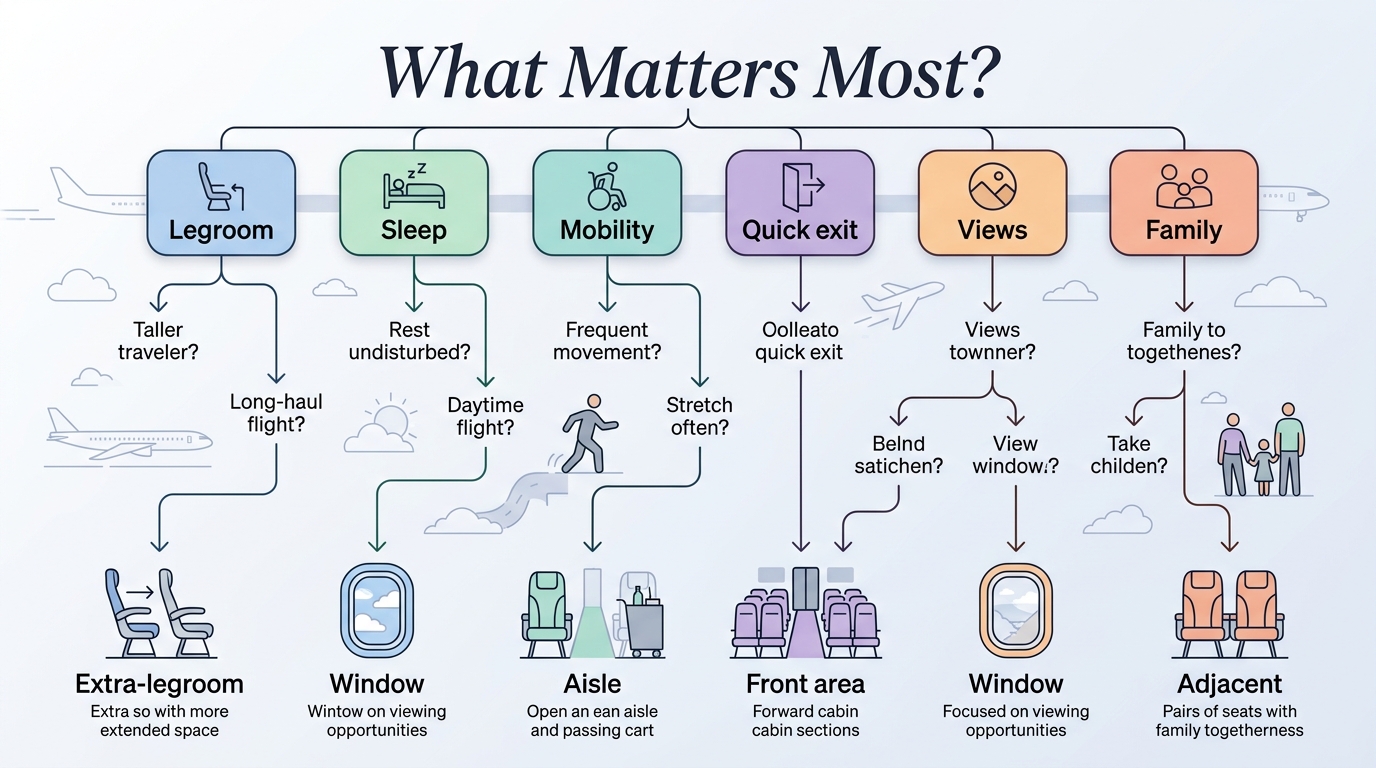
- •Legroom: Exit row, designated extra-legroom seats, or bulkhead rows.
- •Sleeping: Window seat away from lavatories and galleys.
- •Bathroom Access: Aisle seat (preferably a few rows away from lavatories).
- •Quick Exit: Front rows or aisle seat near the front.
- •Less Motion: Seats near the aircraft's center of gravity / over the wing.
- •Aircraft Variance: Check the exact aircraft seat map, pitch, and recline rules.
- •Fare Rules: Basic economy fares may restrict advance seat selection.
The best seat on a plane depends on what matters most to you. An aisle seat may be ideal if you want easy access to the bathroom, while a window seat can be better for sleeping and enjoying the view. Tall travelers may prioritize extra-legroom seats, while passengers sensitive to motion may prefer seats closer to the aircraft's center.
There is no universally "perfect" airplane seat. A seat such as "12A" might be an excellent window seat on one aircraft, but on another, it could be missing a window entirely or have restricted recline. To choose the right seat, knowing the seat number alone is not enough. You must understand the specific aircraft type, the airline's seat map, and the fare rules governing your ticket. Standard economy seats provide basic transportation, while premium cabins offer enhanced features. Basic economy tickets, for instance, often restrict advance seat selection entirely or assign seats at check-in (see our guide on Basic Economy vs Economy). Always review the seat map for your exact flight to make an informed decision.
What Is the Best Seat on a Plane?
| Priority | Seat type/area to consider |
|---|---|
| More legroom | Exit row / designated extra-legroom seat |
| Easy bathroom access | Aisle |
| Sleeping | Window |
| Quick exit | Front rows / aisle near front |
| Less motion sensation | Seats near the aircraft's center of gravity / over the wing area |
| Working | Aisle or preferred seat with suitable tray-table configuration |
| Views | Window |
| Privacy | Window / less busy cabin area depending on configuration |
| Families | Seats together according to airline seating rules |
| Tall travelers | Verified extra-legroom seat |
| Frequent bathroom access | Aisle |
| Motion sensitivity | Seats around the wing area may feel less motion to some passengers |
What Makes a Seat "Good"?
Comfort is entirely subjective. What one traveler considers a fantastic seat, another might find highly restrictive. When evaluating an airplane seat, consider the following factors:
- Legroom: Often evaluated by "seat pitch" (the distance from one point on a seat to the exact same point on the seat in front of it).
- Seat width: The physical distance between the armrests.
- Recline: How far back the seat tilts. Some rows (like those immediately in front of an exit row) may have restricted recline.
- Location: Proximity to the front (for quicker exiting) or the wings (for perceived motion stability).
- Access: How easily you can reach the aisle without climbing over seatmates.
- Noise: Proximity to engines, lavatories, or galleys.
- Window alignment: Whether the seat actually lines up with a window.
- Tray table: In standard seats, it drops from the seat ahead; in bulkheads and some exit rows, it is stored inside fixed armrests.
- Under-seat space: Crucial if you travel with a personal item that must fit beneath the seat in front of you.
Comparing Fares for Your Route?
Search live multi-airline schedules, spot discount windows, and baggage fee rules on FareWander.
How to Choose the Best Seat Based on Your Priority
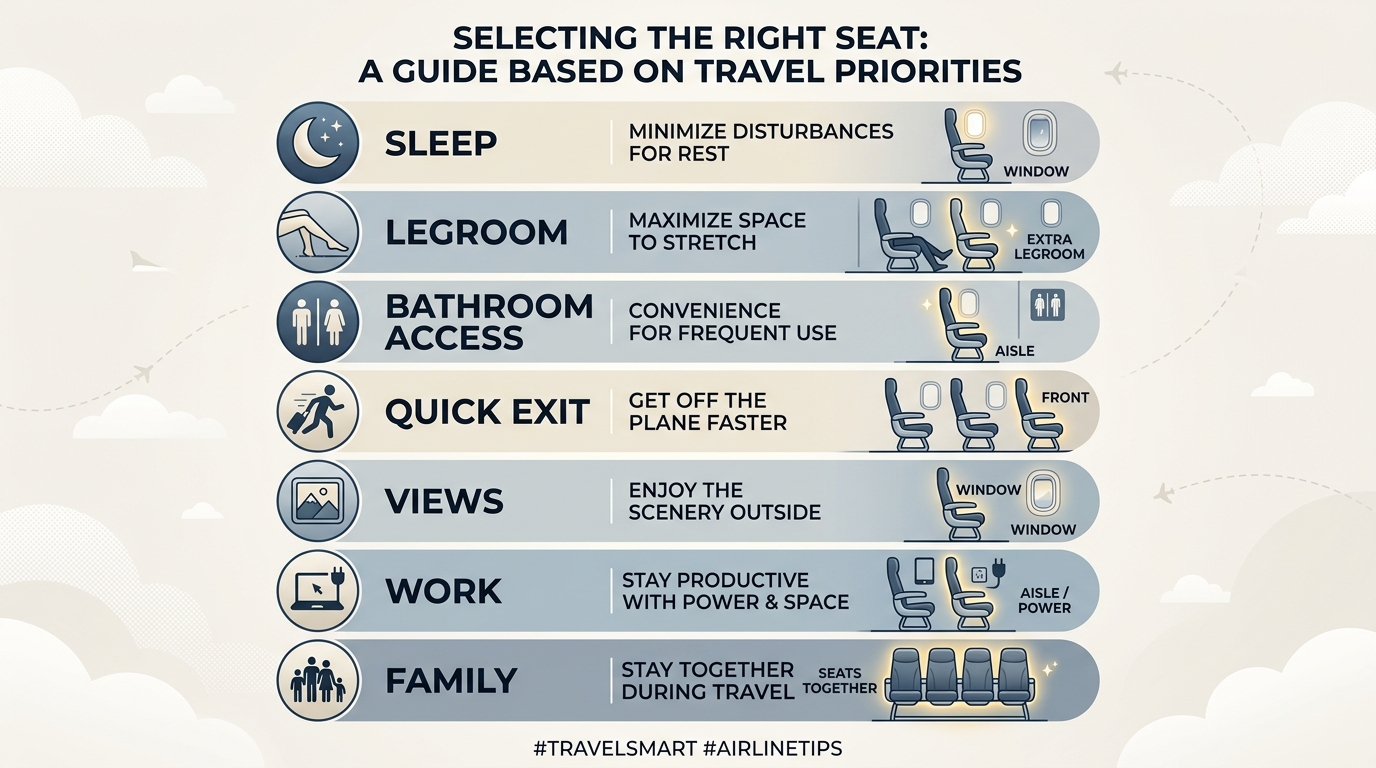 Your perfect airplane seat depends on whether you prioritize sleep, space, or quick exits.
| Priority | Recommended seat type/area | Reason | Potential drawback |
|---|---|---|---|
| Sleep | Window seat | You can lean against the cabin wall and avoid aisle traffic. | Harder to get up for the bathroom. |
| Legroom | Extra-legroom, exit row, or premium cabin | Maximizes physical space for your knees and legs. | May require an extra fee or strict eligibility. |
| Quick exit | Front rows or aisle near the front | Places you closer to the primary boarding/deplaning doors. | Often incurs higher "preferred seat" selection fees. |
| Bathroom access | Aisle seat | Allows you to get up freely without disturbing others. | You may be bumped by passing passengers or beverage carts. |
| Views | Window seat (verified alignment) | Unobstructed views for photography and sightseeing. | Some "window" seats actually lack a window. |
| Work | Aisle or preferred seat | Easier access to your bags; some preferred seats offer power outlets. | Aisle traffic can be distracting. |
| Family travel | Adjacent seats (rows or blocks) | Keeps children and guardians together. | May be difficult to secure on basic economy fares without paying fees. |
| Motion sensitivity | Center / over-wing area | This area sits near the aircraft's center of lift, where motion may feel less pronounced to some. | Views may be partially obstructed by the wing. |
Best Seat for Legroom
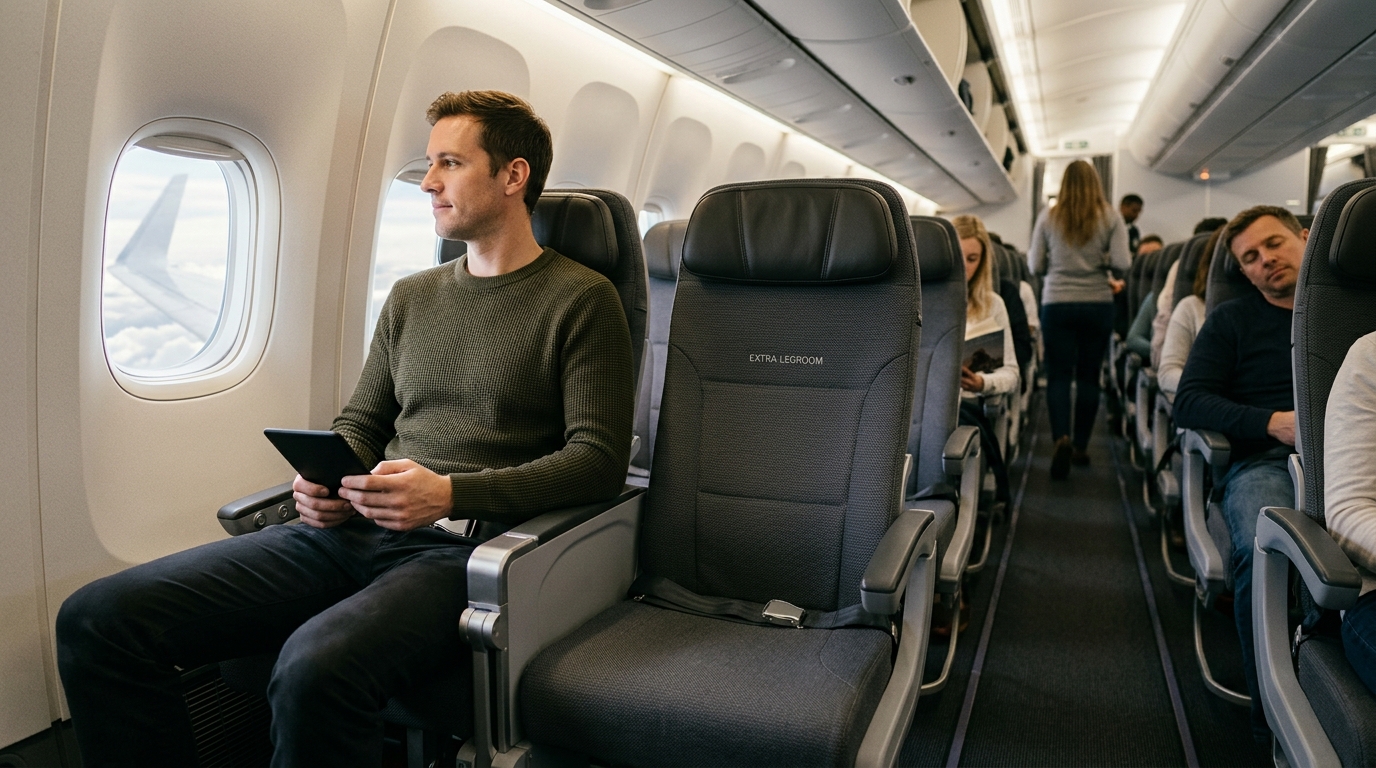 Extra-legroom seats are highly valuable for taller travelers on long flights.
If stretching out is your primary goal, you should look for specific areas of the cabin.
Best candidates:
- Extra-legroom seats (often branded as "Economy Plus" or "Main Cabin Extra")
- Certain exit rows
- Some bulkhead seats
- Premium economy or Business Class
It is a common misconception that every exit row has the most legroom. Seat layouts vary dramatically by aircraft.
Exit row benefits:
- Potentially significant extra legroom to allow for emergency egress.
Possible disadvantages:
- Fixed armrests on some aircraft, which slightly reduces seat width.
- Restrictions on having personal items on the floor during taxi, takeoff, and landing.
- No ability to sit with infants, pets, or passengers who do not meet emergency eligibility criteria.
- Proximity to lavatories or galleys on some aircraft.
- Possible seat recline restrictions in the row immediately preceding an exit.
Always use official airline sources to confirm exact restrictions before paying an upgrade fee.
Best Seat for Tall Travelers
Tall travelers should focus on practical personal space rather than just seat numbers.
Prioritize:
- Seat pitch: This gives a baseline idea of row spacing.
- Seat configuration: Slimline seats might offer more knee clearance despite a smaller pitch.
- Extra-legroom availability: Paid upgrades are often worth the investment on flights over three hours.
- Seat width: Fixed armrests (found in bulkheads) can make a seat feel much tighter.
- Exit-row eligibility: If you are physically capable and meet the airline's rules, an exit row is often the most cost-effective way to secure space.
Remember that seat pitch is a row-to-row measurement and does not perfectly represent actual usable legroom, as the thickness and design of the seat in front of you play a major role.
Planning Travel Logistics?
Use FareWander tools to calculate flight times, luggage rules, and visa requirements.
Best Seat for Sleeping
For most travelers looking to rest, window seats are generally considered the best for sleep.
Benefits of window seats for sleep:
- You have a wall to lean against.
- You control the window shade.
- You will not be woken up by a neighbor needing to get to the aisle.
Potential drawbacks:
- You are trapped if you need to use the lavatory while your seatmates are asleep.
Also consider the overall cabin location, especially on overnight flights (see What Is a Red-Eye Flight?). Avoid seats directly next to galleys, lavatories, or high-traffic areas, as the noise and light will disrupt sleep. Look for seats that guarantee full recline, avoiding the last row of the aircraft or rows immediately in front of exit rows.
Best Seat for a Quick Exit
If you have a tight connection (see What Is a Layover?) or simply hate waiting to deplane, seats toward the front of the aircraft may allow for an earlier exit. Aisle seats also make it easier to gather your belongings and step into the aisle as soon as the seatbelt sign turns off.
However, actual deplaning time depends heavily on:
- Aircraft door usage (some airports use front and rear doors).
- Airport procedures (jet bridge vs. remote stairs/bus).
- Passenger behavior and carry-on retrieval speed.
- Connecting passenger priority.
Do not guarantee that a front-row passenger always leaves first, especially if the airline utilizes a rear-door disembarkation process on a remote stand.
Best Seat for Bathroom Access
Aisle seats generally offer the easiest access to the bathroom, allowing you to get up as often as needed without climbing over others.
But be warned: "Near the bathroom" is not automatically "best." Seats immediately adjacent to lavatories may experience constant passenger traffic, queueing in the aisle, loud door slamming, bright lights opening and closing on overnight flights, and galley activity. Finding an aisle seat a few rows away from the lavatory usually offers the best balance of access and peace.
Best Seat for Turbulence or Motion Sensitivity
Turbulence affects the aircraft as a whole, and no passenger seat eliminates turbulence. There is no such thing as a seat that "prevents" motion.
However, some travelers prefer seats around the aircraft's center or the over-wing area because movement can feel less pronounced there than it does toward the very rear of the tail section. If you suffer from severe motion sickness, it is recommended to discuss appropriate measures with a healthcare professional, as a seat assignment alone will not cure medical sensitivity.
Best Seat for a Window View
Window seats are best for enjoying views, taking photography, leaning while sleeping, and avoiding aisle traffic.
But beware: Not every "window seat" aligns perfectly with a window. Due to the way airlines install seats into the physical tracks of the aircraft, some configurations feature offset or misaligned windows, leaving you staring at a blank plastic wall. Always check the actual aircraft seat map on the airline's official website during the booking process.
Best Seat for Working on a Plane
Business travelers aiming for productivity should consider the following:
- Tray-table size: Bulkhead tray tables (stored in the armrest) are sometimes smaller and less stable for heavy laptops.
- Seat pitch: More pitch means more room to open a laptop screen without it being crushed when the person in front reclines.
- Power outlets and USB availability: Do not assume every aircraft has power; verify this via the airline.
- Aisle access: Easier for retrieving work materials from the overhead bin.
- Neighbor movement: If you have an aisle seat, your work may be interrupted if your window-seat neighbor needs to get up.
Window vs Aisle vs Middle Seat
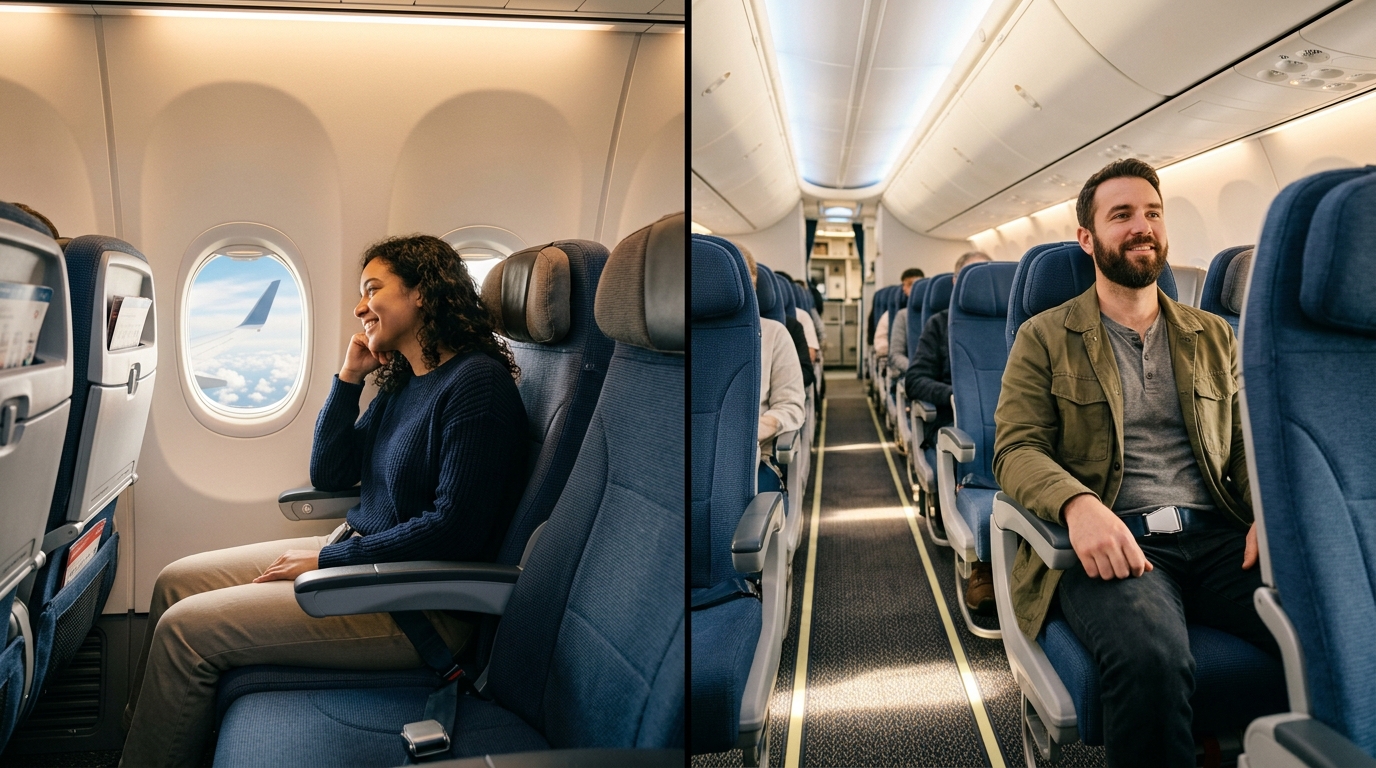 Window seats offer great views and sleep benefits, while aisle seats provide superior mobility.
| Feature | Window | Aisle | Middle |
|---|---|---|---|
| View | Excellent | Minimal | Minimal |
| Sleeping | Best (wall to lean on) | Moderate (head may fall forward) | Poor (no wall, bumped by neighbors) |
| Bathroom access | Poor (must climb over others) | Excellent | Moderate (only one person to cross) |
| Privacy | High | Low (aisle traffic) | Lowest |
| Shoulder space | Moderate (wall limits one side) | Moderate (can lean slightly into aisle) | Often feels tightest |
| Ease of movement | Low | High | Low |
| Work | Good (undisturbed) | Good (easy bag access) | Difficult (cramped) |
Note: While the middle seat is usually the least preferred by many travelers, it can be useful for families or couples depending on the cabin arrangement.
What Is an Exit Row Seat?
An exit row seat is located immediately next to the aircraft's emergency exit doors or over-wing exits.
Because they serve as the primary egress path in an emergency, these rows often feature extra physical space. However, they come with strict emergency-exit responsibilities. Passengers seated here must meet specific eligibility requirements mandated by aviation authorities (e.g., being able-bodied, over a certain age, and capable of understanding crew commands).
Restrictions: You generally cannot store bags under the seat in front of you during taxi, takeoff, and landing.
Variability: Aircraft configurations vary; never encourage passengers in your travel party to choose an exit row without confirming they meet the airline's official eligibility rules.
What Is a Bulkhead Seat?
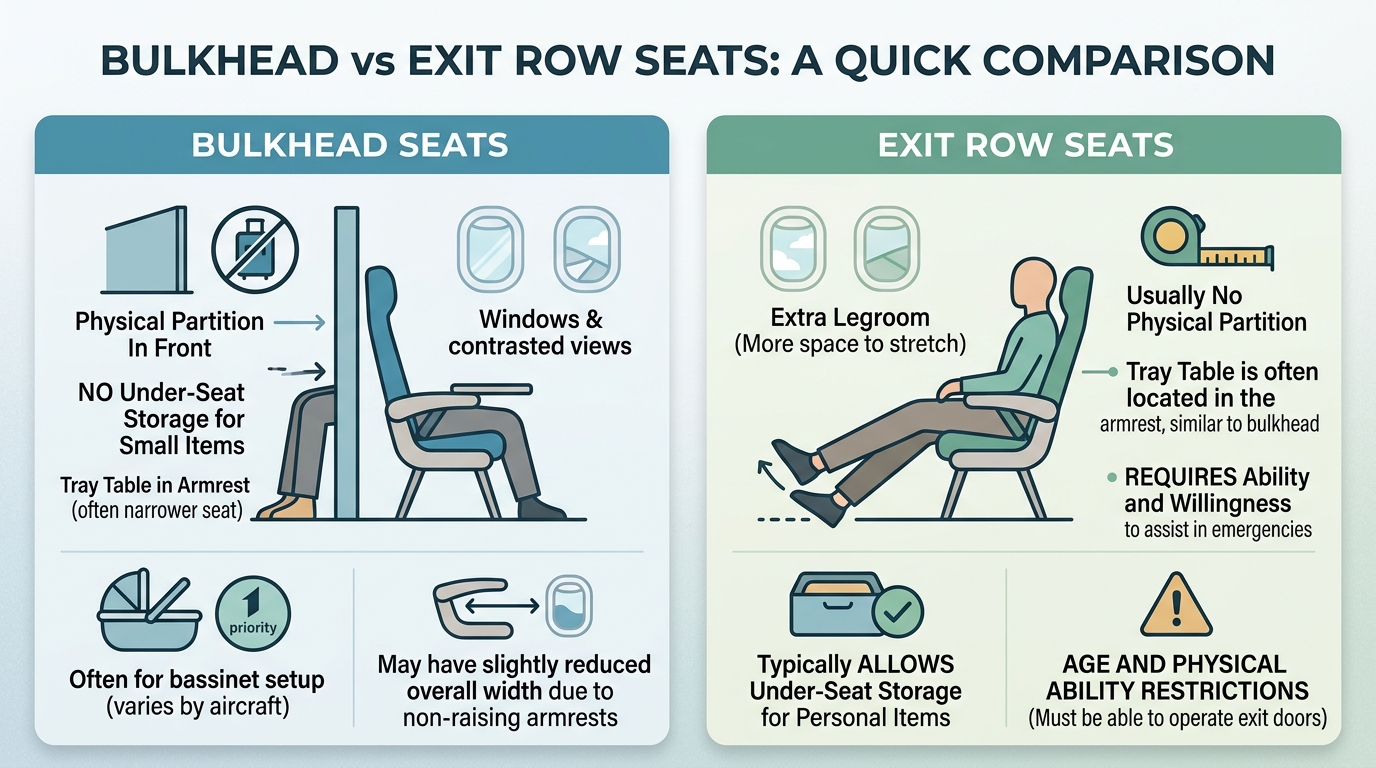 Bulkhead and exit row seats offer extra space but come with specific storage and eligibility rules.
A bulkhead seat is located directly behind a physical cabin partition, wall, or curtain that separates different classes of service or sections of the plane.
Potential benefits:
- No seat directly in front of you to recline into your space.
- Potential knee-space advantage.
- Bassinets may be located nearby on some aircraft, making them ideal for parents with infants.
Potential drawbacks:
- Fixed armrests are common on some aircraft, reducing seat width.
- Tray tables are stored inside the armrests.
- Under-seat storage is usually restricted during takeoff and landing, requiring all bags to go in the overhead bin.
- Proximity to galley/lavatory and high infant activity (due to bassinets).
Best Seats on a Plane for Families
When traveling with children, securing seats together is the top priority.
Considerations include:
- Ensuring an adult sits next to young children.
- Looking for bassinet locations (usually at bulkhead rows) if flying with an infant.
- Booking an aisle and window combination to keep children entertained while allowing adults easy access to the aisle.
- Proximity to the lavatory for quick diaper changes or bathroom trips.
Do not assume that airlines always seat families together for free. Policies vary heavily by airline, fare class, and jurisdiction. Basic economy fares, for instance, often randomly assign seats, which can separate families (learn more in our guide on Basic Economy vs Economy). Always review current official airline family-seating policies before purchasing restrictive fares.
Best Seats for Solo Travelers
Solo travelers have the most flexibility. Your choice depends on your preference:
- Window: Best for sleeping undisturbed and enjoying views.
- Aisle: Best for frequent walkers or bathroom users.
- Extra-legroom / Front cabin: Great if you prioritize a quick exit or extra space.
- Exit row: Excellent for solo travelers who meet safety eligibility requirements.
Best Seats for Couples
If you are traveling as a pair, look for:
- Two-seat configurations (often found near the back of wide-body aircraft or on smaller regional jets).
- The "window + aisle" strategy: Booking the window and aisle in a 3-seat row, hoping the middle remains empty. If someone does book the middle, they are usually happy to swap for the aisle or window so you can sit together.
- Selecting adjacent seats early in the booking process.
Do not guarantee the ability to swap seats after boarding; always book the seats you actually want if sitting together is mandatory.
Best Seats on Long-Haul Flights
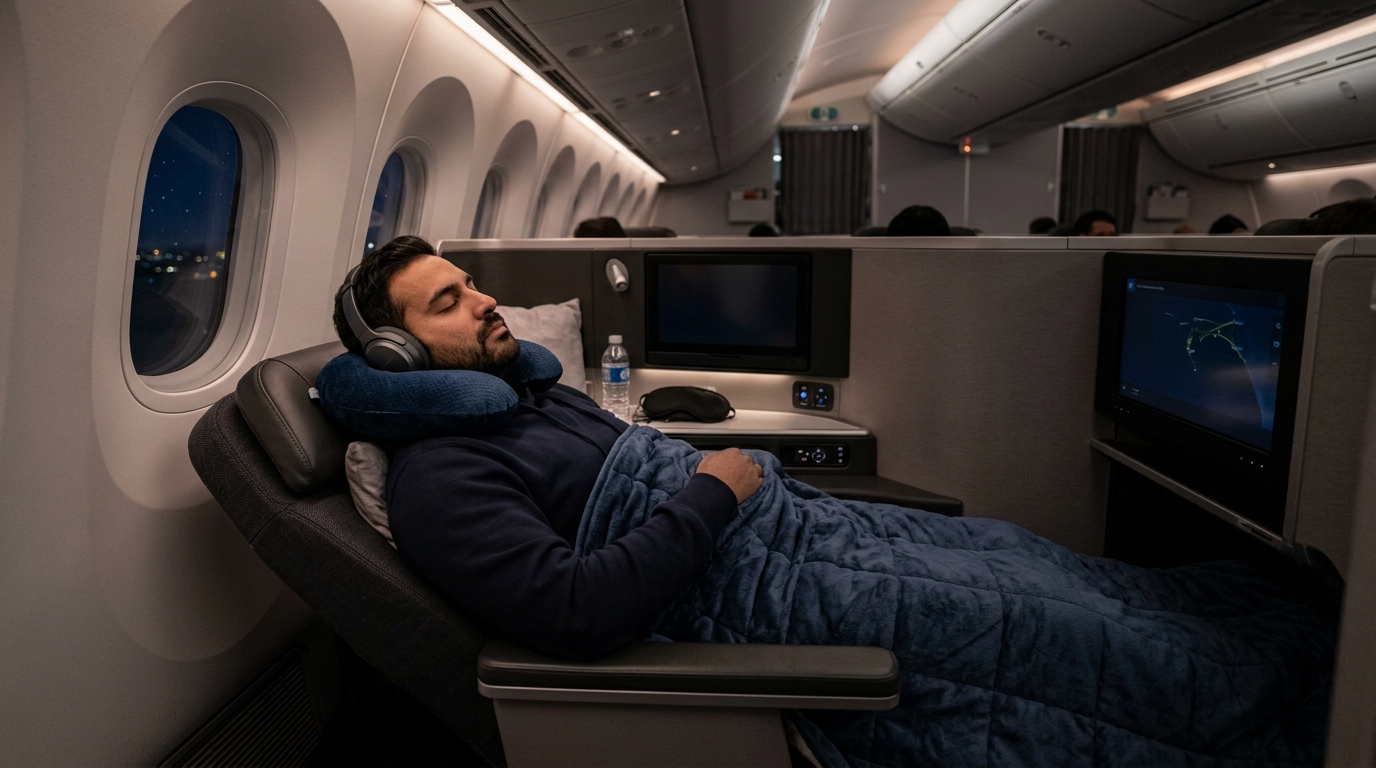 Choosing the right seat is critical for rest and comfort on flights over 10 hours.
The "best seat" is significantly more important on a 10–15 hour long-haul flight (e.g., Delhi to New York) than on a short 1-hour regional hop.
Prioritize:
- Legroom and seat width.
- Seat recline (avoiding the last row).
- Noise levels (avoiding galleys).
- Bathroom proximity (close enough for convenience, far enough to avoid lines).
- Cabin location (some prefer the quieter forward economy cabins).
- Power availability to keep devices charged.
If budget permits, long-haul flights are the best time to invest in Premium Economy for the wider seats and deeper recline.
Front of Plane vs Back of Plane
Front of the Plane:
- Potentially quicker exit upon arrival.
- May have different cabin service timing (often served meals first).
- Potentially more expensive as airlines designate these as "preferred seats."
Back of the Plane:
- Sometimes offers more seat availability, increasing the chance of an empty seat next to you.
- May be closer to lavatories and the rear galley.
- May experience more cabin passenger traffic.
- Potentially slower to exit upon landing.
Aircraft configuration varies wildly. Do not make universal claims that the front is always quieter or the back always experiences more turbulence.
Over-the-Wing Seats: Are They Better?
Seats around the wing may be preferred by some travelers for perceived motion stability, as they sit near the aircraft's center of lift.
But keep in mind:
- The exact wing position differs by aircraft type.
- Your window view will likely be obstructed by the wing and engine.
- Engine noise can be louder in this section depending on the aircraft model.
Over-wing seats are not objectively superior; they represent a trade-off between perceived stability and visibility.
Seats You May Want to Think Twice About
While no seat is universally "bad" without context, some locations require careful thought before booking:
- Seats directly beside lavatories: High traffic, smells, and door noise.
- Seats beside galleys: Flight crew preparation noise and bright lights.
- High-traffic aisle seats: Getting bumped continuously.
- Seats with restricted recline: Usually the last row of the plane or the row right in front of an emergency exit.
- Seats with limited/blocked windows: "Window" seats that sit perfectly aligned with the aircraft's solid wall panels.
- Bulkhead/Exit rows (sometimes): If you require under-seat storage for medical devices or personal bags during takeoff.
How to Read an Airline Seat Map
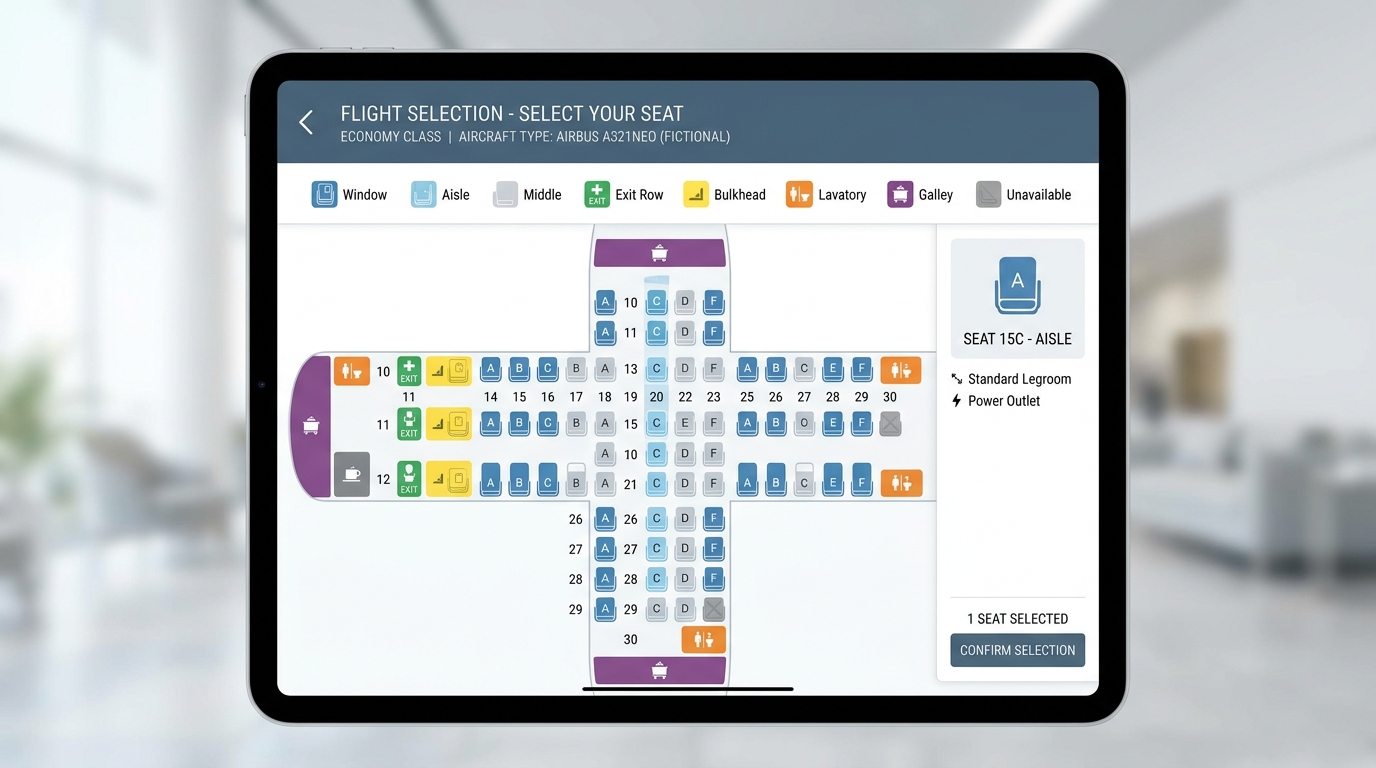 Understanding how to read a seat map helps you avoid lavatories and secure better views.
When flying on partner or ticketed flights (see What Is a Codeshare Flight?), always verify seat maps on the operating carrier's system.
- Identify the exact aircraft type on your booking.
- Open the airline's official seat map during the booking process.
- Check the cabin layout (e.g., 3-3-3 vs 2-4-2).
- Check seat pitch and legroom dimensions if the airline publishes them.
- Check seat width if published.
- Identify exit rows (usually marked with arrows or specific colors).
- Identify bulkheads (solid lines separating cabins).
- Check lavatory locations (usually marked with WC or toilet icons).
- Check galley locations (usually marked with a knife/fork or coffee cup icon).
- Check window alignment if indicated.
- Check the seat-selection fee for that specific row.
- Check restrictions (like fixed armrests or no recline).
- Recheck the map before departure to ensure no aircraft swaps occurred.
Why Your Seat Map Can Change After Booking
Never assume your seat is permanently set in stone months in advance. A selected seat may sometimes be changed due to:
- Aircraft swaps: The airline changes the plane from a Boeing 777 to a Boeing 787 for operational reasons, completely altering the seat map.
- Operational changes or schedule changes.
- Safety or weight-and-balance requirements.
- Cabin reconfiguration.
Tell travelers to check their seat assignment again 24-48 hours before departure. Paid seat selection is generally honored, but if an aircraft swap occurs, you may be moved.
Should You Pay Extra for a Better Seat?
 Weigh your priorities and total ticket cost before paying seat-selection fees.
Paying extra for seat selection may make sense if:
- The flight is long (over 4-5 hours).
- You are a tall traveler who desperately needs extra legroom.
- You have a medical need for an aisle seat.
- You must sit with family or young children.
- You highly value a specific location (like a front row for a tight connection).
It may not be worth it if:
- The flight is a very short regional hop.
- You do not care where you sit.
- Standard, free seats meet your needs.
- The airline allows free seat selection at the 24-hour check-in window and you are willing to risk availability.
Always compare the total value of the ticket plus the seat fee against the cost of upgrading to a higher fare class.
How Much Does Seat Selection Cost?
Seat-selection fees are highly dynamic. They vary by airline, route, cabin, fare class, seat type, your loyalty status, and the booking channel. A standard aisle seat might cost $15 on a domestic flight but $50 on an international route. Extra-legroom seats can range from $30 to well over $150 depending on flight duration.
Use the airline's official booking portal to see the exact fee for your specific itinerary.
Do Airlines Guarantee the Seat You Select?
Airlines do their best to honor paid seat selections, but they do not offer an absolute legal guarantee. As mentioned, aircraft swaps, operational requirements, safety mandates, and schedule changes can result in seat reassignment. If you paid for an extra-legroom seat and are downgraded to a standard seat due to an aircraft swap, airline policies generally dictate that you are entitled to a refund of the seat fee.
Can You Change Your Seat After Booking?
It is often possible to change your seat after booking, depending on the airline, your fare rules, seat availability, and timing. Changing a seat may involve paying a new seat fee, paying a fare difference if upgrading to a premium section, or it might be entirely free if you hold elite loyalty status. Never guarantee free changes; always review your ticket's fare conditions.
Best Seat Selection Strategy by Flight Length
| Flight length | Recommended Priority |
|---|---|
| Under 2 hours | Quick exit / convenience. |
| 2–5 hours | Aisle/window preference based on bathroom habits. |
| 5–9 hours | Legroom + aisle access. |
| 9+ hours | Legroom + recline + sleep + noise avoidance + bathroom access + power availability. |
This is a practical framework, not a universal rule.
Best Seat by Traveler Type
| Traveler | Best priority |
|---|---|
| Tall traveler | Extra legroom (Exit row or Premium) |
| Light sleeper | Window / quieter forward cabin area |
| Frequent bathroom user | Aisle |
| Work traveler | Power + tray table + aisle access |
| Family | Adjacent seats + verification of airline family policy |
| Solo traveler | Aisle or window depending on personal preference |
| Photographer | Window (verified alignment) |
| Motion-sensitive traveler | Center/over-wing area may feel more comfortable to some |
| Long-haul traveler | Legroom + recline + cabin location |
10-Step Seat Selection Checklist
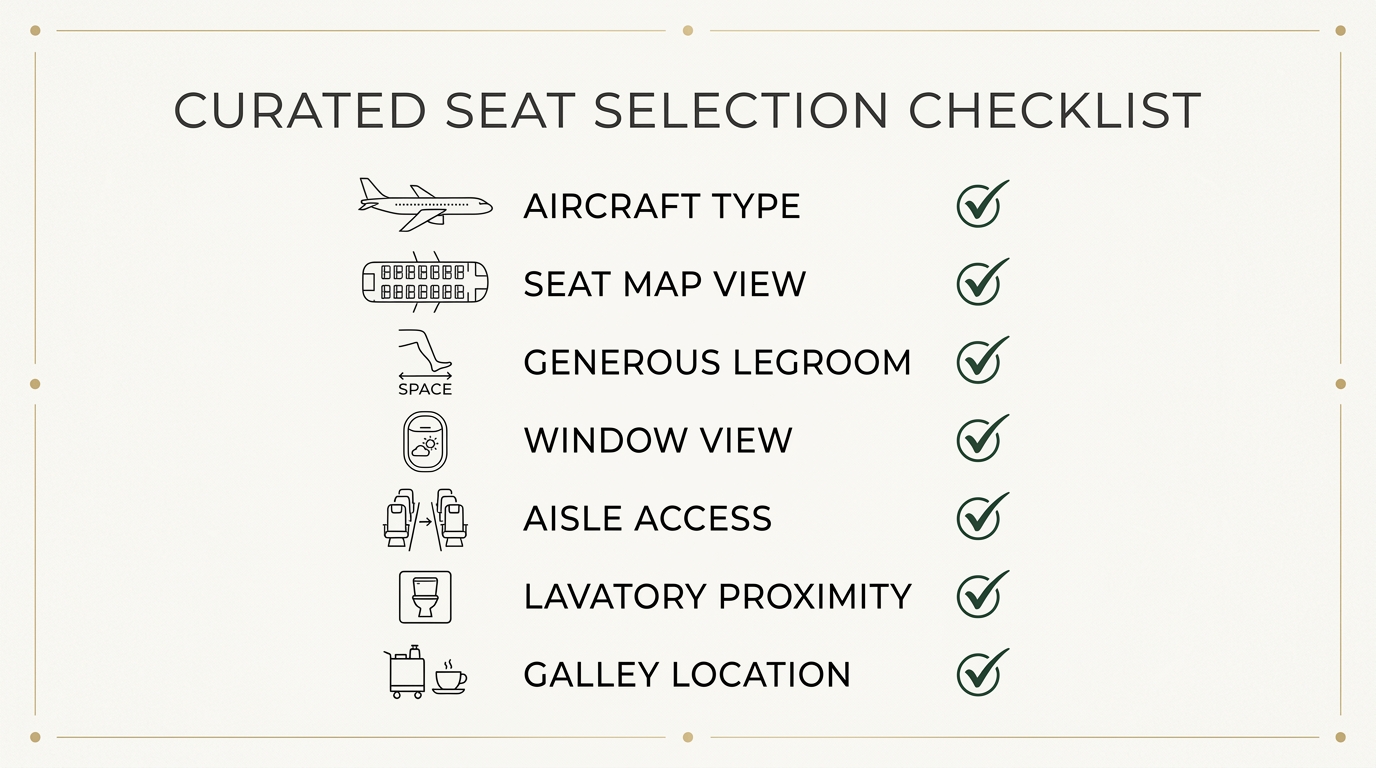 Review this checklist before purchasing any premium or standard airplane seat.
- Check aircraft type on your booking.
- Open the official airline seat map.
- Compare seat pitch for your desired row.
- Compare seat width and look for fixed armrests.
- Check window alignment if booking a window seat.
- Check exit row eligibility requirements.
- Check bulkhead storage restrictions.
- Check proximity to lavatories and galleys.
- Check the exact seat-selection fee.
- Recheck your seat assignment 24 hours before departure.
Common Airplane Seat Selection Mistakes
- Choosing a seat number blindly without checking the specific aircraft type.
- Assuming every window seat has a perfect, unobstructed window.
- Assuming the exit row is always the best seat (ignoring fixed armrests or storage rules).
- Ignoring lavatory and galley proximity on overnight flights.
- Ignoring restricted recline in the last row or ahead of emergency exits.
- Paying for a preferred seat without checking what actual physical benefits it offers.
- Assuming seat maps never change after booking.
- Ignoring family seating policies and hoping the crew will move people.
- Ignoring accessibility requirements when booking bulkheads or exit rows.
- Choosing a seat based solely on outdated online third-party rankings rather than current airline data.
Conclusion
The best seat on a plane is the one that matches your priorities. For many travelers, that means choosing between an aisle for mobility, a window for sleep and views, or an extra-legroom seat for longer flights. But seat numbers alone are not enough: aircraft type, seat map, fare rules and airline policies can change the experience. An exit row might offer amazing legroom on one jet but feature restrictive fixed armrests on another.
Before paying for a seat, check the exact aircraft and current seat map for your flight.